What Is a Proxy Hostname?
A proxy hostname is the domain you use to connect to a proxy service. Rather than entering a numeric IP address, the client connects through a readable host address that points to the provider’s proxy servers. Once configured in a browser, application, or script, this hostname ensures that outgoing requests pass through the proxy network before reaching the intended website.

Lukas Mikelionis
Last updated: Mar 27, 2026
3 min read
TL;DR
- A proxy hostname is a host address used to access a proxy service
- It replaces the need to connect to a proxy using a direct IP address
- Requests from the client are directed to the proxy service first, which then passes them to the destination website through its own network
- Websites typically receive the proxy server’s IP address, not the original client IP
- Proxy hostnames are frequently used in automation workflows, web data collection, and network traffic management
How does a proxy hostname work?
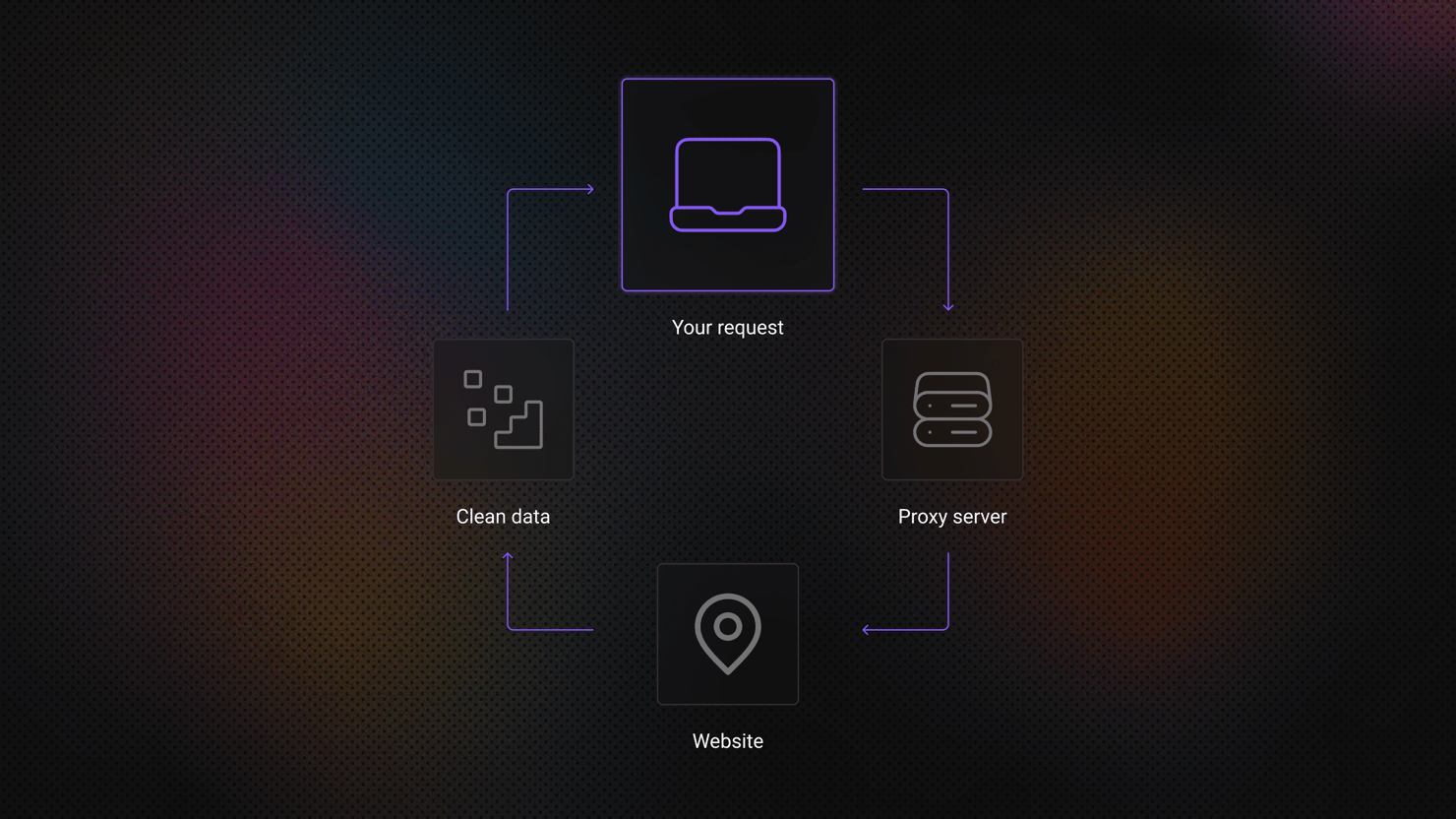
A proxy hostname helps a client to reach a proxy service using a human-readable domain name rather than a numeric IP address. When the hostname is configured in a browser, application, or script, network requests are sent to that hostname first. The proxy system, whether a residential proxy or otherwise, then handles communication with the destination website and returns the result to the client.
A typical connection process works like this:
#1. The client uses the configured proxy hostname
The user sets a proxy hostname and port in their browser, application, or automation tool. Any outgoing request is directed to this proxy endpoint rather than going straight to the target website
#2. The hostname is translated into a server address
Through DNS resolution, the hostname is converted into the IP address of a proxy server operated by the provider
#3. The proxy handles the external connection
Once the proxy server receives the request, it establishes a connection with the destination website on the client’s behalf
#4. The website processes the incoming request
At this point, the destination server receives the request from the proxy and prepares the appropriate response
#5. The response is returned through the proxy
The proxy passes the received data back to the original client, completing the communication while the destination site interacts only with the proxy’s network address.
What does a proxy hostname look like?
A proxy hostname usually contains two main elements: a domain name and a port number. The domain name identifies the proxy server within the provider’s infrastructure, while the port specifies the channel used to establish the connection.
For example, a Decodo residential proxy hostname may look like this:
gate.decodo.com:7000
In this example, gate.decodo.com is the hostname that routes requests through the proxy network, and 7000 is the port used to initiate the connection.
Using hostnames instead of static IP addresses makes proxy configuration more flexible. A single hostname can route traffic to different proxy servers within the provider’s network, allowing the infrastructure to distribute requests efficiently without requiring users to update connection settings.
What are the different types of proxy hostnames?
Proxy hostnames are often distinguished by how access to the proxy servers is provided. Some are reserved for specific users, while others are openly accessible. These differences influence how the proxies are used, as factors like connection stability, privacy, and network performance can vary depending on the type of proxy setup.
Private proxy hostnames
Private proxy hostnames connect users to dedicated proxy servers that aren’t shared with the public. These proxies are typically provided by commercial proxy services and are assigned to a specific user or organization.
Because access is restricted, private proxy hostnames generally offer greater reliability, improved connection stability, and stronger privacy. They are widely used in professional environments such as web scraping, automation systems, market research, and large-scale data collection, where consistent performance and lower detection risk are important.
Public proxy hostnames
Public proxy hostnames provide access to open proxy servers that can be used by anyone on the internet. These proxies are often free and widely available through public proxy lists.
However, public proxy hostnames come with several limitations. Since many users share the same servers, they can experience slower speeds, unstable connections, and a higher risk of being blocked by websites. In addition, public proxies may lack adequate security controls, making them less suitable for sensitive tasks or professional use cases.
What are the benefits of using a proxy hostname?
Routing traffic through a proxy hostname means that web requests are handled by a proxy server before reaching the target website. By introducing this intermediary step, users can control how their requests appear to external services. This setup can provide benefits related to location access, privacy, and identity separation during online interactions.
Bypass geo-restrictions
Some online platforms restrict content based on the visitor’s geographic region. When traffic is sent through a proxy hostname, the destination website recognizes the location of the proxy server instead of the user’s original network. If the proxy operates from a different country or region, the request may be treated as coming from that location. This capability is commonly used for tasks such as regional content verification, localization testing, and market research.
Improved privacy
A proxy hostname creates a separation layer between the client device and the destination service. Instead of connecting directly, the request is handled by the proxy server first. Because of this intermediary step, the destination website does not directly receive the client’s original IP address, which helps limit the exposure of certain network details during the interaction.
Increased anonymity
Using a proxy can make it harder for websites to associate requests with a specific device or network origin. Since the proxy server acts as the visible source of the traffic, the user’s actual connection information isn’t directly presented to the destination site. Although proxies alone do not guarantee complete anonymity, they can help reduce traceability in workflows such as automated data collection, research, and monitoring.
Potential drawbacks of using a proxy hostname
Using a proxy hostname can make connecting to a proxy network more convenient, but it isn’t always a perfect solution. The overall experience can vary depending on the provider’s infrastructure, the stability of the connection, and how different websites react to traffic coming through proxy servers.
Potential reliability issues
When requests pass through a proxy server, the connection quality depends largely on the provider’s network environment. If the proxy servers experience heavy traffic, service interruptions, or unstable routing, users may notice slower response times or occasional connection failures.
Security considerations
Since proxy traffic is handled by an external server, data passes through infrastructure that isn’t directly controlled by the user. If a provider does not maintain strong security practices, there is a risk that transmitted information could be exposed or mishandled. “For this reason, it is important to” rely on proxy services that clearly document their security and privacy policies.
Website restrictions
Some websites monitor incoming traffic and may limit access if they suspect that requests are coming from a proxy. This can happen when many connections appear to originate from the same proxy network. In such cases, the site might ask for additional verification, restrict certain features, or temporarily block the connection.
Residential proxies are significantly harder to detect than datacenter proxies; see how Decodo’s residential proxy network works.
Try Decodo proxies for reliable connections
If you need a stable and scalable proxy solution, Decodo provides residential and shared proxy networks designed for automation, data collection, and large-scale web access. With flexible proxy hostnames and a globally distributed infrastructure, users can route requests efficiently while maintaining reliable connections.
These proxy networks are designed to support an array of use cases, including web scraping, market research, localization testing, and automation workflows. By distributing traffic across multiple proxy nodes, users can manage large volumes of requests more effectively while reducing the likelihood of connection disruptions.
Start a residential or shared proxy trial to explore how Decodo’s proxy network can support your workflow and help manage web traffic more effectively.

Residential proxies with #1 response time
Equip 115M+ ethically-sourced IPs from 195+ locations around the globe.
Is proxy hostname worth using?
A proxy hostname can be a useful way to manage how requests are sent through a proxy network. When traffic is forwarded through a proxy server, the destination website interacts with the proxy rather than the user’s device. This setup can help separate the client’s connection details from the external service and make it easier to access region-dependent content or operate automated workflows.
For developers, businesses, and data teams working with proxy infrastructure, hostnames also simplify configuration. Instead of manually switching between individual proxy IP addresses, a single hostname can direct traffic to different proxy nodes within the provider’s network as needed.
That said, the overall effectiveness of a proxy hostname depends on the proxy service supporting it. Providers with well-maintained infrastructure and stable proxy pools generally offer more consistent connectivity and fewer disruptions under high-volume request loads.
About the author

Lukas Mikelionis
Senior Account Manager
Lukas is a seasoned enterprise sales professional with extensive experience in the SaaS industry. Throughout his career, he has built strong relationships with Fortune 500 technology companies, developing a deep understanding of complex enterprise needs and strategic account management.
Connect with Lukas via LinkedIn.
All information on Decodo Blog is provided on an as is basis and for informational purposes only. We make no representation and disclaim all liability with respect to your use of any information contained on Decodo Blog or any third-party websites that may belinked therein.