Buy Proxies: Residential, Datacenter, ISP & Mobile
Different targets require different proxy types. Residential, datacenter, ISP, and mobile proxies each vary in detection resistance, session control, pricing, and performance. Explore our detailed guide and find the proxy type that best matches your use case.
14-day money-back option
125M+
IPs
195+
locations
∞
traffic option
24/7
tech support
99.99%
uptime
What is the difference between proxy types, and which should I buy?
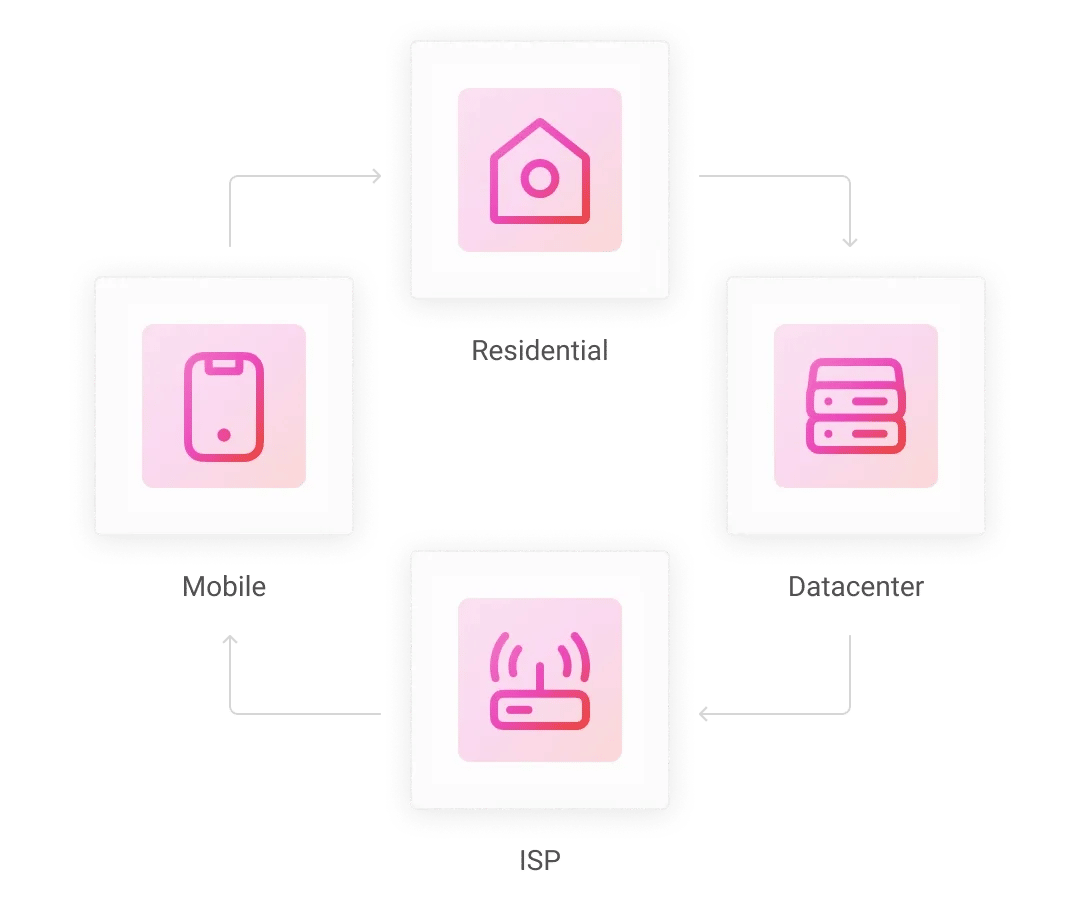
Residential proxies use real household IPs for maximum stealth. Datacenter proxies use server IPs for speed and cost efficiency. ISP proxies combine both with static IPs from real Internet Service Providers. Mobile proxies use 4G/5G carrier IPs for the highest anonymity against advanced anti-bot systems.
Attribute
Residential
Datacenter
ISP (Static)
Mobile
IP source
Real household devices (ISP-assigned)
Data center servers
ISP-registered, server-hosted
Real mobile carrier (4G/5G)
Pool size
115M+
500K+
Global IPs
10M+
Detection resistance
Highest
Low
High
Highest
Session type
Rotating or sticky (up to 30 min)
Rotating or static
Static (permanent)
Rotating or sticky
Cost model
Pay per GB
Pay per GB or per IP
Pay per IP
Pay per GB
Starting from
$2/GB
$0.02/IP
$0.27/GB
$2.25/GB
Avg. response time
<0.6s
<0.3s
<0.2s
<1s
Protocol support
HTTP(S) + SOCKS5
HTTP(S) + SOCKS5
HTTP(S) + SOCKS5
HTTP(S) + SOCKS5
Best for
Scraping, SERP monitoring, eCommerce
Bulk scraping, price monitoring
Multi-accounting, agent loops, large-scale scraping
Mobile app testing, AI and automation, multi-accounting
Free trial
3-day / 100MB
3-day / 100MB
3-day / 100MB
3-day / 100MB
Which proxy type is right for my use case?

- Choose residential proxies when scraping heavily protected websites, harvesting SERP data, or accessing geo-restricted content. Their IPs are tied to real devices and ISPs, making them virtually indistinguishable from organic traffic and far less likely to be flagged or blocked.
- Use datacenter proxies when speed and volume are your top priorities and your targets don't enforce aggressive bot detection. These proxies deliver the fastest response times and the lowest cost-per-request, making them ideal for large-scale, latency-sensitive data collection on unprotected or lightly guarded sites.
- Select ISP proxies when your workflow demands persistent, long-lived sessions, like multi-account management, e-commerce automation, or ad verification, because they combine the legitimacy of residential IPs with the reliability and uptime of datacenter infrastructure.
- Use mobile proxies when you need to route traffic through carrier-grade mobile IPs to defeat sophisticated anti-bot systems, accurately test mobile applications under real network conditions, or safely manage multiple accounts on platforms that scrutinize IP reputation at the cellular level.

Web scraping and data extraction

Price monitoring and market intelligence

Multi-account management and social media automation

SEO monitoring and SERP tracking

AI data pipelines and LLM training datasets
How much do proxies cost, and which pricing model should I choose?

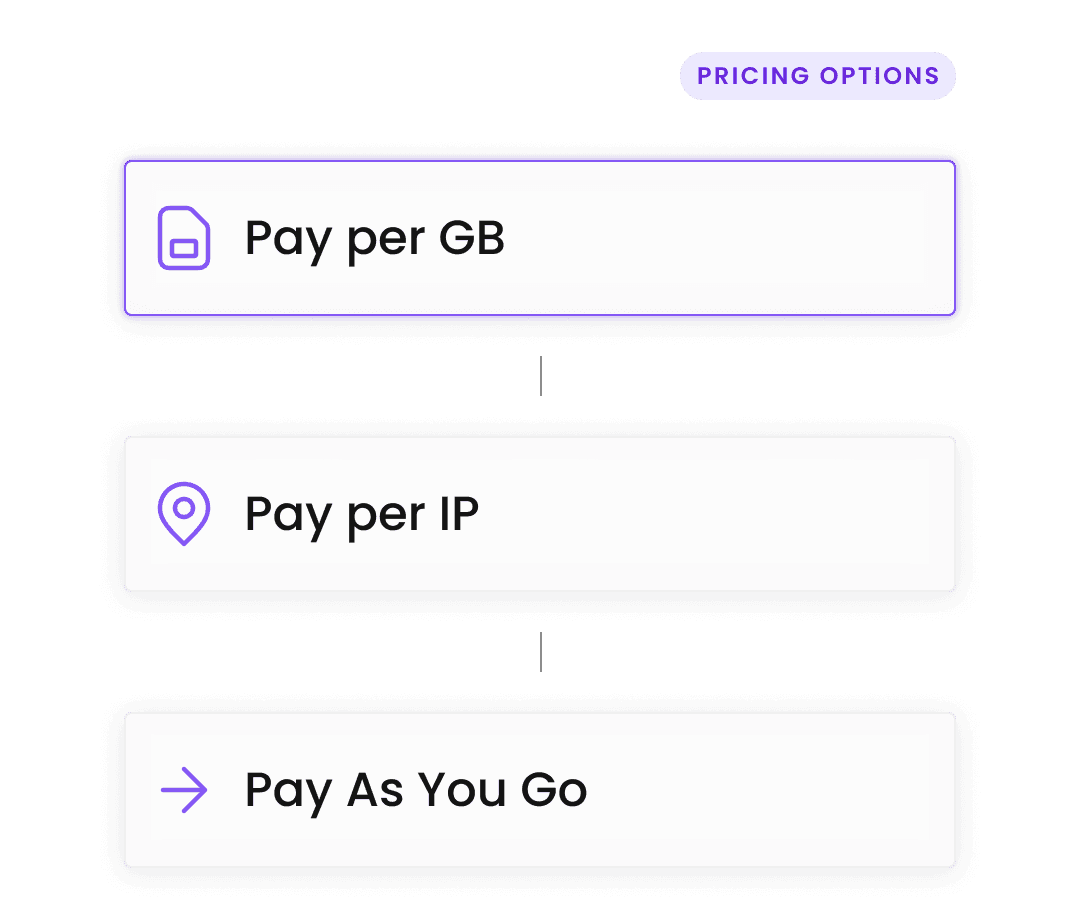
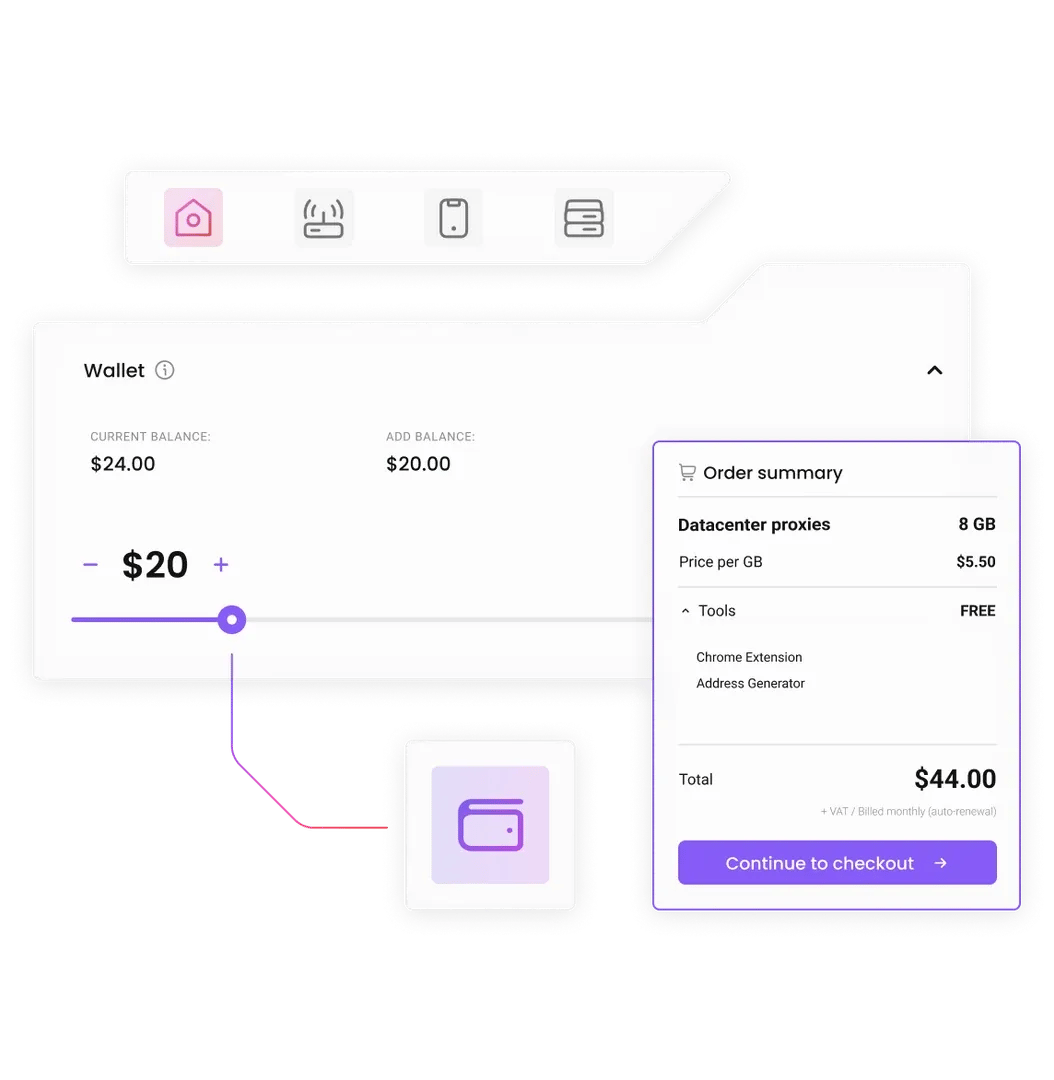
Proxy pricing follows two models – pay per GB (traffic-based, best for variable workloads) and pay per IP (fixed-cost, best for stable recurring operations). Residential and mobile proxies use per-GB billing. Datacenter and ISP proxies offer options.
- Pay per GB works best when your traffic volume is unpredictable or project-based. You access the full IP pool and pay only for data transferred, ideal for web scraping, SERP collection, and one-off research projects. Residential proxies start at $2/GB and mobile proxies at $2.25/GB.
- Pay per IP gives you a fixed set of IP addresses at a predictable monthly cost. This suits stable, recurring operations like multi-accounting, rank tracking, and ad verification, where you need a consistent session identity. Datacenter proxies are available from $0.02/IP or $0.45/GB (shared). ISP proxies start at $0.27/IP.
- Pay As You Go is the best choice for one-off projects. You can grab this option for both residential and mobile proxies at $4/GB.
14-day money-back
SSL Secure Payment
Your information is protected by 256-bit SSL
How do I buy and start using proxies from Decodo?

Pick your proxy type, grab your credentials, and start sending requests, no complicated workflows, no DevOps degree required.
- Create your Decodo account.
- Pick your proxy type that best matches your needs and use case.
- Choose a subscription or kick off your 3-day free trial (100 MB included).
- Configure your endpoint in the dashboard, select location (country, state, or city), session type (rotating or sticky), and protocol (HTTP(S) or SOCKS5).
- Copy your endpoint and credentials.
- Drop them into your tool. Python, Node.js, and cURL examples are ready in the dashboard and on GitHub.
- Send a test request to ip.decodo.com to confirm everything's working.
How does the Decodo dashboard work?
Endpoint configuration

Select your proxy type, target location (country, state, or city), session type (rotating or sticky), and protocol (HTTP(S) or SOCKS5). The dashboard generates your endpoint string and authentication credentials instantly. No manual configuration required — copy the endpoint directly into your script or tool.
Real-time usage statistics

Track active sessions, traffic volume, bandwidth consumption, and success rates per target in real time. Statistics update live during active proxy or scraping sessions, helping you stay cost-efficient.
Subscription and plan management

Upgrade, downgrade, or cancel your subscription with a single click. Switch between different proxy types, purchase additional GBs, grab more IPs, or replace existing ones at any time straight in your dashboard.
Why buy proxies from Decodo?
Decodo is one of the leading proxy and web data collection infrastructures on the market, built to handle everything from large-scale scraping and price monitoring to AI data pipelines and multi-account management.
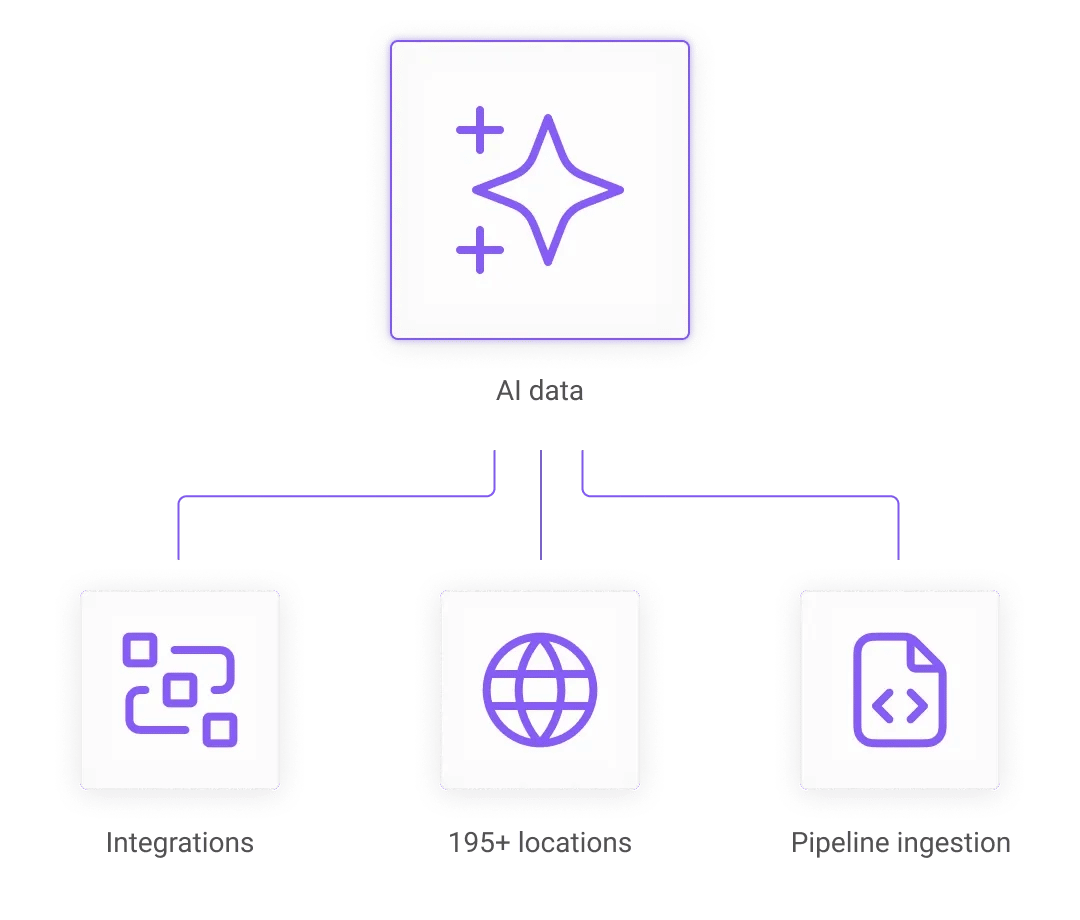
125M+ IPs across 195+ locations
99.86% success rate
#1 response time in the market
99.99% uptime
ISO/IEC 27001:2022 certified proxies and Scraping API
Ethically-sourced IPs from consenting users
135K+ active clients globally
3-day free trial
24/7 live tech support
What do customers and industry experts say about Decodo?
We're thrilled to have the support of our 135K+ clients and the industry's recognition.
Techradar
The best proxy of 2025, that’s highly affordable for most use cases.
Frequently asked questions
What is a proxy server?
A proxy server routes your internet requests through a different IP address, acting as an intermediary between your device and the target website. This masks your real IP, bypasses geo-restrictions, and prevents IP-based rate limiting for tasks like web scraping and data collection.
What is the best proxy to buy?
The right proxy depends on your use case. Residential proxies work best for scraping protected targets and SERP data. Datacenter proxies suit bulk collection from unprotected sites. ISP proxies are optimal for multi-accounting and stable long sessions. Mobile proxies offer the highest anonymity against advanced anti-bot systems.
How much does a proxy server cost?
Datacenter proxies start at $0.57/GB (50 GB plan). Residential proxies start at $3/GB. ISP proxies start at $2.25/GB (50GB plan). Mobile proxies start at $3/GB (50GB plan). Pay As You Go residential proxies are available at $4/GB with no monthly commitment.
Are proxy servers illegal?
Proxies are legal in most jurisdictions when used to access publicly available data in compliance with the target website's Terms of Service. Decodo's proxies and Scraping API are ISO/IEC 27001:2022 certified, and all IPs are ethically sourced from consenting users. When in doubt regarding proxy usage and your use case, consult a legal professional.
What is the difference between a shared and dedicated proxy?
A shared proxy is used by multiple users, which is more cost-efficient, but with potentially shared IP reputation history. A dedicated proxy is assigned exclusively to one user, providing better performance, cleaner IP history, and higher stability. Dedicated options are available for both datacenter and ISP proxies.
What is the difference between rotating and sticky proxy sessions?
Rotating sessions assign a new IP with each request or at defined intervals, preventing IP-based rate limiting, ideal for web scraping and data collection. Sticky sessions maintain the same IP for longer sessions, required for multi-step workflows like login flows, cart interactions, and account management.
Start with The Right Proxy for Your Use Case
125M+ IPs across 195+ locations. A range of proxy types, all in one platform with a 3-day free trial.
14-day money-back option