ISP Proxies
Decodo ISP proxies are IPs assigned by internet service providers and hosted on high-speed servers, combining residential reliability with datacenter stability. They deliver <0.2s response times for web scraping, multi-accounting, and AI data pipelines.
14-day money-back option
Free
3-day trial
<0.2s
response time
99.99%
uptime
Premium
ASNs
24/7
tech support
Trusted by:






What are ISP proxies?

ISP proxies are IPs issued by an internet service providers (ISPs), but they run on high-performance datacenter servers. This gives them the trustworthiness of residential IPs while maintaining the speed and reliability of datacenter infrastructure.
Decodo offers them as shared ISP proxies for flexible scaling and dedicated ISP proxies for a single-user identity. Because the IPs are static, they are also a form of static residential proxies. Explore static residential proxies with Pay per GB pricing options.

How do ISP proxies differ from other proxy types?
ISP proxies combine some of the best features of residential and datacenter proxies.
Unlike rotating residential proxies, ISP proxies hold a fixed IP indefinitely, which makes them better suited for login-dependent workflows and long-session tasks. Unlike datacenter proxies, they carry ISP-assigned subnet ranges that targets see as real home connections, resulting in lower block rates on protected platforms.

How do you set up an ISP proxy?
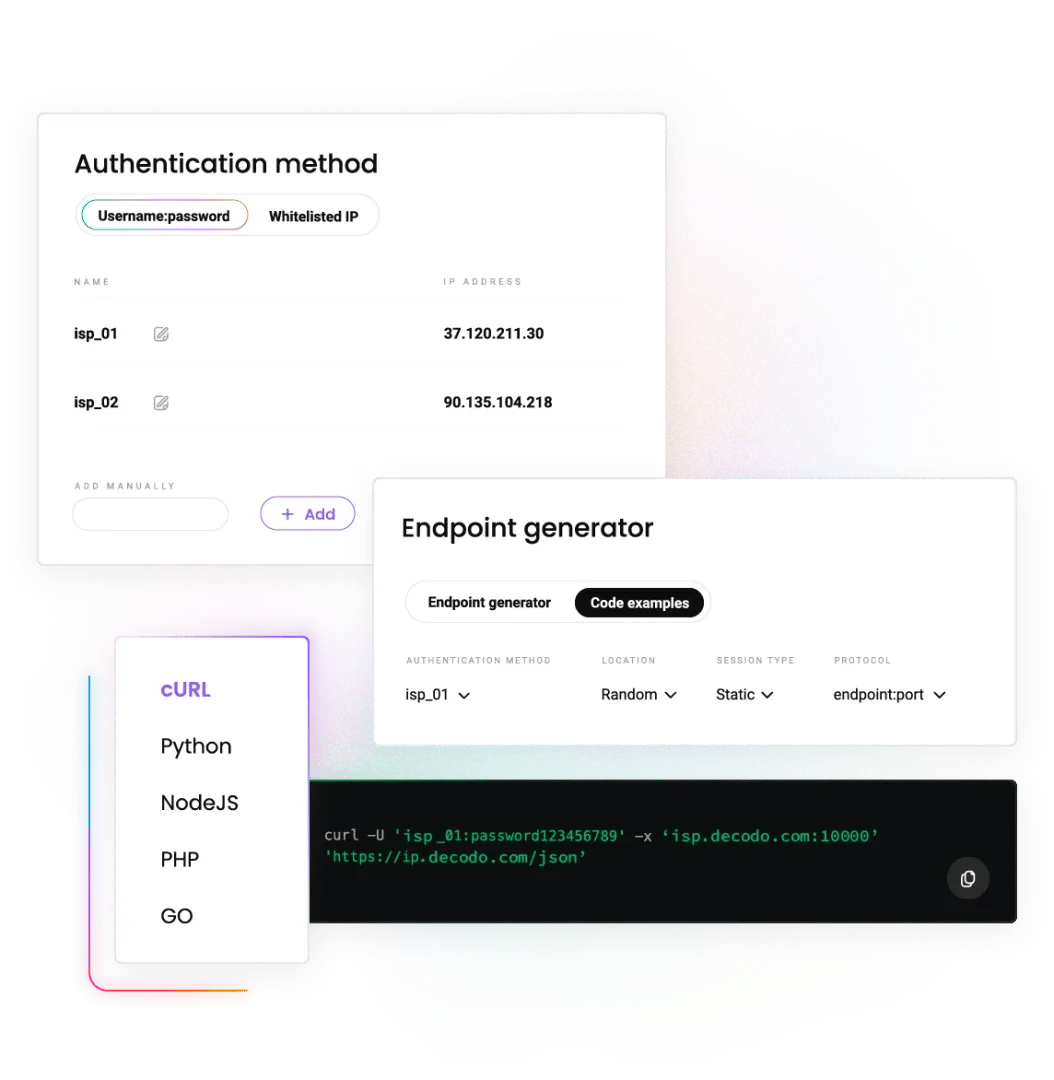
Setting up an ISP proxy with Decodo will only take 3 simple steps.
- Choose a plan. Pick a plan from 3 pricing options: pay per IP, pay per GB, or pay for a dedicated IP. Then choose the amount and a location.
- Authenticate. Use your username and password with endpoint isp.decodo.com:10000.
- Send requests. Route Python, Node.js, or cURL traffic through the proxy and receive parse-ready responses.
Which ISP proxy type is most suitable for your business?
From AI-driven scraping to multi-accounting, picking the right ISP tier maximizes success rates and stability. Compare by features, traffic model, and target complexity.
Dedicated
Pay per GB
Pay per IP
Type
Dedicated
Shared
Shared
Payment
Number of dedicated IPs
Traffic (bandwidth)
Number of IPs
Use cases
- Accessing "mission-critical" applications
- Managing account logins, KYC-sensitive flows, and checkout
- Scraping advanced websites with strict heuristics
- Maintaining long-lived sessions, evading bot protection
- Running agents that require a fixed, trusted identity
- Crawling large-scale websites and collecting data for AI model training
- Handling high-throughput, parallel requests
- Monitoring SERPs, pricing, and inventory
- Running programmatic QA and CI data tests
- Maintaining a consistent identity with moderate throughput
- Managing multiple accounts at scale
- Tracking SEO and rankings with session reuse
- Verifying ads across regions
Locations
- North and South Americas:
US, CA, BR, CO - Europe:
UK, DE, FR, NL, IT, BE, PL, SE, ES, RO, IE, CZ - APAC:
AU, HK, JP, KR, SG
- North and South Americas:
US, CA, BR, CO - Europe:
UK, DE, FR, NL, IT, BE, PL, SE, ES, RO, IE - APAC:
AU, HK, JP, SG
- North and South Americas:
US, CA, BR, CO - Europe:
UK, DE, FR, NL, BE, PL, IT, SE, ES, RO, IE - APAC:
AU, JP, HK, SG
Protocols
SOCKS5 & HTTP(S)
SOCKS5 & HTTP(S)
SOCKS5 & HTTP(S)
Why choose Decodo ISP proxies?

Premium ASNs
IPs from providers, including AT&T, Verizon, Orange, and Tele2, for targets with strict access controls.

99.99% uptime
Datacenter-grade infrastructure for uninterrupted data collection workflows.

<0.2s response time
Fast enough for high-volume scraping and real-time data extraction.

Static IP identity
A consistent IP for logins and session-based tasks.

Shared and dedicated options
Flexible pool access or an exclusive single-user IP per project.

Ethically-sourced IPs
A transparent network built on responsible IP sourcing.

Global coverage
US, UK, Japan, Germany, France, and many other locations.

Flexible pricing models
Choose a plan from 3 pricing options: pay per IP, pay per GB, or pay for a dedicated IP.

3-day free trial
100MB included to test performance before committing.
What can you use ISP proxies for?
How do I use ISP proxies for web scraping at scale?

ISP proxies carry ISP-assigned subnet ranges that access-controlled websites treat as genuine residential connections. This results in significantly lower block rates compared to datacenter proxies on protected targets, including eCommerce platforms, job boards, and review sites.
How do I manage multiple accounts with ISP proxies?
Dedicated ISP proxies assign a single static IP to your account, making it the right tool for managing social media profiles, marketplace accounts, or ad accounts that require consistent session identity. Because your IP stays the same, you're less likely to trigger security checks or login verification requests that often happen when an IP changes frequently.
How do ISP proxies support SEO monitoring and SERP tracking?
ISP proxies deliver location-specific search engine results from genuine residential IP ranges, giving SEO tools accurate SERP data without datacenter detection. Use static IPs for consistent geo-targeted rank tracking or combine with the SERP Scraping API for structured search result extraction across global locations.
How do I use ISP proxies for ad verification and brand protection?
View ad placements, creative delivery, and landing page routing as a real user in any of Decodo's global ISP proxy locations. Static IPs allow sustained verification sessions without re-authentication, making ISP proxies better suited than rotating residential proxies for campaigns requiring extended monitoring windows.
How do I collect AI training data and market research data with ISP proxies?
ISP proxies keep the same trusted IP throughout long data collection sessions, helping reduce interruptions and access issues. This makes them a great choice when gathering large amounts of information from websites over an extended period. Feed structured data directly into AI pipelines via Decodo’s Web Scraping API integration, using ISP proxies as the IP layer for access-controlled sources.
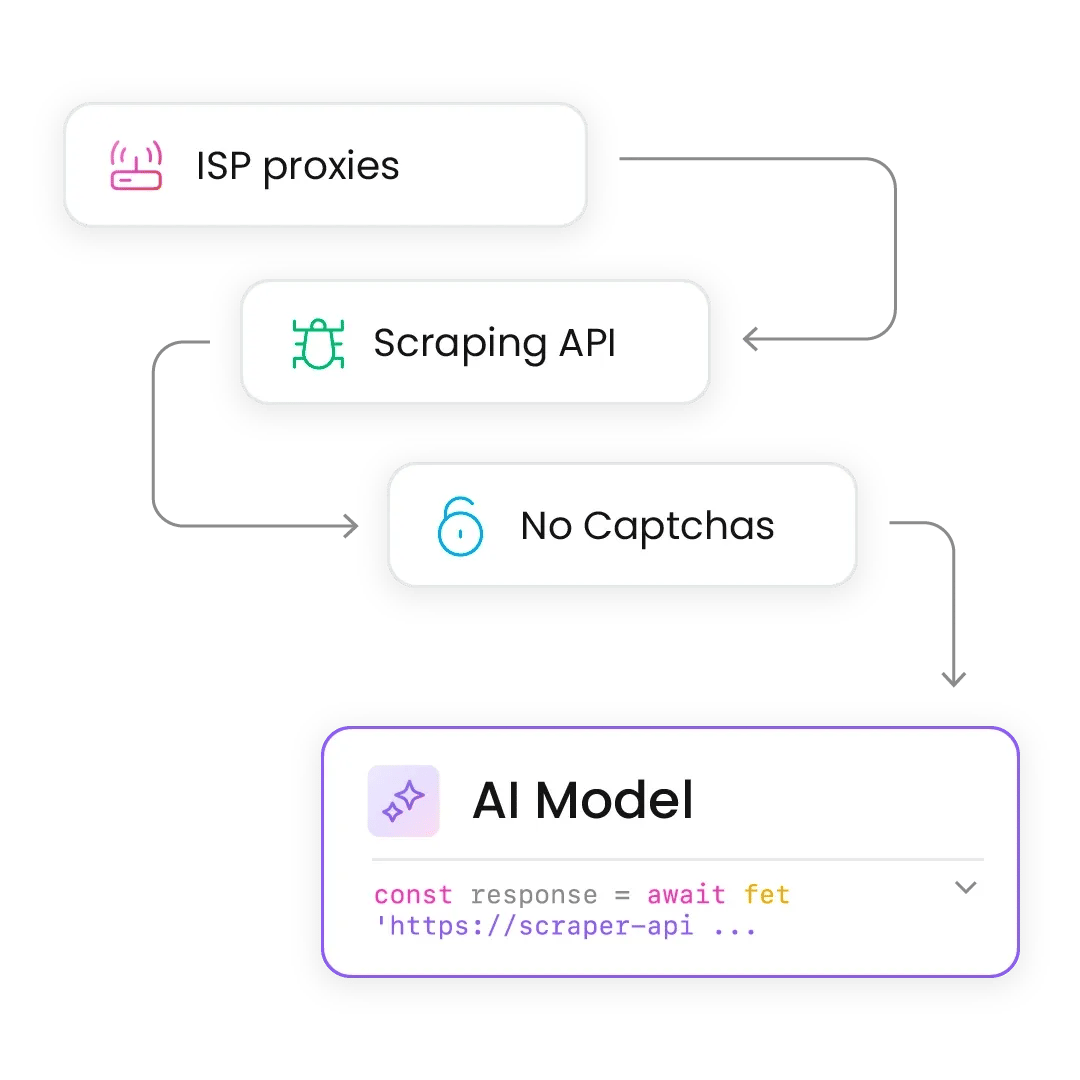
How do ISP proxies fit into AI data pipelines?
Pair ISP proxies with the Web Scraping API to automate access-controlled targets without CAPTCHA interruptions or IP blocks. Use AI Parser for JSON-clean outputs, Markdown for docs and notebooks, and Decodo's n8n node, OpenClaw Skill, or MCP Server to orchestrate agent workflows in minutes.
- Persistent identity for agent loops and RAG validation
- Geo-diverse inputs for fair and unbiased data
- Lower false-positive block rates compared to datacenter IPs
- Drop-in compatibility with Requests, Playwright, and Puppeteer
Most popular ISP proxy locations
Decodo ISP proxies are available across global locations. Each IP is assigned by a local internet service provider for maximum authenticity in the target region.


How do you integrate ISP proxies with Python, Node.js, or cURL?
Use Python with minimal configuration or drop us into n8n for no-code flows. Prefer agents? Wire up our MCP Server so your AI can browse, scrape, and fetch data on demand.
Flexible ISP proxies pricing for every workflow
Start fast on shared pools or lock down persistent identities with dedicated IPs. Switch plans as you scale – Pay as You Go, monthly, or contact our sales team for an enterprise solution.
With each plan, you access:

Premium ASNs
Static IPs with ISP origin
100% dedicated IPs
High bandwidth & concurrency support
No CAPTCHAs or IP bans
Live usage statistics
Global locations
HTTP(S) & SOCKS5 support
24/7 tech support
14-day money-back
SSL Secure Payment
Your information is protected by 256-bit SSL

Simple ISP proxies integration
Follow our step-by-step guides for headless browsers, multilogin tools, and proxy managers. Ready-to-use examples, environment templates, and health checks are included.



Awarded web data collection solutions provider
Users love our proxies with ethically-sourced IPs around the globe for their exceptional performance, advanced targeting options, and ability to overcome CAPTCHAs, geo-restrictions, and IP bans. Recognized for best usability and fastest time-to-value in proxy solutions.
Discover why users love Decodo
Don't just take our word – check what our 135K+ users & industry experts say about us.

Attentive service
The professional expertise of the Decodo solution has significantly boosted our business growth while enhancing overall efficiency and effectiveness.
N
Novabeyond
Easy to get things done
Decodo provides great service with a simple setup and friendly support team.
R
RoiDynamic
A key to our work
Decodo enables us to develop and test applications in varied environments while supporting precise data collection for research and audience profiling.
C
Cybereg






Featured in:





Decodo blog
Build knowledge on ISP proxies, or pick up some ideas for your next web data project – our blog is just the perfect place.
Most recent

Puppeteer vs. Playwright for Web Scraping in 2026
Puppeteer and Playwright are Node-based browser automation libraries that drive a real Chromium, Firefox, or WebKit browser through code. Choosing between them is a real architectural decision for any production scraping project. The two libraries share a common origin, with Playwright being built at Microsoft by engineers who previously worked on Puppeteer at Google. Yet they differ in browser coverage, language bindings, and scraping ergonomics. In this guide, we’ll cover their performance, stealth, and proxy integration.

Justinas Tamasevicius
Last updated: Sep 30, 2026
15 min read
Most popular

Random IP Address: Examples, Use Cases, Risks, and Alternatives
From web scraping to getting around geo-blocks, IPs play a huge role in how the internet works behind the scenes. But there’s a flip side – using a free or random IP from a sketchy provider can cause way more trouble than you’d expect. It can break compliance rules, mess with your data, or even lead to bigger operational and reputational problems. Dive into this article to learn more about the risks of random IP addresses.
Kotryna Ragaišytė
Last updated: Aug 19, 2025
8 min read
What Are Rotating Proxies? Types, Benefits & Use Cases
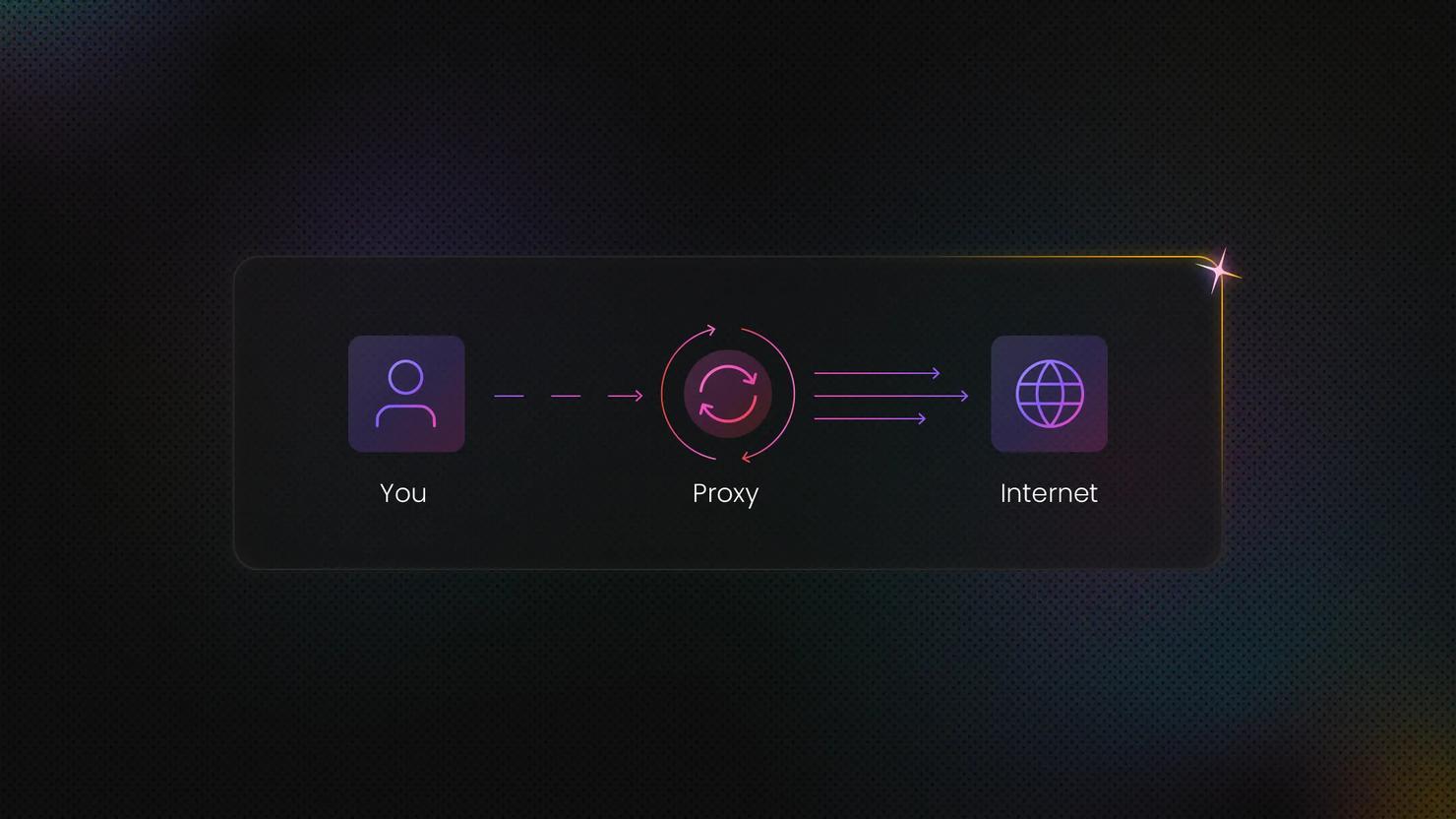
A rotating proxy is a proxy server that automatically assigns a new IP address at regular intervals or after each connection. In this guide, we'll delve into how rotating proxies work, the different types available, and the most common use cases where they offer a clear advantage.
Dominykas Niaura
Last updated: Apr 30, 2025
7 min read
What Is a Proxy Connection on a Browser? Everything You Need to Know
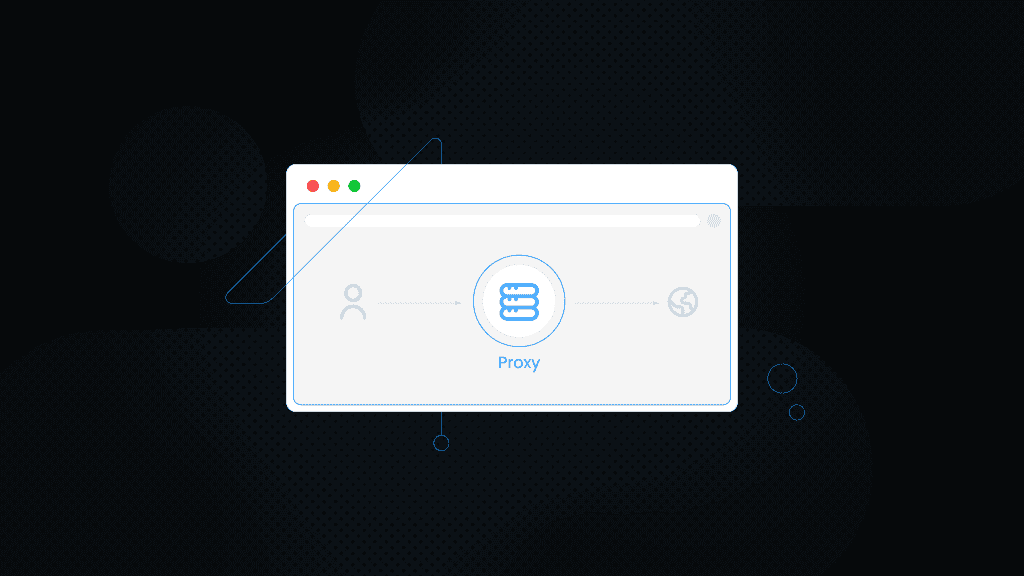
Did you know that every time you browse the internet, your IP address is exposed? Your IP reveals your location, device information, and even your online activities. But what if there was a way to protect your privacy and keep your online activities anonymous?
Enter the world of proxies via browsers. Determining the meaning of proxies on a browser can help you understand how these tools shield your identity and secure your online presence.
- The basics of a proxy connection on a browser.
- Different types of proxies on browsers and their advantages and disadvantages.
- How to set up a proxy on a browser.
Martin Ganchev
Last updated: Oct 09, 2024
3 min read
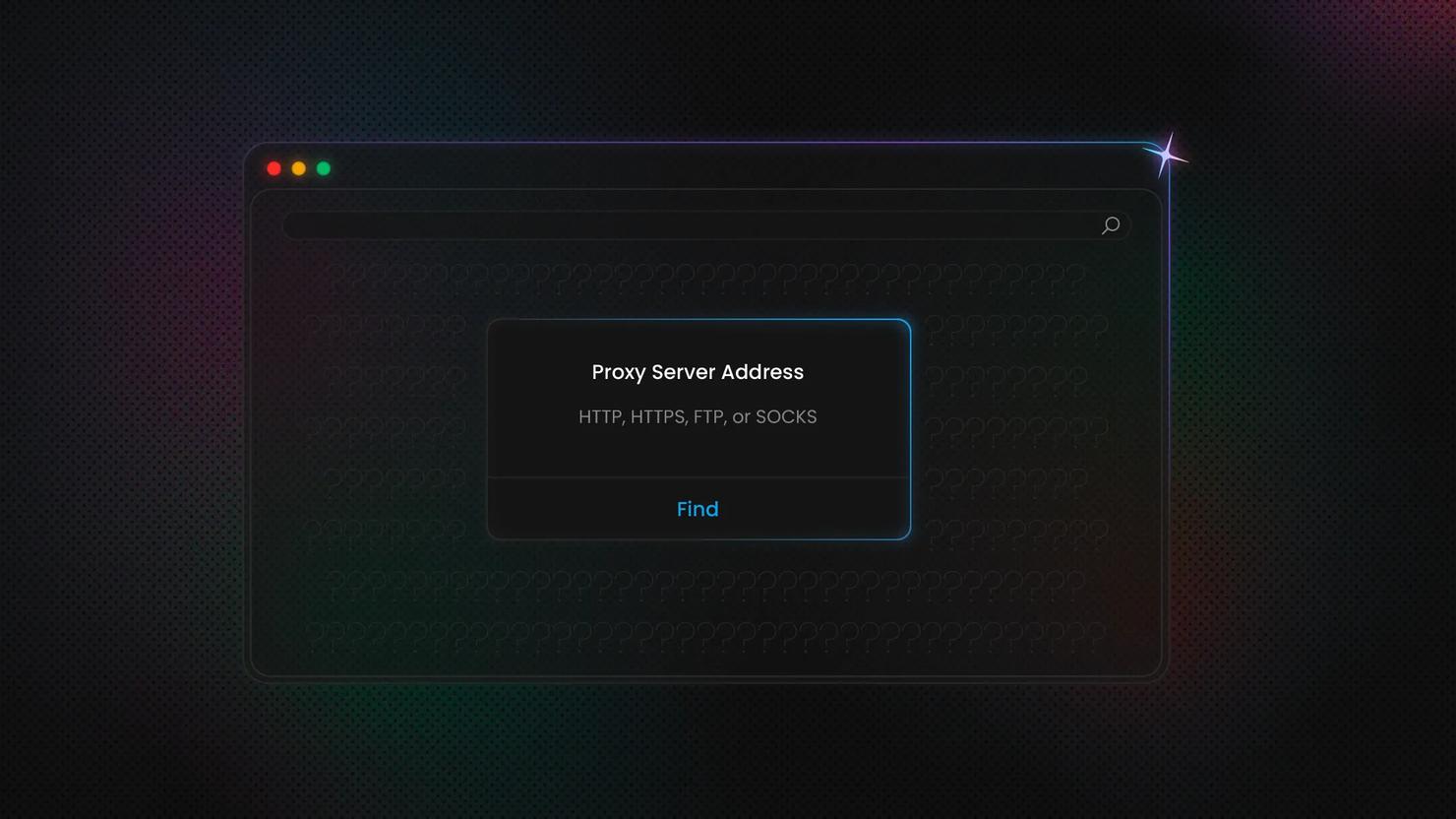
How to Find Proxy Server Address On Any Device
A proxy server sits between your device and the internet and routes your traffic through an intermediary IP. It's core infrastructure for privacy, access control, and large-scale data operations. If you need to locate your proxy address and port, to set up a scraper, debug a failed connection, or audit your network, you'll want to know exactly where each platform stores these details. This guide covers every major OS, browser, and device, step by step.
Kipras Kalzanauskas
Last updated: Mar 17, 2026
6 min read
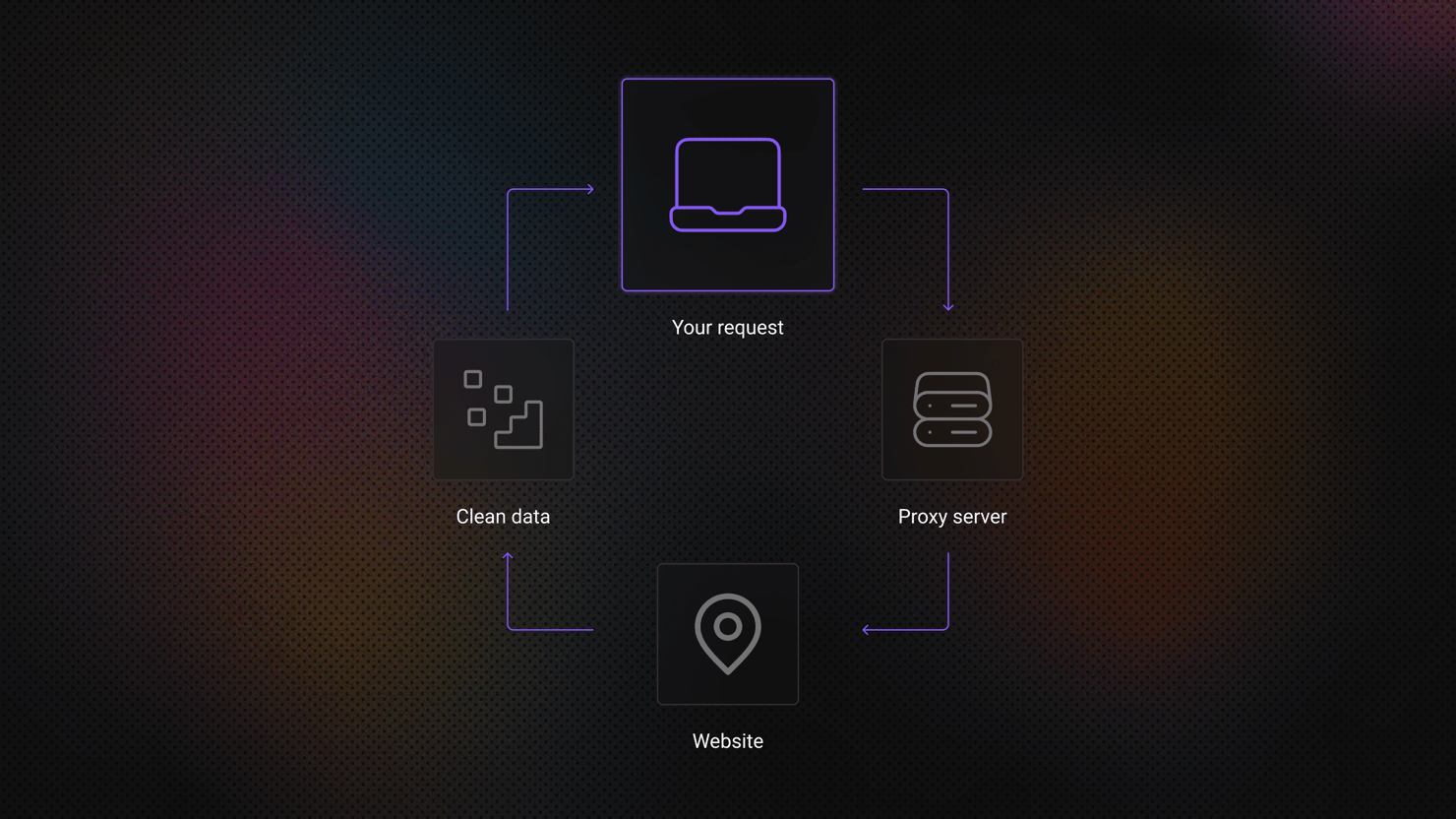
What Is an SSL/HTTPS Proxy: How It Works and When to Use It
An SSL proxy, often called an HTTPS proxy, is an intermediary server that forwards web requests between a user and a website through an encrypted HTTPS connection. Instead of connecting directly to the destination server, the client routes traffic through the proxy, which helps secure data transmission and manage outgoing requests.
Lukas Mikelionis
Last updated: Mar 18, 2026
4 min read
Frequently asked questions
How much do ISP proxies cost?
Decodo offers several pricing options, so you can choose the one that best matches your needs. You can pay for dedicated IPs, shared IPs, or based on the amount of data you use (per GB).
Decodo’s ISP proxies start at $0.27/IP, with no minimum purchase required. All paid plans also include a 14-day money-back (terms apply).
Is there a free trial for ISP proxies?
Yes. Decodo offers a risk-free 3-day free trial for new users to test ISP proxy performance before committing.
Are cheap ISP proxies reliable?
Affordable ISP proxies on Decodo don’t trade away quality. Every IP runs on premium ASNs from providers including AT&T, Verizon, Orange, and Tele2, with 99.99% uptime. Even lower per-IP pricing still delivers consistent, high-trust connections on demanding targets.
That's why Proxyway recognizes Decodo as the best option for balancing features and affordability.
What is the difference between shared and dedicated ISP proxies?
Shared ISP proxies use a pool of fixed IPs that are shared by multiple users. They're a good option when you need to send many requests at once or collect data from websites at scale.
Dedicated ISP proxies give you a fixed IP that only you can use. This makes them a better choice for tasks that require a consistent connection, such as managing accounts, staying logged in, or accessing websites that track user sessions.
In general, choose a dedicated ISP proxy if you need to maintain the same identity over time. For example, when using dashboards, online accounts, or checkout processes. Choose shared ISP proxies if your priority is handling large volumes of traffic efficiently across multiple connections.
When should I choose a dedicated ISP proxy over a shared one for AI workflows?
If the workflow requires stable sessions, consistent logins, or reproducible fingerprints, such as agent loops, evaluator pipelines, or account-area access, a dedicated ISP proxy is the correct choice.
If the priority is parallel throughput or geographic flexibility across multiple simultaneous requests, a shared ISP option provides that flexibility without the per-IP cost of dedicated access.
Are ISP proxies better than residential or datacenter proxies?
It depends on the use case. ISP proxies outperform datacenter proxies on trust level and block rate because they carry ISP-assigned subnet ranges that target reads as genuine home connections.
Residential proxies provide superior anonymity and IP pool diversity, but rotate IPs by default, which makes them less suitable for tasks that need a fixed identity.
ISP proxies are the best fit when you need both high speed and a static IP that persists longer.
ISP Proxies Built for Speed, Stability and Scale
Get premium ASN IPs with <0.2s response and 99.99% uptime, starting at $0.27/IP.
14-day money-back option