How AI Will Change Black Friday for Businesses?
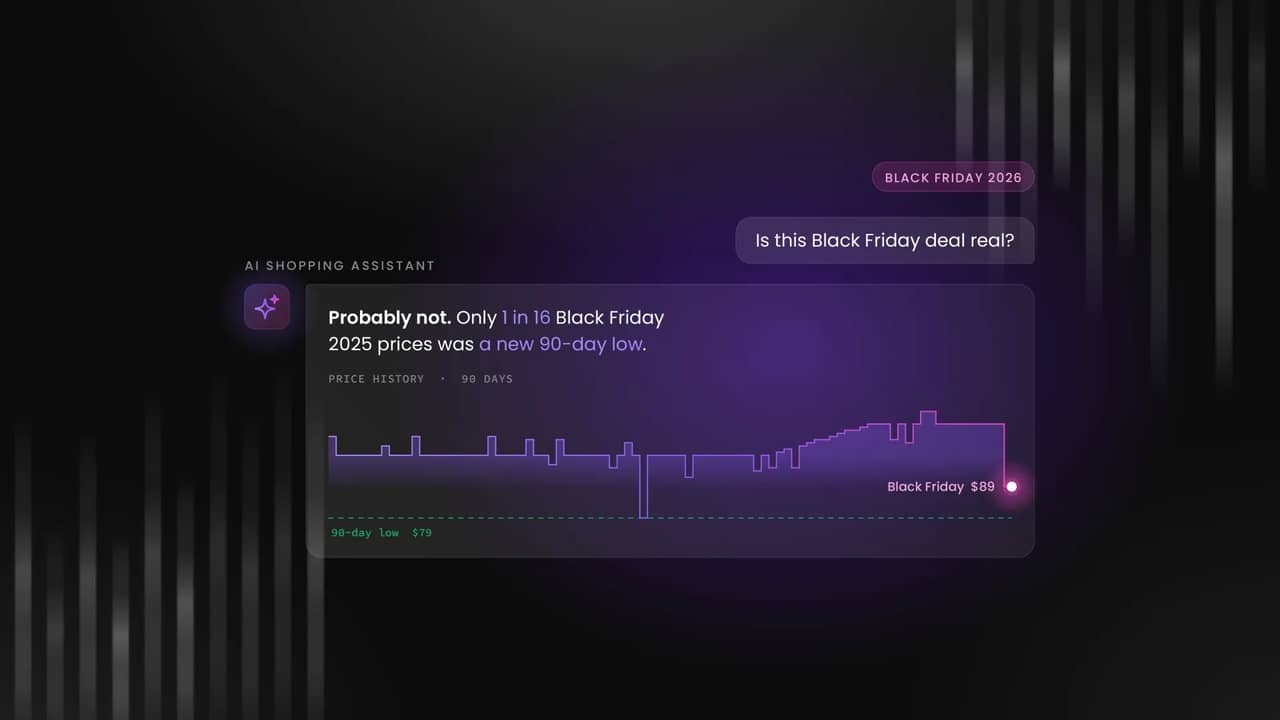
This Black Friday, many shoppers will ask an AI assistant one question: is this deal real? Last year, the honest answer was often no. Decodo's data shows only 1 in 16 Black Friday 2025 prices were a new 90-day low. AI is changing how people shop online, and businesses will feel it this Black Friday. Here's what that means for retailers.
Last updated: Nov 11, 2026
6 min read
TL;DR
- AI traffic to US retail sites is set to rise 130% this holiday season
- Only 1 in 16 Black Friday 2025 prices was a new 90-day low
- 7 in 10 prices lasted less than a day, so daily price checks miss most moves
- 1 in 10 products drove 2 in 3 of all price changes in 2026
AI shoppers arrive this Black Friday
AI tools will sit between shoppers and retailers at this scale for the first time.
Adobe forecasts a 130% rise in AI traffic to US retail sites this holiday season. On Black Friday alone, AI traffic is set to nearly double, up 95%. In Adobe's survey of 5,000 consumers, 77% of AI users felt more confident in their purchase.
Salesforce reported that AI and agents influenced 1 in 5 global Cyber Week orders in 2025. That came to $67B in sales.
These tools are built to compare. A shopper can ask an AI assistant if a Black Friday price is a real deal. The answer takes seconds.
What an AI agent would have said last Black Friday
Decodo ran last year's Black Friday prices through a price-history check.
Decodo collected prices six times a day with its Web Data API. It compared each product's lowest Black Friday weekend price with the previous 90 days. That's the same check an AI shopping agent can run on any product page.
The results were blunt:
- Only 1 in 16 Black Friday prices was a new 90-day low
- 4 in 10 products had sold for less at some point in the previous 90 days
- 2 in 3 Black Friday prices were no lower than the product's typical price
The verdict changes by category. An AI agent would have flagged 3 in 4 Home and DIY prices as no deal. The same was true for grocery and beauty. Electronics did best, with 4 in 10 prices flagged. Last year, nearly 2 in 3 electronics got a real Black Friday discount.
Grocery stood out for another reason. Not one tracked grocery product hit a new 90-day low on Black Friday.
A patient AI agent saves more
AI agents can watch prices for weeks and buy at the best moment.
Decodo tested that approach on last year's data. It compared each product's Black Friday price with its lowest price from October through December. On 4 in 10 products, the lowest price beat Black Friday by 5% or more. On average, the extra saving was 11%.
Fashion and grocery gave patient buyers the most room. Fashion prices dropped another 14% on average outside Black Friday weekend. Grocery prices dropped another 13%.
Pricing algorithms will meet shopping algorithms
Retailers use their own algorithms to set prices, and they run at very different speeds.
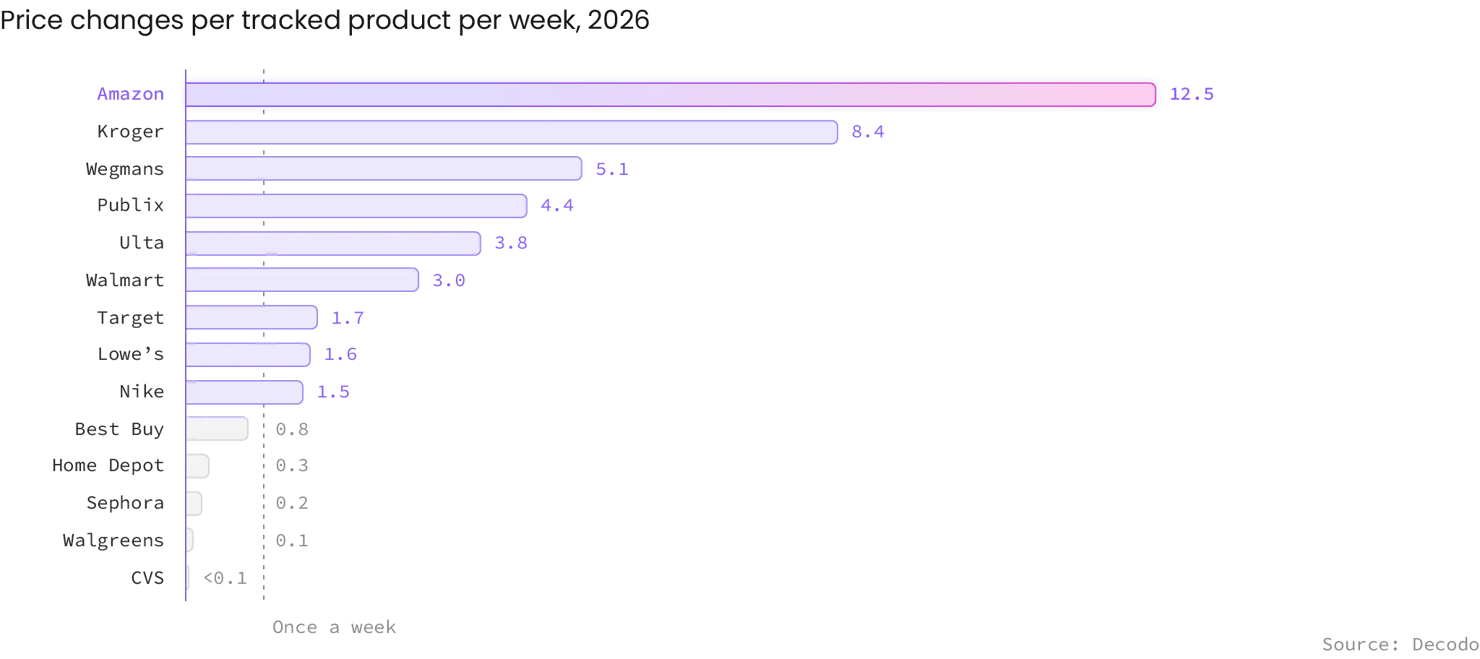
Amazon changed a tracked product's price about 12 times a week in 2026. Kroger came second, at about 8 times a week. CVS changed a tracked price fewer than twice a year.
More than 1 in 3 retailers change prices at least once a week. Nearly 1 in 3 change prices less than once a month. A fast retailer can react to an AI agent's comparison within hours. A slow one may hold the same price for weeks.
The price an AI agent quotes may not last
Fast repricing means prices can move between a recommendation and a purchase.
On Black Friday 2025, 1 in 10 products showed two different prices in one day. When prices moved, they averaged 28% apart. Over the full Black Friday weekend, 3 in 10 products changed price at least once.
Many changes didn't stick. 3 in 10 price changes were reversed by the next check, about four hours later. At Kroger, it was 4 in 10.
"AI shopping tools turn every product page into a price comparison. Shoppers will ask an assistant if a Black Friday deal is real. The assistant will check the price history and answer with data. Retailers that track their own prices and their competitors' prices will see those answers first. The ones that don't will learn about them from their sales numbers." – Gabrielė Vitkė, Product Marketing Lead at Decodo
AI can make competitor monitoring smarter
The same data that powers AI shoppers can power smarter competitor monitoring.
Most retailers still check competitor prices on a fixed schedule. Decodo's data shows why that schedule misses a lot. AI can decide what to check, when to check it, and what to expect.
Most prices disappear within a day
Prices now change faster than a daily price check can see.
Decodo recorded each product's price about every four hours in 2026. 7 in 10 of those prices changed again within 24 hours. A competitor report pulled once a day would have missed most of them.
Short-lived prices also carry signals. 3 in 10 price changes were reversed within about four hours. An AI monitor can flag those tests as they happen.
1 in 10 products drives most price moves
A small share of products drives most price action.
1 in 10 tracked products caused 2 in 3 of all price changes in 2026. 1 in 5 products caused more than 8 in 10. At the other end, 15% of products never changed price all year.
An AI monitor can learn which products move and check those every few hours. Stable products can be checked weekly. That frees up budget for the products where competitors compete most.
Retailers follow weekly rhythms
Many retailers change prices on the same day each week.
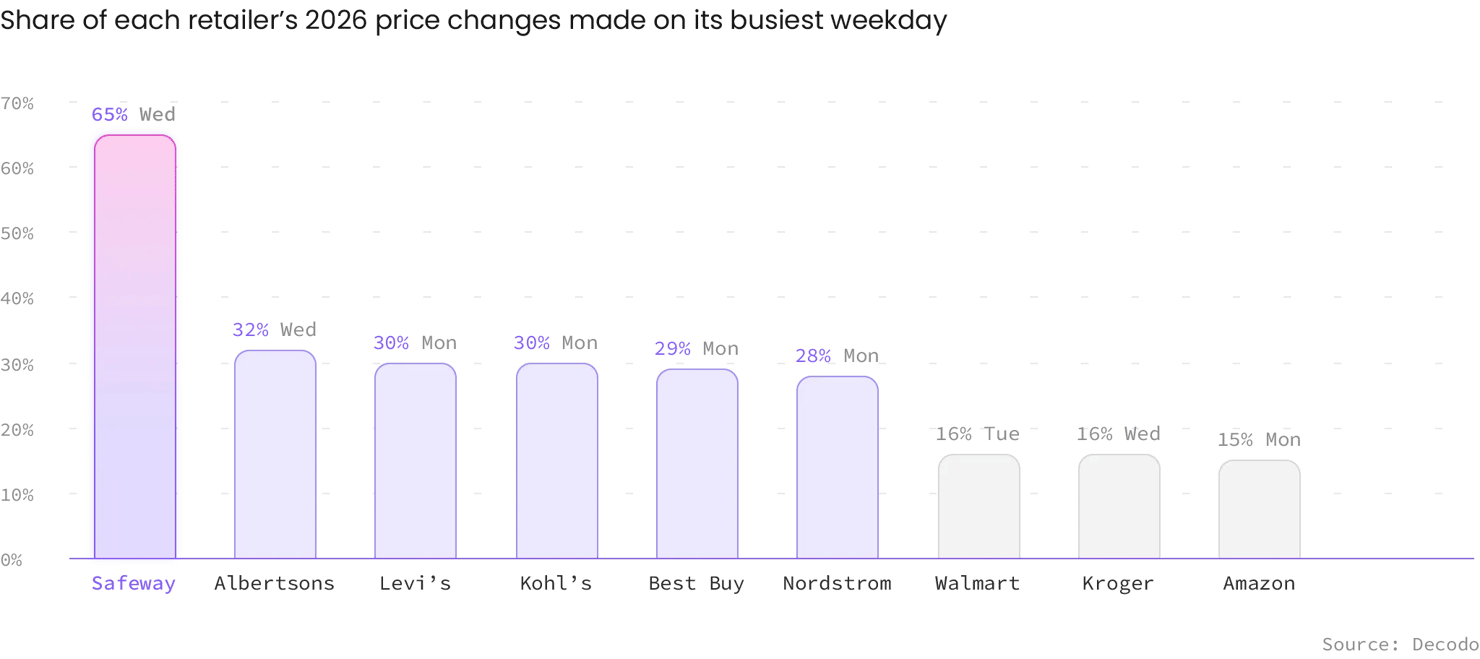
Safeway made 2 of its 3 price changes on Wednesdays. Albertsons, its sister chain, made 1 in 3 of its price changes on Wednesdays. Best Buy, Kohl's, Levi's, and Nordstrom made about 3 in 10 of their changes on Mondays.
Amazon showed no weekly rhythm. Its price changes were spread almost evenly across the week. An AI monitor can learn each competitor's rhythm and time its checks to match.
Retailers repeat last year's prices
Competitor price history is one of the best forecasts for Black Friday 2026.
1 in 3 products carried the exact same everyday price as a year ago. Half of last year's Black Friday deal prices reappeared at some point in 2026. Best Buy priced the Hisense soundbar at $999.99 and $1,299.99 in both years.
An AI model trained on last year's prices can forecast a competitor's likely Black Friday price. Retailers can plan their own offer before the competitor goes live.
How businesses can prepare for AI shoppers
Black Friday falls on November 27, about three weeks away. These steps help retailers meet AI shoppers with prices that hold up.
- Price key Black Friday products at or below their 90-day low
- Keep reference prices steady in the weeks before the sale
- Use AI to focus monitoring on the products that change price most often
- Time competitor checks around each retailer's weekly pricing rhythm
- Forecast competitor Black Friday prices from last year's price history
- Hold Black Friday prices steady from recommendation through checkout
- Make sure AI tools read your live price, not an outdated snapshot
Each step starts with price data. Retailers collect competitor product pages at scale with Decodo's Web Data API. The same kind of data powers the AI tools shoppers will use.
Make sure AI agents see your current price
AI shopping tools often work from saved copies of product pages.
An AI assistant may quote a price from a page it read hours or days ago. In Decodo's data, 7 in 10 prices lasted less than a day. A saved snapshot older than 24 hours is likely to show the wrong price.
Outdated prices hurt in two ways. A shopper may see an old, higher price and skip a real Black Friday deal. Or the assistant may promise a lower price that's already gone. The shopper then leaves at checkout.
Retailers can lower that risk with a few steps:
- Show the current price in the page's main HTML, so it loads without extra scripts
- Add structured product data with price, currency, and stock status
- Update product feeds as soon as a price or stock level changes
- Keep sale start and end dates visible on the page
- Check that the AI crawlers you want to reach can access product pages
A page with a clear, current price is easy for an AI agent to compare. Adobe expects AI traffic on Cyber Monday to rise 88%. Those visits will land on product pages built for both people and AI agents.

Collect real-time retail data
Activate a free Web Data API starter plan with up to 10K monthly requests.
Bottom line
AI shopping tools will judge Black Friday 2026 deals against their price history. Last year, that test would have been tough. Only 1 in 16 Black Friday prices was a new 90-day low. 2 in 3 were no lower than the product's typical price.
Retailer pricing algorithms will meet these shopping agents head-on. Amazon changes a tracked price about 12 times a week. CVS does it fewer than twice a year. On Black Friday itself, 1 in 10 products showed two prices in one day.
AI also changes how retailers watch each other. In 2026, 7 in 10 prices lasted less than a day. 1 in 10 products drove 2 in 3 price changes. AI monitoring can focus on those products and learn each competitor's weekly rhythm.
For businesses, the weeks before Black Friday are about passing the AI test. Set Black Friday prices that beat recent history, keep them steady, and track competitors daily. AI agents will reward the deals that hold up.