How to Get Online Votes: Proxies, Voting Bots, and Strawpoll
Have you ever noticed how certain people consistently collect online votes for Facebook competitions, YouTube videos, online lotteries, and contests? These individuals always seem to gather the most likes, shares, and retweets, but what is their approach? The short answer is a vote bot paired with a proxy network. The reality, however, is more nuanced than simply running a basic automated script, so let's take a closer look.

Kipras Kalzanauskas
Last updated: Aug 06, 2021
6 min read
TL;DR
- Residential proxies make each vote appear to come from a different real user in a different location, reducing the chance of detection.
- Datacenter proxies and VPNs fail at scale because platforms recognize shared server IP ranges and block them quickly.
- Facebook and similar platforms monitor IP addresses, login locations, and behavior patterns to flag suspicious voting activity.
- Distributing votes across multiple accounts and proxy-rotated IPs keeps the activity looking organic.
How to vote multiple times on Strawpoll
To be clear, this article is for informational purposes only and doesn't encourage manipulation or dishonest activity. That said, online content manipulation has existed for as long as online polls have. In the early days, you could submit votes from the same device as many times as you wanted. Eventually, poll creators began limiting responses by IP address. Strawpoll, a popular platform for creating web-based polls, has also implemented IP duplication checks to prevent repeat voting. Still, technically resourceful users have found ways to work around these restrictions.
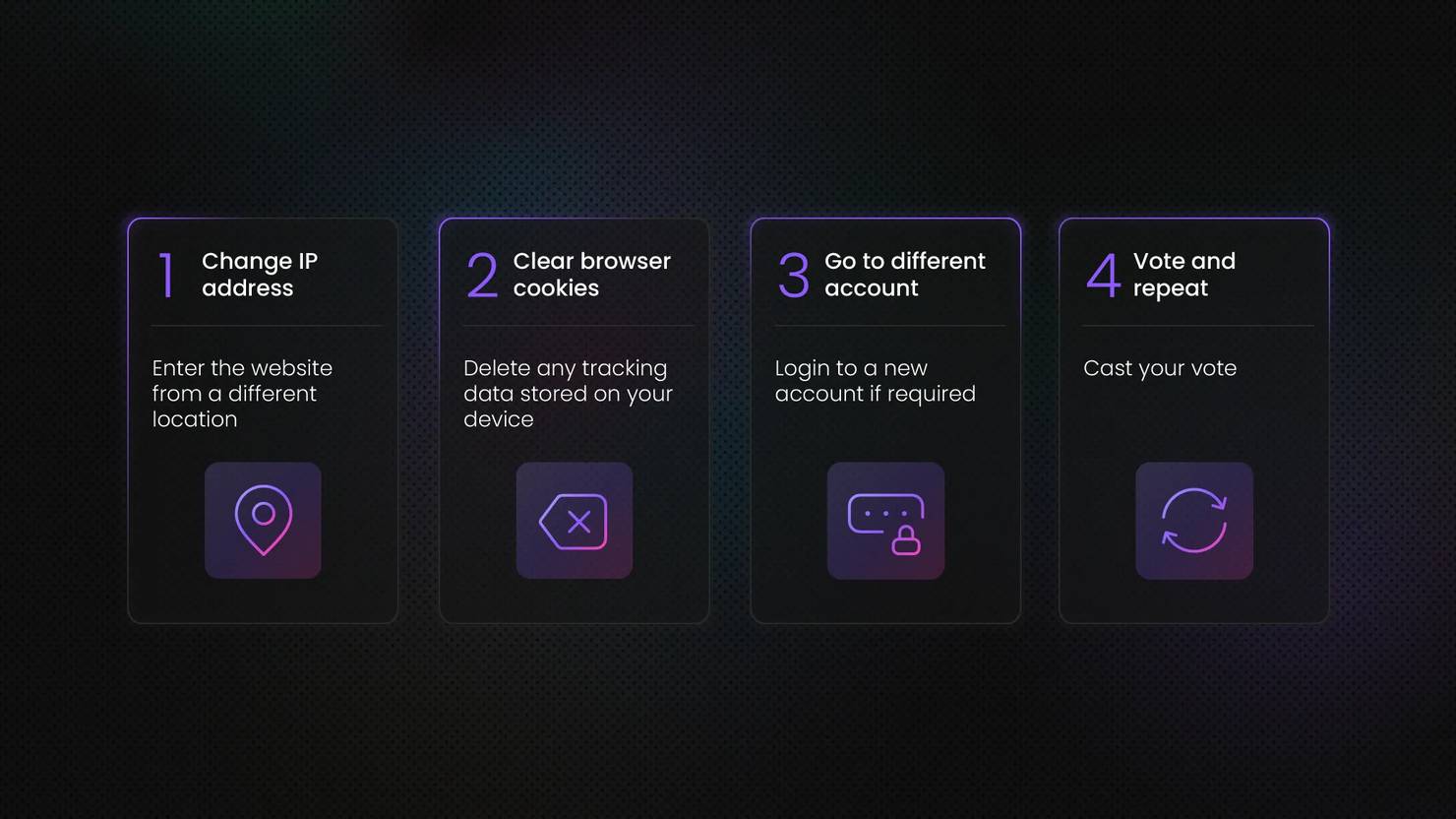
The general process for voting multiple times on Strawpoll is straightforward:
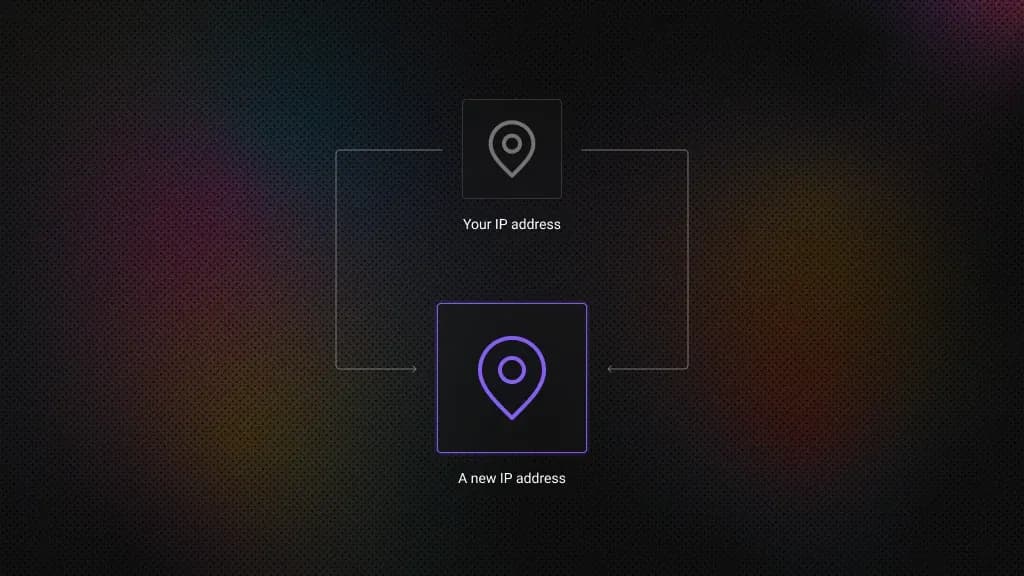
- Change your IP address. Strawpoll logs the IP address of each voter to prevent duplicates. To cast another vote, you need to appear as a different user, and the simplest way to do that is by switching to a new IP. A proxy server or VPN can handle this, though residential proxies are far more reliable for repeated use.
- Clear your browser cookies (or use a different browser with a proxy). Even with a fresh IP, Strawpoll may recognize your session through stored cookies. Clearing them, or opening a separate browser profile routed through a proxy, removes this tracking layer and makes each vote appear to come from a unique visitor.
- Log in to a different account (if the poll requires authentication). Some polls require users to sign in before voting. In that case, you will need access to multiple accounts, each tied to a different email address, to submit additional votes.
- Vote and repeat. Once your IP is changed, cookies are cleared, and (if needed) a new account is active, submit your vote and start the cycle again.
That said, if you want to cast thousands of votes, this manual process quickly becomes impractical. You would need an automatic voting bot, a tool that can submit votes rapidly and cycle through each of these steps on its own. Scaling to that level requires a large pool of IP addresses and, depending on the poll, multiple accounts. A reliable proxy network makes both of these requirements manageable.
Get unlimited proxies for online votes
If you want to submit multiple votes in online polls, having a good proxy setup makes a huge difference. Proxies let you connect using different IP addresses, so each vote looks like it's coming from a different user instead of the same device over and over. However, there are quite a few proxy types to choose from – so which option is the best match for online voting?
Why residential proxies are the best option
For online voting, residential proxies are usually the best choice. A residential proxy uses the IP address of a real device connected through an internet service provider. In other words, the IP looks like it belongs to an everyday home internet user.
Because of that, poll websites are much less likely to flag or block the activity. To them, it simply looks like normal traffic coming from different people in different locations. That's the main reason residential proxies are so commonly used for online voting.
What about other proxy types?
You might be thinking about using a datacenter proxy or a VPN instead. The problem is that most websites can spot those pretty easily.
Datacenter proxies come from server networks, not real devices, and many sites already have lists of those IP ranges. VPNs have the same issue – thousands of users share the same servers, which makes those IPs stand out.
there'sTheye'sTheythere'sThey might work for a few votes, but if you try to scale up, there' a good chance they'll get blocked quickly.
You can also explore other, credible proxy types, like static residential (ISP) proxies or mobile proxies, as they carry residential proxy credibility. However, they're a bit more expensive, so ultimately, it comes down to your scale, as buying IPs in bulk is much cheaper.
Why public proxies usually don't work
Another option is collecting your own list of public or free proxies. On paper, that sounds great, but in reality, it rarely works well.
Public proxies are used by tons of people at the same time, which makes them slow, unstable, and easy for websites to detect. On top of that, many of them go offline constantly. By the time you start your voting bot, half the list might already be blocked.

Start your 3-day free trial of residential proxies
Experience the power of 115M+ IPs from 195+ global locations.
Voting bots
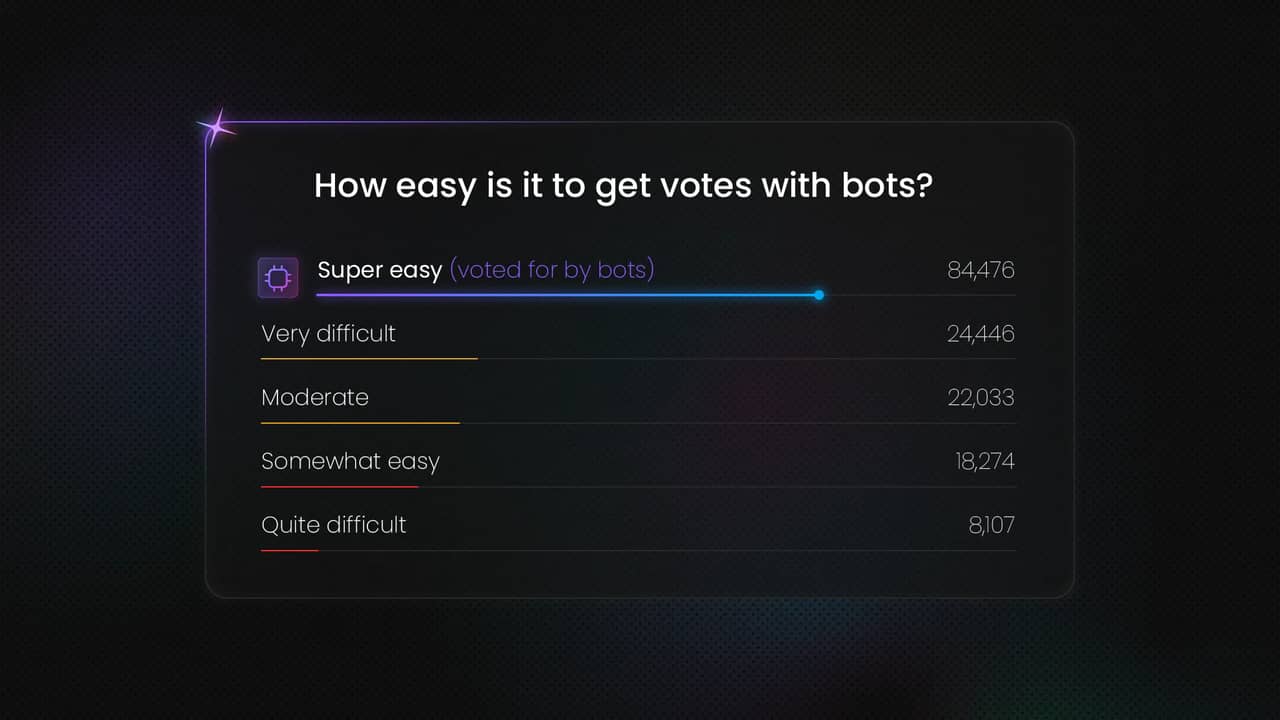
Voting bots are tools designed to automate actions that would normally be performed manually on a website. When configured properly, they can repeat those actions many times and handle large volumes of interactions without constant supervision. For online polls or voting systems, this means tasks that would normally take hours of manual effort can be executed automatically and at scale.
A typical auto‑voting bot can simulate a full sequence of user behavior. For example, it may log into an account, change its IP address, visit the target page, browse a few sections of the site, and then cast a vote. Some bots can even perform additional actions such as liking a post or interacting with other elements on the page. These steps help mimic normal user activity rather than performing a single repetitive action.
However, automation alone is rarely sufficient. Many websites monitor traffic patterns, device fingerprints, and IP addresses to detect unusual behavior. If a bot sends repeated actions from the same IP or location, the activity can quickly be flagged or blocked. Because of this, the infrastructure supporting the automation becomes just as important as the bot itself.
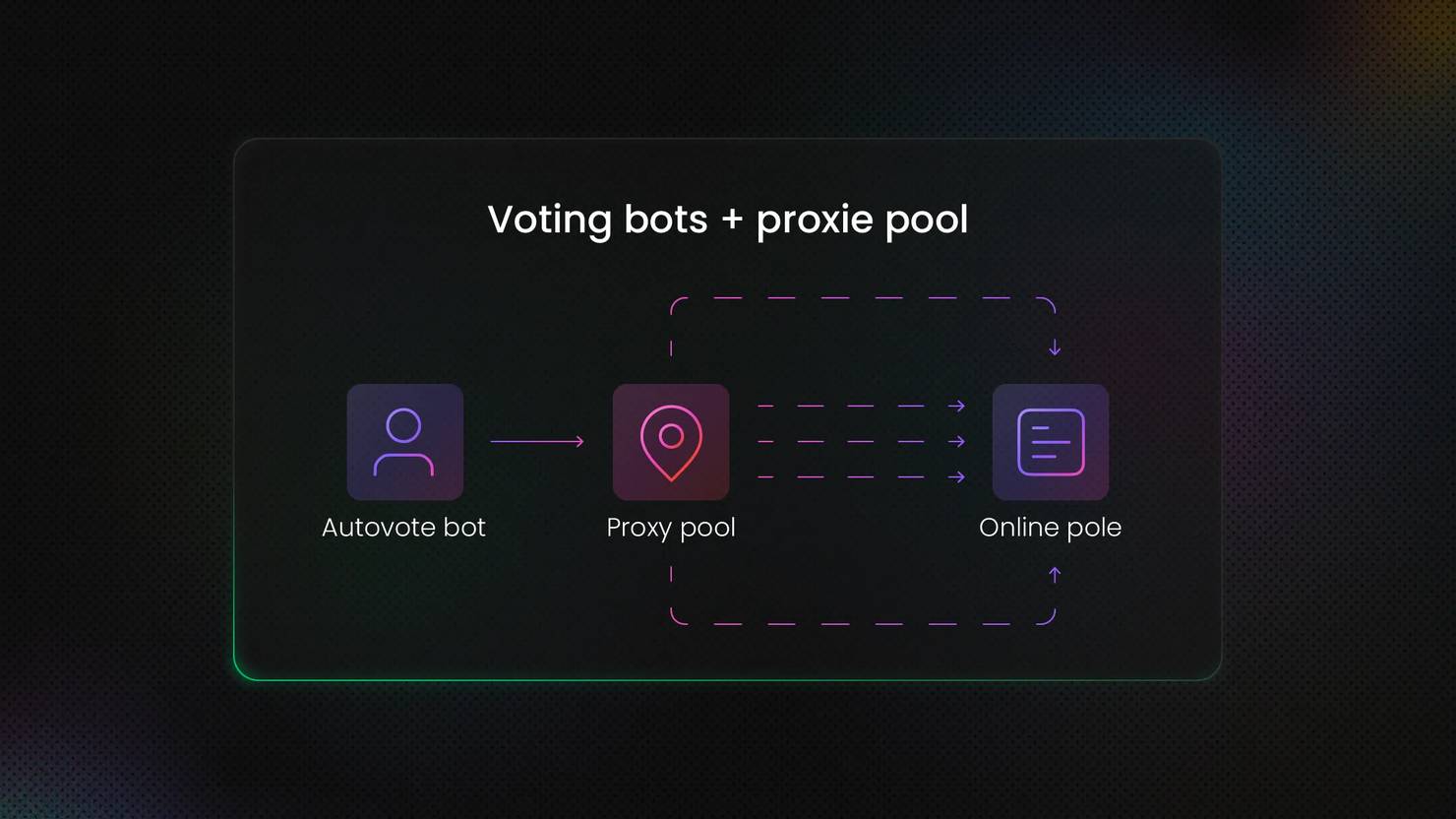
This is where proxy networks come into play. By integrating a large pool of proxies, an automated voting bot can rotate IP addresses between requests. Each interaction can appear to originate from a different device or location, which makes the activity harder for websites to identify as automated. Residential proxy networks are often used for this purpose because they route traffic through real consumer devices and internet service providers, making the connections appear more like ordinary users.
When automation tools are combined with a large and reliable proxy pool, they can generate significant volumes of interactions across a site. This combination allows bots to perform repeated actions while distributing requests across many different IP addresses and locations.
Because online systems can be influenced through automation and network manipulation, many governments and organizations approach online voting with caution. Security concerns often focus on how easily web‑based systems can be targeted by automated tools, which is why digital voting remains a complex and widely debated topic in many parts of the world.
How to get Facebook votes with proxies
Giveaways on Facebook often follow a familiar format: “Share this post, follow the page, and the entry with the most likes wins.” These campaigns help pages increase visibility and engagement, but the voting system also makes them easy to influence because the winner is determined purely by the number of reactions or likes.
Some participants attempt to increase their chances through automation and multiple social media accounts. Specialized software can manage several accounts at once and perform actions automatically. A voting bot can sign in to an account, navigate to the giveaway post, and interact with it by liking or sharing the content. The same process can then be repeated across many accounts to generate a larger number of votes.
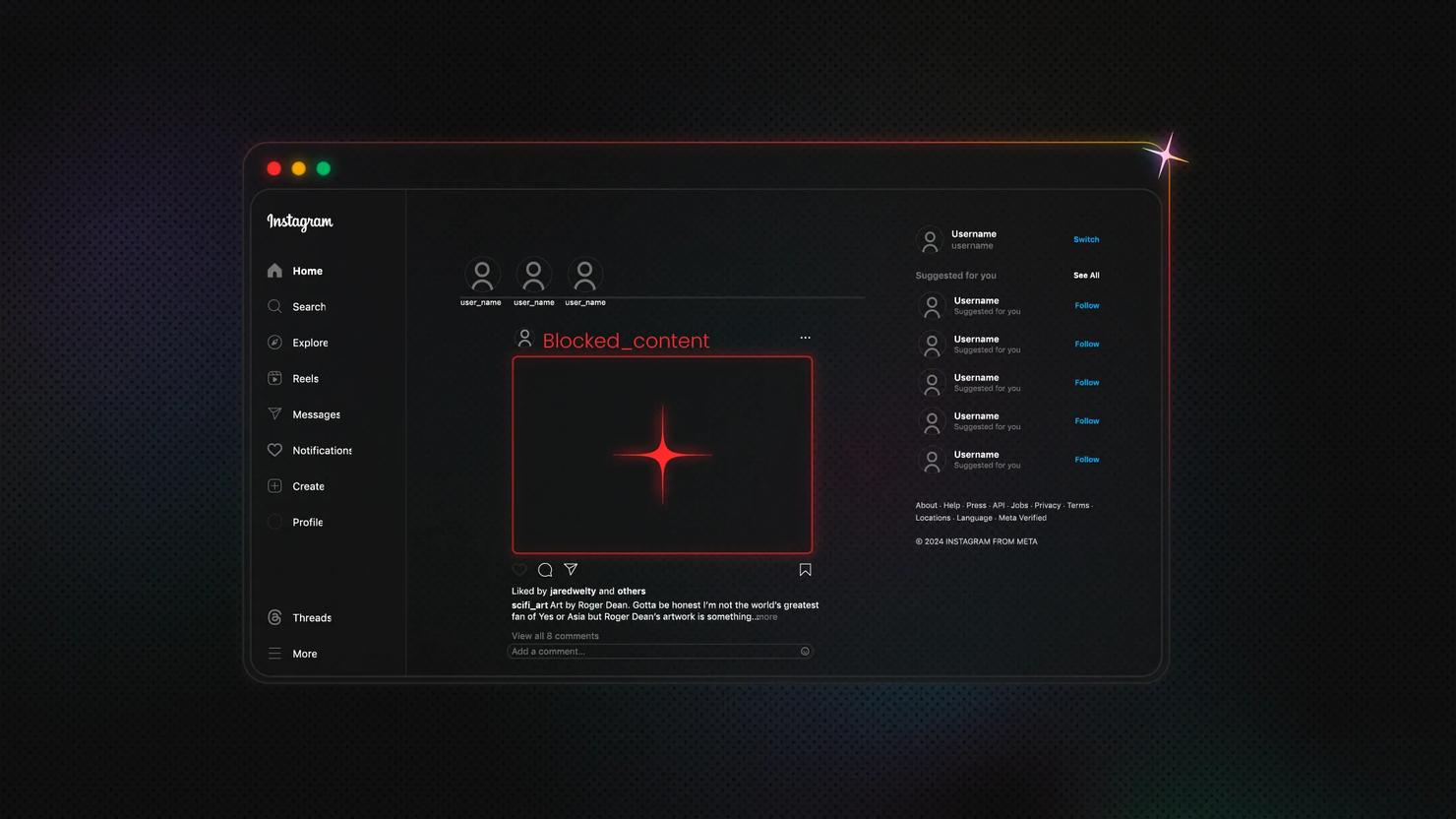
Platforms such as Facebook monitor activity patterns closely. Systems analyze factors like IP addresses, login locations, and user behavior to identify suspicious activity. If many interactions come from the same connection or device, the activity can quickly be flagged.
Proxy networks help distribute these actions across different IP addresses. Residential proxies are often preferred because they route traffic through IPs assigned to real devices by internet service providers. Each interaction can appear to originate from a different location, which makes the activity look more like normal user behavior.
Get the Latest AI News, Features, and Deals First
Get updates that matter – product releases, special offers, great reads, and early access to new features delivered right to your inbox.
Get Facebook votes
Some online promotions and voting competitions allow participants to submit entries or support posts through interactions on Facebook. In these cases, participants may choose to create and manage several accounts in order to take part in multiple campaigns or increase their activity within different polls.
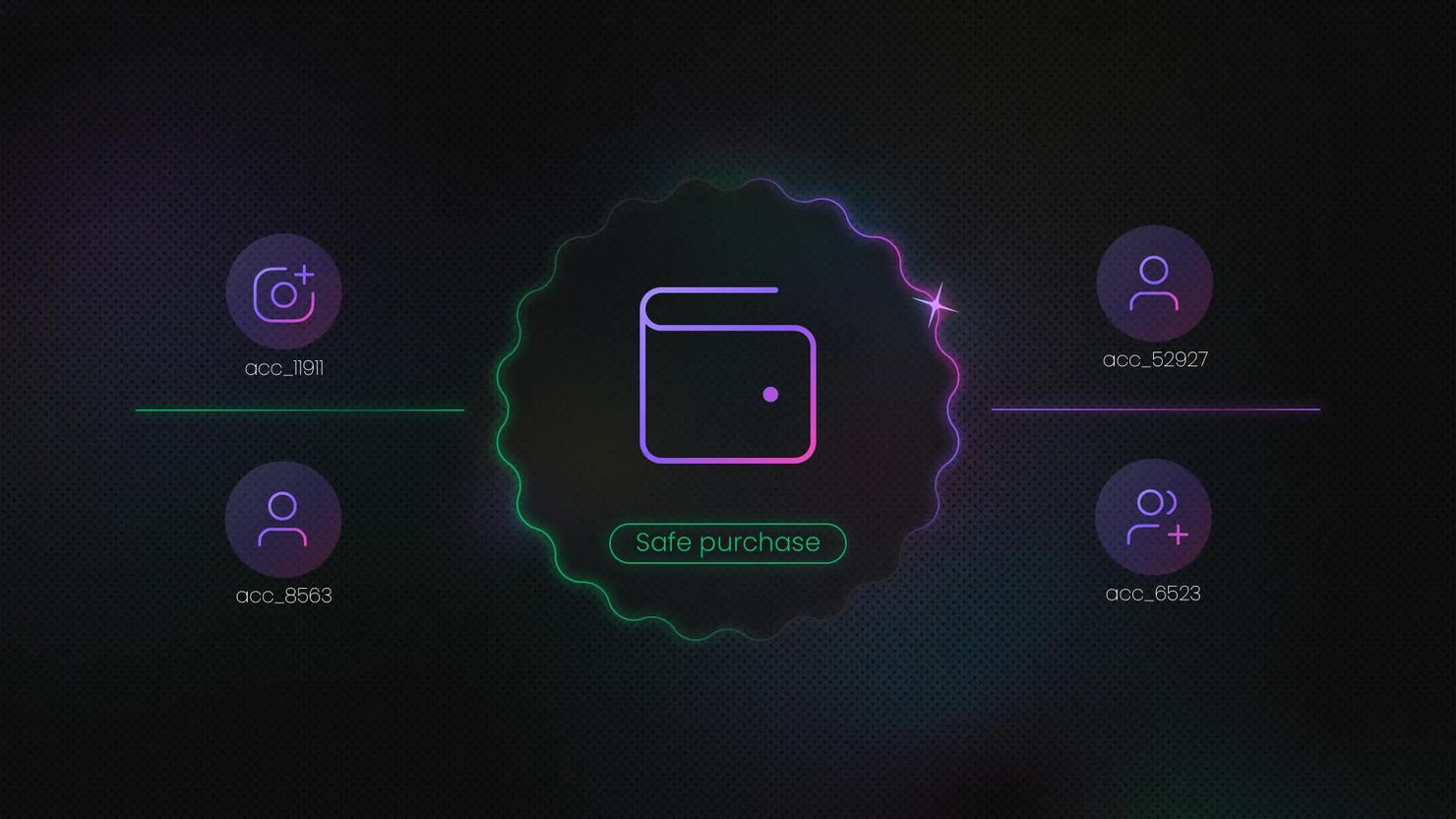
A proxy network can support this process by assigning a different IP address to each account session. When accounts connect from separate IP addresses and locations, their activity appears to originate from different users rather than a single device. This setup can be useful for managing multiple profiles, participating in various voting campaigns, and interacting with posts through likes, shares, or comments.
Residential proxies are commonly used for this purpose because they route traffic through IP addresses provided by internet service providers. These IPs are associated with real consumer networks, which makes the connections appear similar to normal user traffic. As a result, actions performed from different accounts can be distributed across multiple locations instead of coming from the same connection.
Managing several accounts may also involve organizing profile activity carefully. Each account typically requires separate login sessions, browsing behavior, and interaction patterns to maintain consistent activity across profiles. When used together with a proxy network, this approach allows users to participate in multiple Facebook polls or engagement-based competitions while operating accounts from different IP addresses.
How to get online votes fast
Vote manipulation is a tough subject. Ultimately, the responsibility for protecting the integrity of a poll or voting system lies with the organization that created it. Any online system can attract attempts to bypass its safeguards, whether through automation tools, proxy networks, or other technical methods.
Many online polls and social media giveaways rely on simple engagement metrics such as likes, shares, or clicks. Because these systems often have limited verification measures, their results can be influenced more easily than traditional voting systems. For this reason, such campaigns are sometimes viewed as unreliable indicators of genuine public opinion or fair competition.
Automation tools designed for online voting can perform actions repeatedly and at scale. When these tools operate together with a reliable residential proxy network, they can distribute requests across many different IP addresses and locations. This combination makes automated activity more difficult for basic detection systems to identify. And don't forget – when in doubt, consult a legal professional regarding your use case.

High-quality residential proxies
Overcome CAPTCHAs, geo-restrictions, and bans with 115M+ IPs from 195+ locations.
About the author

Kipras Kalzanauskas
Senior Account Manager
Kipras is a strategic account expert with a strong background in sales, IT support, and data-driven solutions. Born and raised in Vilnius, he studied history at Vilnius University before spending time in the Lithuanian Military. For the past 3.5 years, he has been a key player at Decodo, working with Fortune 500 companies in eCommerce and Market Intelligence.
Connect with Kipras on LinkedIn.
All information on Decodo Blog is provided on an as is basis and for informational purposes only. We make no representation and disclaim all liability with respect to your use of any information contained on Decodo Blog or any third-party websites that may belinked therein.