Black Friday 2026: Retailers Are Raising Prices Now to Cut Them Later
Black Friday 2026 deals are taking shape now. Decodo has tracked over 1M prices at 37 US retailers, including last Black Friday. From September to late October, 1 in 8 products saw an average price hike of 33%. Last year, that same move turned into the Black Friday "deal." Here's how the markup works and which products are climbing again.
Last updated: Nov 11, 2026
5 min read
TL;DR
- Retailers raised prices on 1 in 8 products since early September
- The average price hike is 33%, up from 25% last year
- Last year, products with a price hike were twice as likely to go on sale
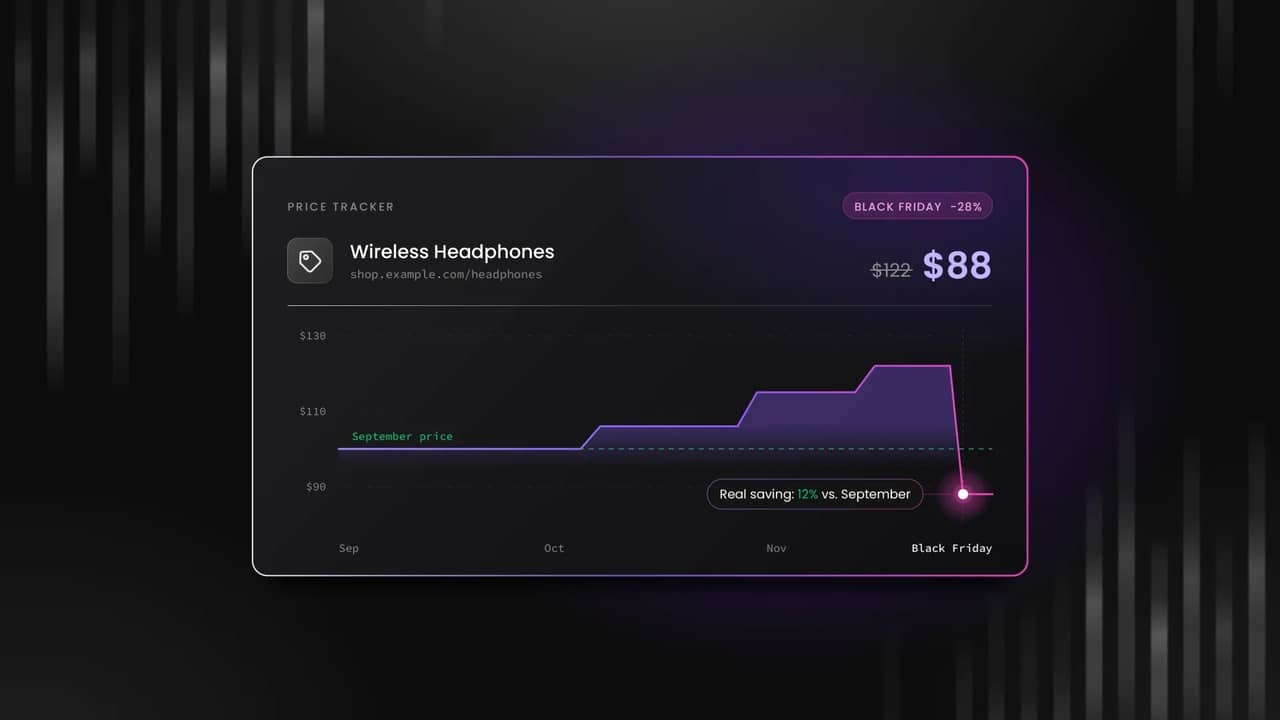
- A deal that looked like 28% off saved shoppers 12% versus September
The pre-Black Friday markup has started
Retailers began raising prices weeks before Black Friday 2026.
Decodo ran this review with its Web Data API, collecting prices six times a day. It compared each product's early-September price with its late-October price. 1 in 8 products got more expensive. The typical price hike was 23%, and the average was 33%.
Last year, 1 in 6 products saw a price hike in the same weeks, averaging 25%. Fewer products went up this year. The ones that did went up more.
Shoppers are ready to spend. Adobe forecasts $12.9 billion in US online spending on Black Friday 2026, up 9.2% from last year. A higher starting price makes the same discount look bigger.
Most markups landed in late September
Retailers moved early this year.
Half of this year's price hikes were in place by September 27. Most of the rest landed by October 11. Only 1 in 7 came in the second half of October. Most of these higher prices have now held for a month or more. That makes them a starting point for Black Friday discounts.
Electronics leads this year's markups
Electronics saw the biggest jump in markups ahead of Black Friday 2026.
1 in 3 electronics now costs more than in early September. Last year, it was 1 in 7. The average electronics price hike is 23%.
Other categories raised prices on fewer products than last year:
- Home and DIY, about 1 in 4 products, down from 1 in 3
- Beauty and health, about 1 in 9 products, close to last year
- Grocery and household, 1 in 12 products, down from 1 in 6
- Fashion, fewer than 1 in 20 products, down from 1 in 7
Best Buy and Micro Center drove much of the electronics shift. Best Buy raised prices on more than 1 in 3 tracked products, up from 1 in 4. Micro Center raised prices on more than 1 in 4, up from none last year. Retailer figures cover a narrower slice of products, so read them as signals.
Electronics also got the most Black Friday discounts last year. Nearly 2 in 3 electronics went on sale, more than any other category. Higher October prices leave room for bigger headline discounts in November.
Last year, the markup became the deal
The 2025 data shows what happened to marked-up products on Black Friday.
Products that got pricier before Black Friday 2025 were twice as likely to go on sale. Nearly 2 in 3 of them got a Black Friday discount. For all other products, 1 in 3 did.
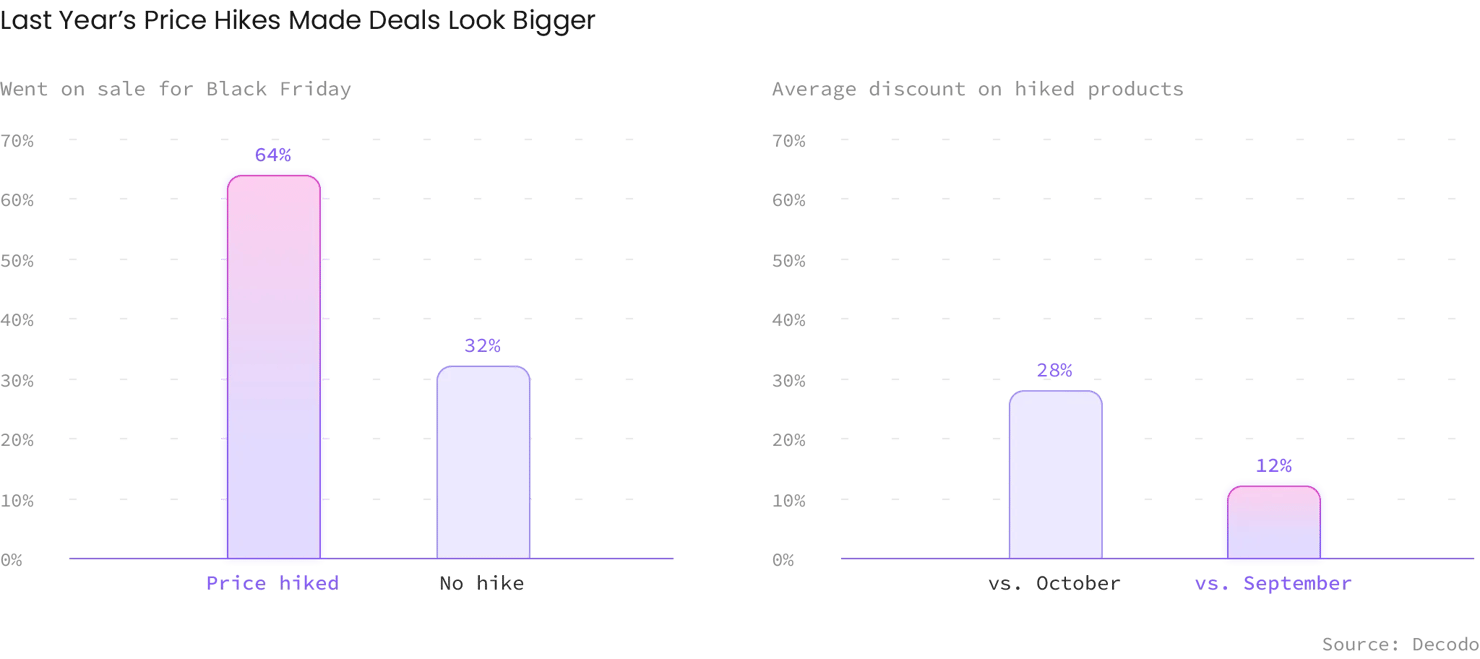
Those deals looked like 28% off. Compared with September, shoppers saved 12%. On Black Friday, 6 in 10 of these products were no cheaper than in September.
How a $79 tool kit became a $99 deal
One Home Depot product shows the full cycle.
The RYOBI ONE+ 18V starter kit cost $79 in September 2025. In October, the price rose to $203.94. On Black Friday, it dropped to $99. Shoppers saw a 51% discount. The kit still cost 25% more than in September.
This year, the same kit went from $129 in September to $228 in October.
Seasonal pricing cycles like this are common across US retail. The FTC's Guides Against Deceptive Pricing explain how retailers can reference a former price in a sale.
"Pricing moves in cycles, and the run-up to Black Friday is one of the busiest. Retailers adjust prices for demand, inventory, and competition in the weeks before the sale. For shoppers, the most useful benchmark is the early-fall price. If the Black Friday price beats the September price, that's a real saving." – Gabrielė Vitkė, Product Marketing Lead at Decodo.
Most deals ended by January
The Black Friday price was short-lived for most marked-up products.
By January 2026, 6 in 10 of these deals were gone. Prices were back at October levels or higher. Shoppers who missed the sale often paid the higher October price again. The Hisense soundbar at Best Buy returned to $1,299.99 in December, after $899.99 on Black Friday.
The same products are climbing again
Several products are repeating last year's pattern ahead of Black Friday 2026.
Product
Retailer
Black Friday 2025
Before the markup, 2026
Price now
RYOBI ONE+ 18V starter kit
Home Depot
$99
$129 (September)
$228
Hisense 4.1.2 soundbar
Best Buy
$899.99
$999.99 (September)
$1,299.99
KitchenAid 5-quart stand mixer
Target
$349.99
$379.99 (September)
$499.99
Speedstyle Pro hair dryer
Ulta
$169.99
$169.99 (August)
$229.99
Acer Nitro 27" monitor
Micro Center
$179.99
$179.99 (September)
$255.99
Apple Pencil (USB-C)
Target
$69.99
$69.99 (August)
$79.99
Three of these six products hit their Black Friday 2025 price in August or September. A "Black Friday deal" at that price would only undo the markup.
Target's KitchenAid stand mixer sold for $349.99 on Black Friday 2025. It cost $379.99 in September 2026 and $499.99 today. The Ulta hair dryer and Acer monitor hit their Black Friday 2025 prices in August. Both now cost 35% to 42% more. The Apple Pencil at Target follows the same path, from $69.99 in August to $79.99 now.
How to spot a marked-up Black Friday deal
A few checks show whether a Black Friday price is a real cut.
- Compare the Black Friday price with the September price
- Look up the product's price on Black Friday 2025
- Treat discounts measured against an October price with caution
- Use a price tracker or automated data collection solution, like Decodo's Web Data API, to make sure you've got the last 90 days of prices
Price trackers use the same public product data Decodo collected for this analysis.
The September price comes before most markups in this data. A price tracker shows that history in seconds. A Black Friday price below both September and last Black Friday is a real saving.

Collect real-time retail data
Activate a free Web Data API starter plan with up to 10K monthly requests.
Bottom line
Black Friday 2026 pricing started weeks before the sale. Retailers raised prices on 1 in 8 products between early September and late October. Half of those hikes were in place by September 27. Electronics saw the most activity, with 1 in 3 products now priced higher.
Last year's data shows how these hikes play out. Products with a pre-sale price hike were twice as likely to go on sale. Their deals looked like 28% off and saved shoppers 12% versus September. By January, 6 in 10 of those deals had ended.
For shoppers, the September price is the clearest benchmark. A Black Friday price below September and below last Black Friday is a real saving. A price tracker shows both in seconds. The RYOBI kit, the Hisense soundbar, and the Apple Pencil are on the same path again.