Best Rotating Proxies in 2026: 9 Providers Compared
Rotation is a configuration applied to a proxy pool, not a proxy type. The best rotating proxy setup combines a healthy IP pool, useful session controls, enough concurrency, and pricing that fits your request volume. This guide compares 9 providers using current product details and independent 2026 tests.

Lukas Mikelionis
Last updated: Nov 06, 2026
8 min read

Top picks by use case
- Best overall – Decodo, for strong tested performance, 4 rotating proxy types, and accessible self-service plans.
- Best budget – DataImpulse, for $1/GB rotating residential traffic with a $5 one-time minimum and no monthly commitment.
- Best free entry – Webshare, for 10 permanent free datacenter proxies that work through a rotating endpoint, with 1GB of monthly traffic.
- Best enterprise – Oxylabs, for the largest observed residential pool in the 2026 benchmark, and extensive controls.
- Best tested speed – Byteful, for the fastest average residential response time in Proxyway's 2026 test, at 0.41s.
- Best sticky-plus-rotating flexibility – SOAX, for per-request rotation, sticky sessions up to 60 minutes, strict sessions, and custom inactivity controls.
Types of proxies and key definitions
Rotation describes when the exit IP changes. The IP can still come from a residential device, a datacenter, an ISP-hosted server, or a mobile carrier. All 4 proxy types can rotate, although ISP proxies are more commonly sold as static addresses.
Proxy type
IP source
Best fit
Common billing model
Residential
Consumer internet connections
Protected targets and location-sensitive pages
Per GB
Datacenter
Data center servers
High-volume work on less restrictive targets
Per GB, IP, port, or thread
ISP/static residential
Data center-hosted IPs registered to ISPs
Faster sessions that need residential-looking addresses
Per IP or per GB
Mobile
Cellular carrier networks
Mobile-specific or highly restrictive targets
Per GB or port
A backconnect gateway is the hostname and port you connect to instead of managing individual exit IPs. The gateway selects an address from the provider's pool and applies your rotation, location, and session rules. See how a backconnect proxy works for the full architecture, or compare the best mobile proxy providers when carrier IPs are essential.
How IP rotation works
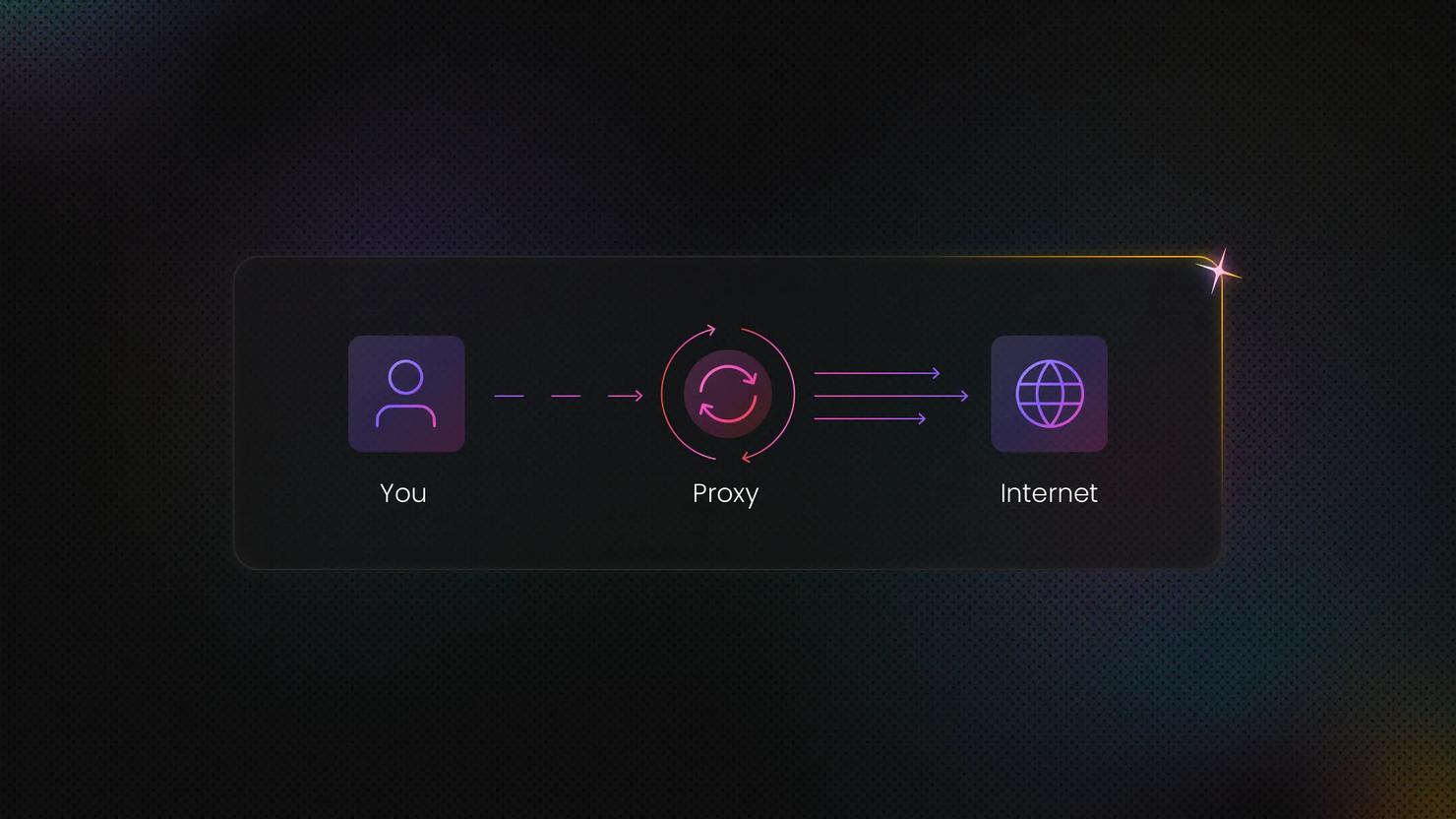
Your client connects to one gateway using credentials or an allowlisted IP. The provider then routes each request through an exit node. Usually, there are 3 rotation types:
- Per-request rotation. The gateway selects a new exit for every connection.
- Timed rotation. Changes the exit IP after a fixed interval.
- Sticky session. Uses a session identifier to ask for the same exit until its time-to-live ends or that node goes offline.
Rotation spreads requests across addresses, but it doesn't erase target-side limits. Keep request rates reasonable, retry selectively, and use sticky sessions for multi-step flows.
Check out the IP rotation glossary if you want to read more details about the underlying terms.
Selection criteria for a rotating proxy service
Judge a provider on the workload it can finish, not the largest number in its hero banner.
- Proxy type match. Use datacenter IPs when the target accepts them, residential IPs when address reputation matters, and mobile IPs only when the extra trust justifies the price.
- Pool size and observed variety. An advertised pool size describes potential supply. A controlled unique-IP test shows what the gateway actually delivered under one methodology.
- Rotation control. Check per-request rotation, sticky-session limits, custom time-to-live values, and what happens when an exit disappears.
- Targeting depth. Country targeting covers many jobs. City, ZIP, ASN, carrier, and operating-system filters matter only when your data depends on them.
- Concurrency. One of the most important factors. Find the account-level connection or thread ceiling before purchase. A large pool won't help if your plan throttles parallel work.
- Trust and continuity. Examine sourcing consent, KYC, abuse controls, documentation, support hours, traffic expiry, and the provider's operating history.
Test 2 providers on the same targets, region, request mix, and concurrency. Count a request as successful only when it returns the complete expected page or payload, not just an HTTP 200. Then compare unique IPs, correct-location rate, latency percentiles, block responses, retries, and cost per successful request.
Best rotating proxy providers in 2026
Provider
Rotating residential price and minimum commitment
Proxy types with rotation
Advertised pool size
Rotation control
Concurrency
Trial or entry test
Decodo
$11.25/month minimum for 3GB ($3.75/GB), $4/GB Pay As You Go
Residential, mobile, datacenter, ISP
115M+ residential (125M+ across types)
Per request or sticky with presets and custom settings up to 24 hours
Unlimited residential sessions
3-day/100MB trial that converts to a plan unless canceled, or a separate 14-day money-back option
Oxylabs
$30/month minimum for 5GB ($6/GB)
Residential, mobile, datacenter, ISP
175M+ residential
Per request or sticky up to 24 hours
Unlimited residential sessions
Business trial by request or a conditional 3-day refund for eligible self-service plans
SOAX
Sandbox has a $0 minimum monthly commitment but requires paid credits. Builder starts at $200/month plus VAT
Residential, mobile, ISP, datacenter
155M+ residential and 33M mobile
Per request, sticky up to 60 minutes, strict sessions, and custom inactivity limits
Unlimited proxy connections
No free trial. Sandbox requires paid credits
Webshare
$3.50/month minimum for 1GB of rotating residential traffic, promotional
Residential, datacenter, ISP
80M+ residential
Per request or sticky from 1 minute to 24 hours
Plan and fair-use dependent
10 free datacenter proxies with a rotating endpoint and 1GB/month
Bright Data
$4/GB PAYG promotion ($8 standard) with no monthly commitment
Residential, mobile, datacenter, ISP
400M+ monthly residential IPs
Per request or user-controlled sessions
Built for large-scale concurrency. Confirm account limits
Free trial with KYC for residential and mobile
IPRoyal
$7/month minimum for a 1GB subscription. PAYG costs $7.35/GB with no monthly commitment
Residential, mobile
64M+ residential
Per request or sticky up to 7 days
Unlimited sessions
Enterprise trial, but no self-serve residential trial
Rayobyte
$3.50 one-time minimum for 1GB PAYG with no monthly commitment
Residential, mobile, datacenter, ISP
40M+ residential
Per request or sticky up to 1 hour
Unlimited residential threads
50MB residential trial
DataImpulse
$5 one-time minimum for 5GB ($1/GB) with no monthly commitment
Residential, mobile, datacenter
90M+ residential
Per request or sticky up to 120 minutes
Proxyway reports 2,000 threads per plan, but there's no official account-level figure
Paid intro with a 7-day refund policy
Byteful
$3.25 one-time minimum for 1GB with no monthly commitment
Residential, mobile
35M+ residential
Per request or sticky up to 24 hours
Unlimited residential sessions
Product page advertises a KYC-gated 1GB trial. Confirm in the dashboard
#1 Decodo – best overall
Decodo's rotating proxy network covers residential, mobile, datacenter, and ISP products. Residential plans include 115M+ IPs, location targeting down to city, ZIP, and ASN, per-request rotation, sticky sessions, and unlimited concurrent sessions. A rotating residential subscription starts at $11.25/month for 3GB ($3.75/GB), while Pay As You Go costs $4/GB with no monthly commitment. Prices exclude VAT. The 3-day, 100MB trial converts to your selected plan unless you cancel, and trial users cannot also claim the 14-day money-back option.
The independent results support the broad feature set: Decodo returned 2.85M unique residential IPs with a 99.92% success rate and 0.53s average response time. The main limitation is cost control. Traffic-based billing can run away when pages are large, retries are loose, or a crawler downloads assets it doesn't need.
- Pros: 4 rotatable proxy types, strong tested performance, and a low-friction 100MB trial.
- Cons: per-GB plans need strict traffic monitoring at scale.

Rotate smarter, not harder
Per-request or sticky sessions across 115M+ residential IPs. Start your 3-day free trial with 100MB.
#2 Oxylabs – best for enterprise control
Oxylabs rotating residential proxies advertise 175M+ IPs across 195 locations, unlimited concurrent sessions, detailed filters, and sessions that can stay sticky for up to 24 hours. The minimum subscription is $30/month for 5GB ($6/GB). VAT may apply. Trials require contact with the provider.
Oxylabs led the 2026 residential test with 3.24M unique IPs and a 99.93% success rate. That makes it a strong choice when coverage and infrastructure depth matter more than a low entry bill. The tradeoff is enterprise friction: pricing starts higher, and advanced filters may trigger KYC. If that enterprise profile is heavier than your project needs, compare the current Oxylabs alternatives.
- Pros: the strongest observed unique-IP result and infrastructure success rate in the shared benchmark.
- Cons: a $30 monthly minimum and account checks make casual testing less direct.
#3 SOAX – best rotation flexibility
SOAX pricing uses a platform plan plus location-tiered network charges. The Sandbox has a $0 minimum monthly commitment, but it includes no credits, so live rotating residential traffic requires a paid top-up. Builder starts at $200/month plus VAT and includes 200 prepaid credits. Residential and mobile traffic share one rate structure, with targeting depth increasing on higher plans.
SOAX supports per-request rotation, sticky sessions up to 60 minutes, strict sessions, customizable inactivity thresholds, and look-alike rotation. That control is valuable when one project mixes stateless collection with multi-step flows. Its 99.78% independent success rate was strong, but its 1.67M observed unique IPs trailed the top 2. Review the SOAX alternatives if you need a lower-priced entry point or simpler pricing.
- Pros: unusually detailed session and targeting controls.
- Cons: the credit, plan, and geo-tier model takes more work to forecast than flat per-GB pricing.
#4 Webshare – best free entry
Webshare rotating residential proxies use an 80M+ pool in 195 countries and start with a promotional 1GB plan at $3.50/month. Its separate permanent free tier provides 10 datacenter proxies and 1GB of monthly traffic. Those datacenter IPs work through Webshare's Rotating Proxy Endpoint, so the offer just tests rotation, not the entire 80M+ rotating residential pool.
Webshare returned 1.75M unique residential IPs with a 99.28% success rate in the 2026 benchmark. The self-service dashboard and transparent tiers make it approachable. The catch is product scope: there's no mobile network, and shared plans can be affected by fair-use or thread conditions.
- Pros: the lowest-friction permanent free entry among the 9 providers.
- Cons: the free tier tests a rotating datacenter endpoint, not the paid rotating residential network.
#5 Bright Data – best enterprise platform
Bright Data rotating residential proxies include 400M+ monthly IPs, 195-country coverage, user-controlled rotation, and a proxy manager. Current Pay As You Go pricing is $4/GB with code RESIGB50, against an $8/GB standard rate, with no monthly commitment. Residential and mobile access requires a compliance review.
The monthly IP figure isn't directly comparable with a point-in-time or daily pool count. Bright Data also didn't participate in Proxyway's 2026 benchmark, so there's no matching independent result in this methodology. Buyers who need policy controls and a broader data platform may still value it. Compare Bright Data alternatives if you need simpler self-service pricing or independently benchmarked performance.
- Pros: extensive controls and a broad enterprise data stack.
- Cons: no comparable 2026 benchmark result, plus more complex pricing and onboarding.
#6 IPRoyal – best long sticky sessions
IPRoyal rotating residential proxies advertise 64M+ IPs, per-request rotation, sticky sessions up to 7 days, unlimited concurrent sessions, and traffic that doesn't expire. The minimum subscription is $7/month for 1GB. Pay As You Go starts at $7.35 for 1GB with no monthly commitment.
Long session controls suit workflows that need continuity, but an exit can still disappear because residential devices go offline. In independent testing, IPRoyal returned 2.33M unique IPs, yet its 96.11% infrastructure success rate was the lowest of the 9 ranked providers that were tested. Compare IPRoyal alternatives if benchmark reliability matters more than 7-day sticky sessions.
- Pros: up to 7-day sticky sessions and non-expiring traffic.
- Cons: weaker 2026 infrastructure reliability than the other tested providers in this ranking.
#7 Rayobyte – best PAYG flexibility
Rayobyte rotating residential proxies start with a $3.50 one-time purchase for 1GB Pay-as-you-go and have no monthly commitment. Plans include a 40M+ pool, unlimited threads, granular targeting, per-request rotation, and sticky sessions. New users can test 50MB before buying.
Pay-as-you-go bandwidth doesn't expire, and recurring subscriptions are also available. Rayobyte sells rotating datacenter, ISP, and mobile products too. Its residential network averaged 1.86s in Proxyway's 2026 test, the slowest result in this 9-provider set. That makes a target-specific trial essential.
- Pros: transparent Pay As You Go pricing and unlimited residential threads.
- Cons: slower independent residential response time than the other tested providers here.
#8 DataImpulse – best budget residential traffic
DataImpulse rotating residential proxies cost $1/GB, start with a $5 one-time purchase for 5GB, have no monthly commitment, and don't expire. The provider advertises 90M+ IPs, 195-country coverage, automatic and sticky sessions, HTTP(S) and SOCKS5, and free country targeting.
The 99.74% independent success rate was strong for the price. However, the test observed 1.54M unique IPs across 3.6M requests, or 42.7% of requests. A current Proxyway review reports 2,000 threads per plan. We cite it for that figure only, since its pricing differs from DataImpulse's own page. The official product page doesn't state an account-level concurrency ceiling. Confirm the limit before a high-parallelism deployment.
- Pros: low entry cost and non-expiring traffic.
- Cons: less observed IP variety than most tested providers and no official account-level concurrency figure.
#9 Byteful – best tested speed
Byteful rotating residential proxies advertise 35M+ IPs, unlimited concurrent sessions, automatic rotation, sticky sessions up to 24 hours, and traffic that doesn't expire. Its Pay As You Go rotating proxy pricing starts with a 1GB purchase for $3.25 and has no monthly commitment.
Byteful produced the fastest average response time in Proxyway's 2026 residential test at 0.41s, alongside a 99.69% success rate and 1.91M unique IPs. Its smaller advertised pool is the obvious tradeoff. Its product page advertises a 1GB residential trial, while its general pricing FAQ says no free trial, so verify the offer in the dashboard.
- Pros: fastest average residential response time in the shared benchmark.
- Cons: a smaller advertised pool and inconsistent trial wording across current pages.
Pricing models and cost considerations
Rotating residential and mobile plans usually charge per GB. The bill rises with HTML size, images, retries, and upload traffic. Datacenter and ISP products may charge per IP, proxy port, or monthly bundle instead. A third model charges for concurrent threads or ports while making bandwidth unmetered.
Where the crossover lands
Compare a $3.50/GB plan with a $50/month 5-port plan. The sticker-price break-even point is 14.3GB, because $50 ÷ $3.50/GB ≈ 14.3GB. At 10GB, metered traffic costs $35, so it is cheaper than the flat plan. At 20GB, it costs $70, so the flat plan is cheaper.
That calculation is only a first pass. The port plan may cap concurrency, offer a different IP type, cover fewer locations, or perform worse on your targets. For example, some proxy providers price residential gateways by port, while most ranked residential pools use per-GB billing. Normalize the proxy type and calculate the cost per successful request before calling either option cheaper.
Hidden costs usually arrive through precise geo-targeting surcharges, minimum monthly commitments, thread caps, expiring traffic, KYC time, or retries against blocked pages. A plan that costs $1/GB but succeeds 70% of the time has an effective traffic cost of about $1.43 per successful GB before retry overhead.
Common use cases for rotating proxies
Use case
Default rotation mode
Why
Web scraping at scale
Per request
Spreads stateless fetches across more exit IPs.
Price and SERP monitoring
Per request, with fixed location parameters
Preserves the target market while reducing repeat requests from one address.
Ad verification
Sticky for each verification path
Keeps location and session continuity across several page loads.
Market research
Per request for discovery and sticky for multi-step forms
Matches rotation to whether the task is stateless or stateful.
AI and agent data collection
Per request for broad retrieval and sticky for tool flows
Separates high-volume discovery from workflows that rely on cookies or carts.
Using proxy rotation doesn't allow you to ignore rate limits. Slow down when a target returns 429 responses, cache data you already have, and avoid retry storms. Better request discipline saves more money than a larger pool.
Legal and compliance considerations
A proxy is a routing tool, and using one is legal in most countries when the underlying activity is lawful. So, the use case still has to respect applicable law, authorization boundaries, contractual terms, and the rights attached to the data. This section is general information, not legal advice.
For residential and mobile networks, ask how participants consent, how they're compensated, and how they can leave the network. Decodo documents its own ethical residential proxy sourcing and usage. A provider's pool claim means little if it can't explain where the addresses come from.
If your project processes personal data, location, and routing, don't remove your obligations. The European Commission's GDPR principles require lawfulness, fairness, transparency, purpose limitation, data minimization, accuracy, storage limitation, security, and accountability. Review the target's terms, collect only what you need, secure it, document the purpose, and honor reasonable rate limits.
Bottom line
The best rotating proxies in 2026 differ by job, not by overall rank: Decodo is the strongest all-around choice, while Oxylabs leads the shared test on residential IP variety and success rate. DataImpulse wins on low per-GB cost, Webshare on free entry, SOAX on session controls, and Byteful on tested speed. Shortlist 2 providers and run the same target-level test before scaling.
Start Decodo's 3-day free trial with 100MB, then measure complete-page success, unique IPs, latency, and cost per successful request on your own targets.

Test it on your targets
Benchmarks are a start. Run Decodo’s rotating proxies on your own pages and measure what comes back.
About the author

Lukas Mikelionis
Senior Account Manager
Lukas is a seasoned enterprise sales professional with extensive experience in the SaaS industry. Throughout his career, he has built strong relationships with Fortune 500 technology companies, developing a deep understanding of complex enterprise needs and strategic account management.
Connect with Lukas via LinkedIn.
All information on Decodo Blog is provided on an as is basis and for informational purposes only. We make no representation and disclaim all liability with respect to your use of any information contained on Decodo Blog or any third-party websites that may belinked therein.