Is PlayStation Store Testing Dynamic Pricing?
Sony has been quietly testing dynamic pricing on the PlayStation Store, showing different users different prices for the same games. First spotted by a Reddit user and later confirmed through API tracking, the experiment now spans over 190 titles across 70+ regions. Here's what we know so far, how it could affect your purchasing decisions, and what savvy shoppers can do to make the most of it.

Benediktas Kazlauskas
Last updated: Mar 13, 2026
7 min read
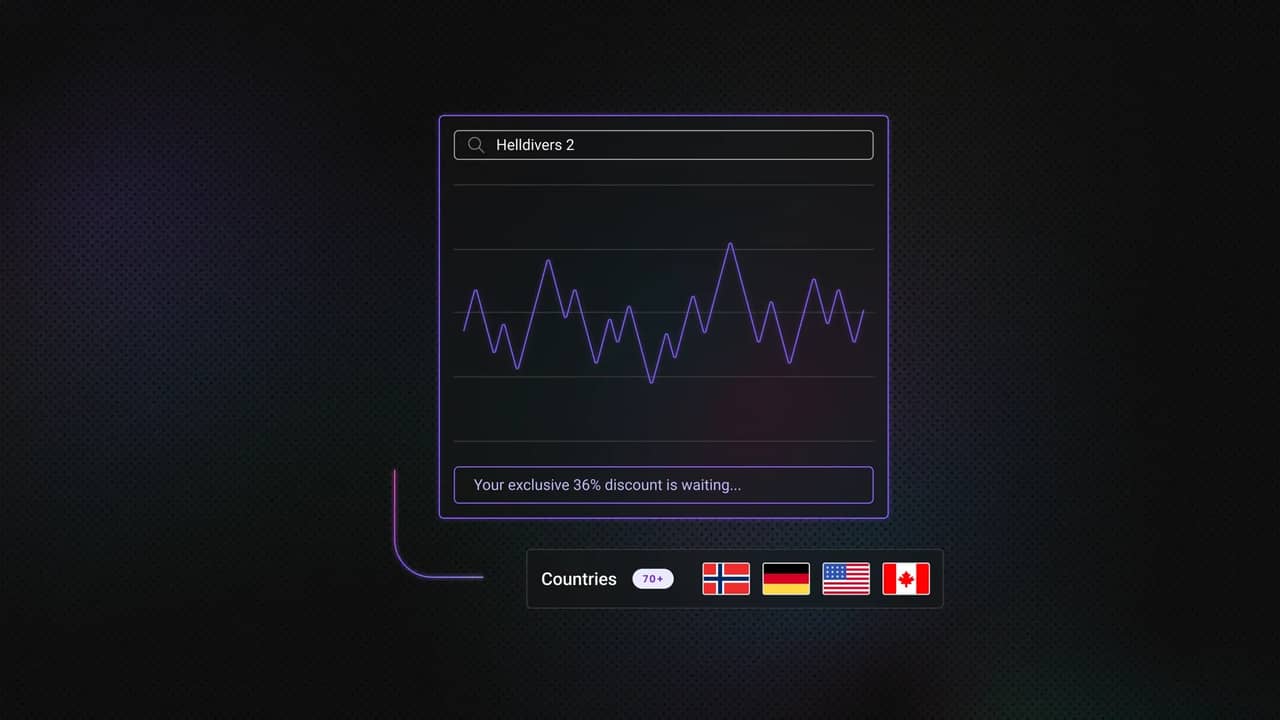
Users started to see different prices for the same games
Last November, a PlayStation user noticed something unusual. While browsing the PS Store, he found that Red Dead Redemption 2 was listed at a lower price on his wife’s account than on his own. Both accounts were in the same region, using the same currency, on the same storefront. The post went viral on Reddit, attracting thousands of comments and sparking a debate that would only grow more heated in the months that followed.
What initially seemed like a glitch turned out to be something far more deliberate. PSPrices, a third-party site that tracks PlayStation Store prices across more than 50 regions, later confirmed that Sony had been running a large-scale A/B pricing experiment since November 2025. The site detected unusual offer structures containing experiment identifiers in PlayStation’s API responses, revealing that different users were being shown different prices for the same games.
Dynamic pricing, the practice of adjusting the cost of products based on demand, customer behaviour, or market conditions, is nothing new. Airlines, hotels, ride-sharing apps, and, according to our research, almost all eCommerce stores in North America, Asia, and Europe have used it for years. But its arrival on a major console storefront has caught gamers off guard, raising questions about fairness, transparency, and what it actually means for your wallet.
What exactly is Sony doing on the PlayStation Store?
The details of Sony’s experiment have emerged gradually through PSPrices’ ongoing tracking efforts, and the scale of the programme has grown considerably since it was first detected.
According to reporting from TechRadar, Sony launched the experiment with roughly 50 games across 30 regions in November 2025. Within 4 months, it expanded to more than 190 games across 70 regions. The affected territories span Europe, the Middle East, Asia, Latin America, and Africa. As of March 2026, the United States has also been included, though Japan appears to remain excluded.
The system works through A/B testing. Users are randomly assigned to control or test groups, and each group sees different prices for the same titles. The experimental prices are consistently lower than the standard retail price, with discounts ranging from approximately 5% to 17.6% in most European and Asian markets. In the US, discounts reach as high as 27.8%.
The experiment covers some of Sony’s biggest first-party games, including God of War Ragnarök, Marvel’s Spider-Man 2, Helldivers 2, Astro Bot, Stellar Blade, Gran Turismo 7, and The Last of Us Part II. Third-party titles are involved as well, with games from publishers such as 2K Games, Rockstar, Bethesda, and Deep Silver appearing in the test. Notable third-party inclusions are WWE 2K25, Warhammer 40,000: Space Marine 2, Kingdom Come: Deliverance 2, and Red Dead Redemption 2.
During sale events, the pricing gap between groups widens further. VGC reported that during the February PlayStation Store sale, Helldivers 2 was offered to standard users at 25% off, while experiment participants saw a 56% discount on the same title. However, Sony hasn’t publicly confirmed or commented on the dynamic pricing experiment.
Dynamic pricing is everywhere, so why does it feel different in gaming?
The concept of flexible pricing is deeply embedded in modern commerce, and most consumers encounter it regularly without giving it much thought.
Airlines adjust ticket prices based on demand, time of booking, and seat availability. Hotels shift room rates depending on occupancy, local events, and seasonal trends. Uber and Lyft use surge pricing during peak hours. Amazon, Walmart, Target, and other eCommerce giants change product prices millions of times per day based on competitor activity, demand patterns, and inventory levels. Even Ticketmaster has faced scrutiny for using dynamic pricing on concert tickets, prompting the UK’s Competition and Markets Authority to launch a formal investigation following the controversial Oasis reunion tour sales.
In the mobile gaming world, personalized pricing and targeted offers have been standard practice for years. Top-grossing mobile titles routinely present different bundles and price points to different player segments based on spending history and engagement patterns.
The data also complicates the popular assumption that dynamic pricing always works against the consumer. According to our Dynamic Pricing Index, which analyzed more than 1.5M data points across 120+ major eCommerce retailers, roughly half of all price changes are actually decreases rather than increases.
Gabriele Vitke, dynamic pricing expert and Senior Product Marketing Manager at Decodo, noted, "Dynamic pricing has a reputation problem, but the data tells a more balanced story. Across the retailers we track, price drops are just as common as increases. The real issue isn't the mechanism itself – it's how visible it is to the people affected by it."
What makes Sony’s experiment feel different is the nature of the product and the marketplace. A flight from London to New York has a finite number of seats, and scarcity naturally influences what passengers are willing to pay. A digital game download has zero marginal cost and unlimited supply. There’s no inventory constraint that would justify charging one customer more than another.
The second factor is competition, or rather, the absence of it. When booking a flight, consumers can compare prices across multiple airlines and booking platforms. On the PlayStation Store, digital PS5 owners have exactly one place to shop. There’s no rival storefront to check, no price-matching guarantee, and no alternative marketplace. This concentration of market power makes any form of variable pricing feel more significant to consumers than it might in a competitive retail environment.
The opportunities for gamers
Despite the backlash, there are genuine ways that this system could work in consumers’ favor, and understanding the mechanics can help shoppers make smarter purchasing decisions.
No one is paying above the sticker price
The most important detail is that no user in the experiment is being charged above the standard retail price. The system applies variable discounts downward, not variable surcharges upward. In a worst-case scenario, a shopper pays the same price they would’ve paid without the experiment. In the best case, they receive a meaningful discount they would not otherwise have seen.
Patient gamers stand to benefit the most
The logic behind Sony’s experiment appears to involve studying price elasticity, which means identifying the price point at which a reluctant buyer becomes willing to make a purchase. Users who rarely buy games or have been inactive on the store are likely candidates for the deepest discounts, as Sony would be trying to convert them from non-buyers into buyers. This aligns naturally with the "patient gamer" philosophy of waiting for better deals before purchasing.
"Ironically, the best strategy for getting lower prices on the PlayStation Store might be to stop buying games on the PlayStation Store. These systems are built to win back reluctant spenders, so the less eager you look, the better the deal you're likely to get," noted Vitke.
Regional accessibility could improve
There’s also a regional accessibility angle worth considering. The data shows that discount levels vary significantly across territories, with US users currently receiving the steepest reductions. If the system adapts pricing to reflect local purchasing power, it could make AAA games more affordable in regions where the standard $70 price tag represents a much larger share of disposable income.
Personalised console deals already exist elsewhere
Microsoft has run "Just For You" deals on the Xbox Store for some time, offering targeted discounts to individual accounts. The key difference here is that Microsoft labels these clearly as personalized offers, while Sony’s experiment operates without any visible disclosure to the user.
Tracking tools give savvy shoppers an edge
Shoppers who want to take advantage of the current landscape have practical tools at their disposal. Sites like PSPrices and Deku Deals track historical pricing across the PlayStation Store and other platforms, allowing users to verify whether a listed price represents a genuine deal. Some users have also reported seeing different prices when logged out versus logged in, making that comparison another useful check before purchasing.
The fairness problem
For all the potential upside, the concerns raised by players and consumer advocates are also valid.
Loyal customers may get the worst deals
The most commonly voiced complaint is that the system effectively penalizes loyal customers. A PlayStation user who buys games frequently and has demonstrated a willingness to pay full price is unlikely to be offered the deepest discounts. Meanwhile, a casual or lapsed user who rarely makes purchases may see significantly lower prices for the same titles. This creates a dynamic where the most engaged members of the PlayStation ecosystem receive the least favorable treatment, something that runs counter to how most consumers expect brand loyalty to work.
Transparency is the biggest gap
Sony hasn’t made a public statement acknowledging the experiment. Users only became aware of it through third-party price tracking and accidental discoveries on Reddit. When a company adjusts what you pay without telling you it’s doing so, this could damage the trust, regardless of whether the adjustments happen to be in your favor.
This opacity contrasts poorly with how other platforms handle similar programs. Xbox’s “Just For You" deals are clearly labeled as personalized offers, giving users the context they need to make informed decisions. Sony’s approach, where experimental prices appear as if they are standard pricing, leaves users unable to distinguish between a genuine sale and a targeted test.
The digital monopoly amplifies the power imbalance
Physical game buyers can shop around at different retailers, compare prices, and take advantage of competing sales. Digital-only PS5 owners have no such option. The PlayStation Store is the sole marketplace for digital PS5 game purchases, and there’s no equivalent of the third-party key sellers that exist for PC games. As one ResetEra commenter observed, Sony does not allow game codes to be sold at retail the way Xbox and Nintendo do, leaving digital PS5 owners with no alternatives at all.
The psychological cost of uncertainty
The psychological impact shouldn’t be underestimated. Multiple community members have described a persistent sense of unease when browsing the store, wondering whether the price they see is the best available. One Push Square reader summed up the feeling that browsing the PS Store now comes with a nagging doubt about overpaying. That kind of trust damage is difficult to repair, even if the underlying pricing mechanics aren’t inherently harmful.
What could Sony do better?
The gap between a system that consumers accept and one they reject often comes down to how it is communicated and implemented. Sony has clear room for improvement on both fronts.
- Label personalized prices clearly, similar to Xbox’s "Just For You" tags, so users understand when they’re seeing a targeted offer rather than a standard price
- Reward loyalty instead of penalizing it. Long-term PS Plus subscribers and high-tenure accounts should receive the best deals, not the least engaged users
- Enable greater competition in the digital marketplace through third-party storefronts or digital resale systems that would give consumers alternatives
- Communicate the purpose of the experiment openly – if the goal is regional accessibility or bringing older titles within reach of budget-conscious players, saying so would shift consumer sentiment considerably
Gabriele Vitke noted, "Every dynamic pricing system has to balance two goals – converting new buyers and keeping existing ones happy. The platforms that get this right tend to layer personalized discounts on top of strong loyalty incentives, so frequent customers never feel like they're missing out. There's no reason Sony can't get there too."
Consumer sentiment can change dramatically with honest communication. The same program that feels like a deception hidden can feel like a genuine benefit when explained.
Practical tips for PS Store shoppers
In the current environment, informed shoppers have several strategies available to ensure they are getting the best possible value on the PlayStation Store.
- Use price-tracking tools like PSPrices and Deku Deals to monitor historical lows for any game before purchasing
- Compare the price you see while logged in against the price shown when logged out, as some users have reported discrepancies between the two
- Consider buying physical copies when possible, as physical discs can be purchased from competing retailers at varying price points
- Wait for major sale events such as Days of Play, Black Friday, and seasonal promotions when baseline discounts tend to be deepest
- Check whether your region is part of the experiment, as US users are currently seeing the steepest discounts of up to 27.8%
- Avoid impulse purchases and take time to research, as patient gamers appear to be the biggest beneficiaries of personalized pricing systems

Price monitoring made easy
Run competitor research across marketplaces with all-in-one Web Data API.
Bottom line
Dynamic pricing on the PlayStation Store is likely here to stay in some form. The infrastructure is in place, the scale is growing, and the economic incentives for Sony are clear. Whether or not this specific A/B test becomes a permanent fixture, some form of personalized or variable pricing is almost certainly part of the future of digital game storefronts.
The crucial question is how these systems are implemented. The difference between a program that feels like a welcome bonus and one that feels exploitative comes down to transparency, fairness, and whether consumers maintain meaningful choice. Right now, Sony is falling short on all three counts. The discounts themselves may be harmless, but the secrecy surrounding them undermines the trust that should exist between a platform and its customers.
About the author

Benediktas Kazlauskas
Content & PR Team Lead
Benediktas is a content professional with over 8 years of experience in B2C, B2B, and SaaS industries. He has worked with startups, marketing agencies, and fast-growing companies, helping brands turn complex topics into clear, useful content.
Connect with Benediktas via LinkedIn.
All information on Decodo Blog is provided on an as is basis and for informational purposes only. We make no representation and disclaim all liability with respect to your use of any information contained on Decodo Blog or any third-party websites that may belinked therein.