HTTP/3 (QUIC) In Beta Is Now Available for Residential Proxies
HTTP/3 (QUIC) is now available in beta for residential proxies, letting connections tunnel over UDP instead of TCP alone. It's the same protocol Chrome, Firefox, and most major CDNs use by default, and anti-bot systems increasingly check the protocol layer itself, not just headers or IP reputation. Access is available on request through your account manager.

Gabriele Vitke
Last updated: Aug 18, 2026
2 min read
What's changed
Proxies have run on TCP-based HTTP/1.1, HTTP/2, and SOCKS5 for years. That covered most workloads. But the web has moved on – Cloudflare, Google, and Akamai default to HTTP/3 now, and so do Chrome and Firefox. A proxy still speaking TCP-only stands out against that baseline, and anti-bot systems increasingly check the protocol layer, not just headers or IP reputation.
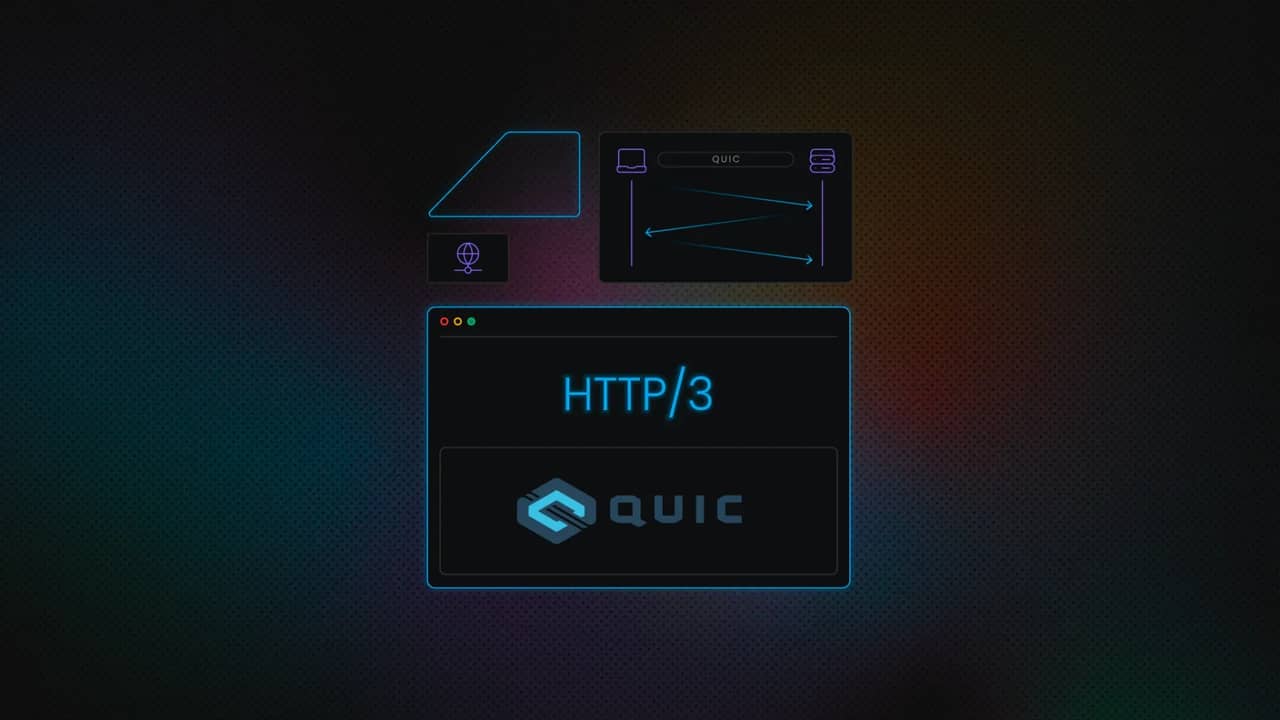
HTTP/3 support closes that gap. Residential proxies can now tunnel over QUIC through a SOCKS5+UDP endpoint. One handshake covers transport and TLS 1.3 setup instead of two separate round trips, and streams are fully multiplexed, so one slow or dropped packet doesn't stall the whole connection.
Who this is for
HTTP/3 helps most on targets that already expect it, or on connections where every dropped packet costs time.
eCommerce price scraping
Retail sites fronted by Cloudflare increasingly expect HTTP/3 connections. Matching that at the protocol level means fewer blocks on targets that used to require workarounds.
Google SERP monitoring
Google defaults to QUIC. Requests that match that protocol connect the way a real search actually does, which means more consistent results at scale.
Travel and fare aggregation
Airline and OTA sites sit behind Cloudflare and Akamai, where round-trip time matters on time-sensitive lookups. QUIC's single-handshake connection cuts latency here.
Mobile-heavy workloads
Unstable connections lose packets. TCP stalls the whole session when that happens; QUIC recovers per stream. That matters most on mobile proxy traffic.
How to use it
HTTP/3 is in beta on residential proxies. It's not self-serve yet – enablement goes through your account manager or customer success team. Once it's on, requests route through a SOCKS5+UDP endpoint; the only requirement on your end is that outbound UDP isn't blocked on your network.

Currently in beta
HTTP/3 proxy support is rolling out to residential proxy accounts by request. Reach out to your account manager to get access.
Bottom line
If you're seeing block or CAPTCHA rates you can't explain by IP quality alone, or you're running latency-sensitive workloads at scale, HTTP/3 is worth testing. It's beta, residential-only for now, and enabled per account – talk to your account manager or contact our customer success team to get set up.
About the author
Gabriele Vitke
Product Marketing Team Lead
Gabriele connects strategy, storytelling, and data to help products find their people. With over a decade of experience across SaaS, B2B, and biotech, she’s led rebrands, built go-to-market strategies, and turned complex tech into something clear and genuinely useful.
Connect with Gabrielė via LinkedIn
All information on Decodo Blog is provided on an as is basis and for informational purposes only. We make no representation and disclaim all liability with respect to your use of any information contained on Decodo Blog or any third-party websites that may belinked therein.