Dynamic Pricing for eCommerce
Unlock smarter pricing, maximize margins, and always stay ahead of competitors with Decodo’s scalable data collection infrastructure.
14-day money-back option
125M+
ethically-sourced IPs
<0.3s
average response time
99.94%
success rate
7-day
free trial
99.99%
uptime
Trusted by:







Why dynamic pricing matters
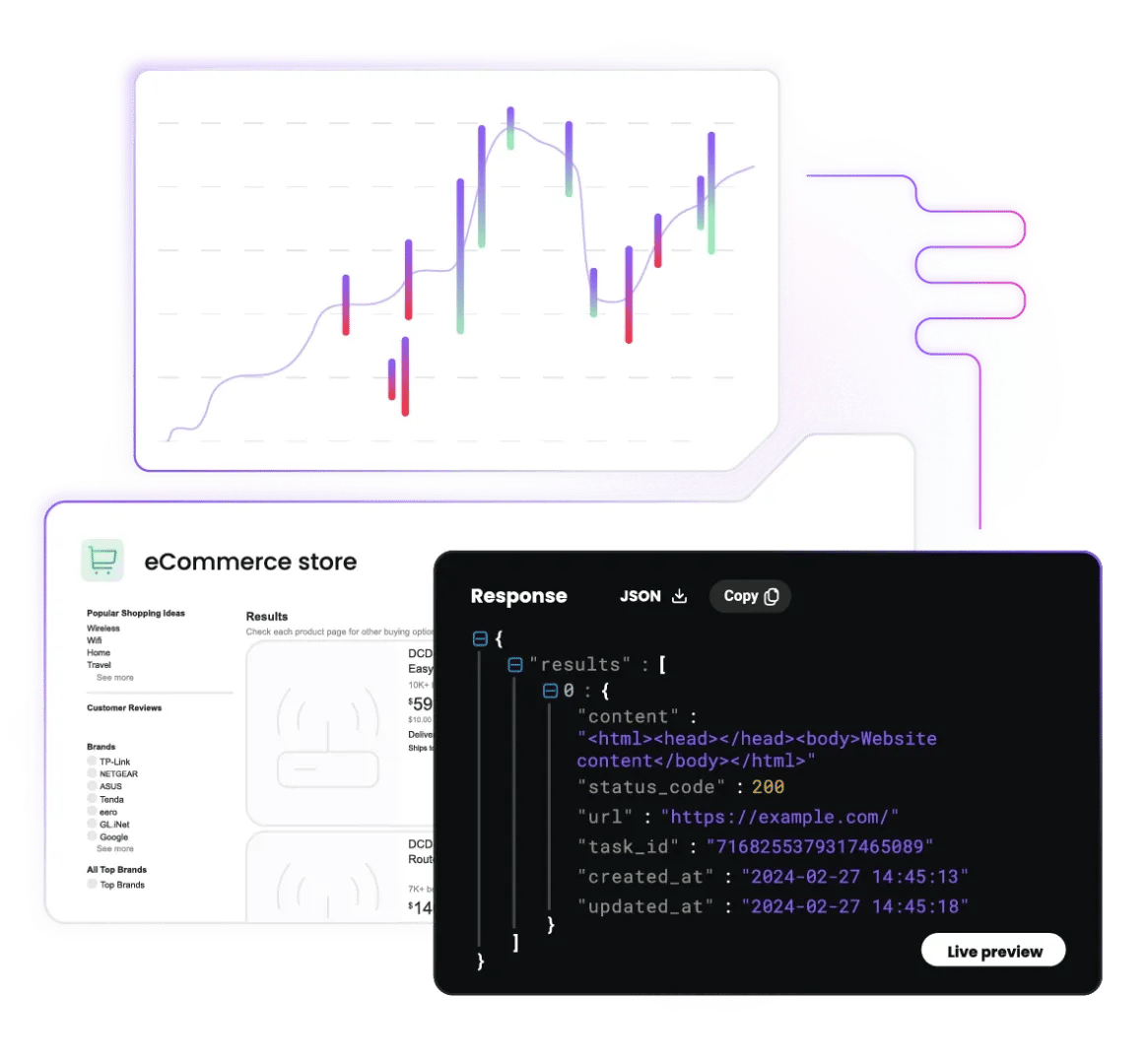
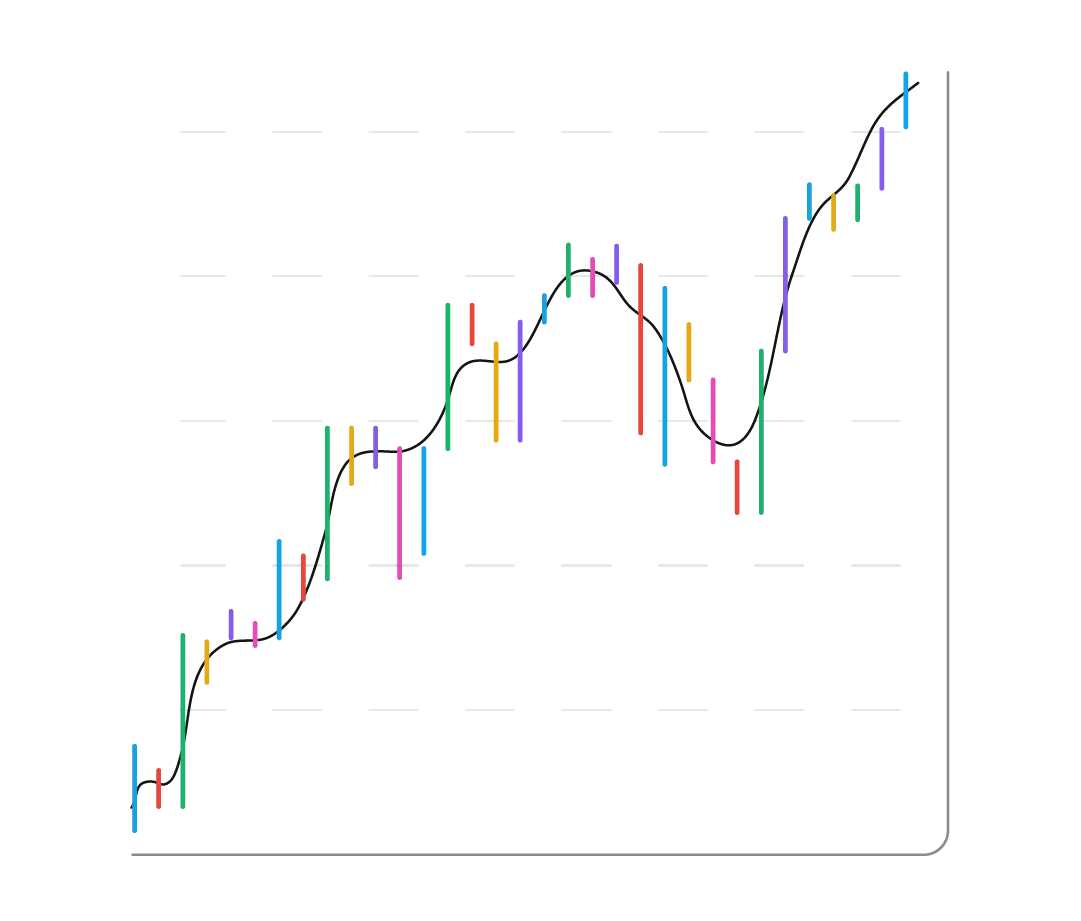
Pricing moves fast, demand surges, competitors adjust, and markets shift by the hour. Static pricing can’t keep up. Dynamic pricing lets you react instantly and run your eCommerce operations with precision, but it all depends on one thing: high-quality, real-time data.
- React faster to demand spikes and competitor price changes.
- Prevent stockouts and reduce overstock with data-driven adjustments.
- Maximize margins by aligning prices with real market conditions.
- Optimize catalog performance across thousands or millions of SKUs.
Decodo makes dynamic pricing effortless
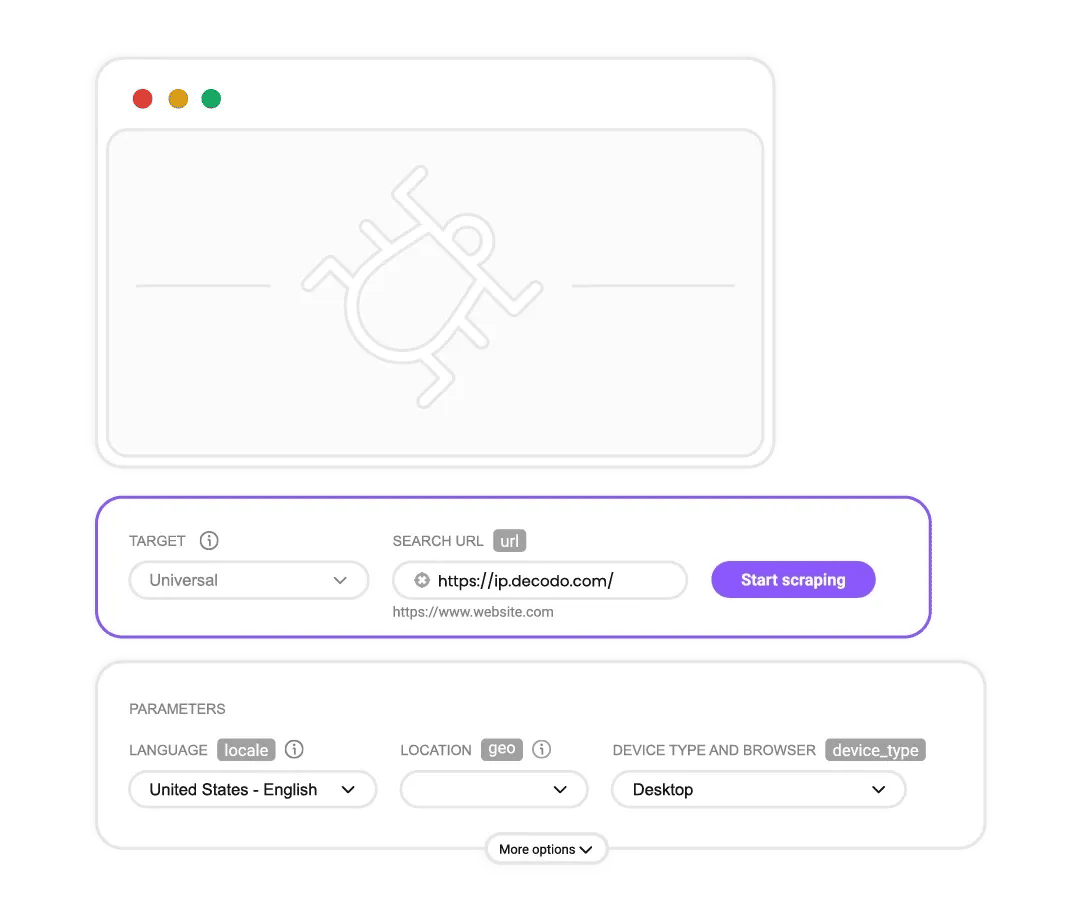
Collect pricing data from any eCommerce website at scale. Decodo’s Web Scraping API handles JavaScript rendering, anti-bot systems, and proxy rotation automatically, so your team can focus on analysis, not maintenance.
- JavaScript rendering
- Anti-bot & CAPTCHA bypassing
- Geo-targeting (country, state, city, ZIP, ASN)
- Structured output (e.g., HTML, JSON, CSV, PNG, XHR, or Markdown)
- 99.99% success rate
Data infrastructure that works
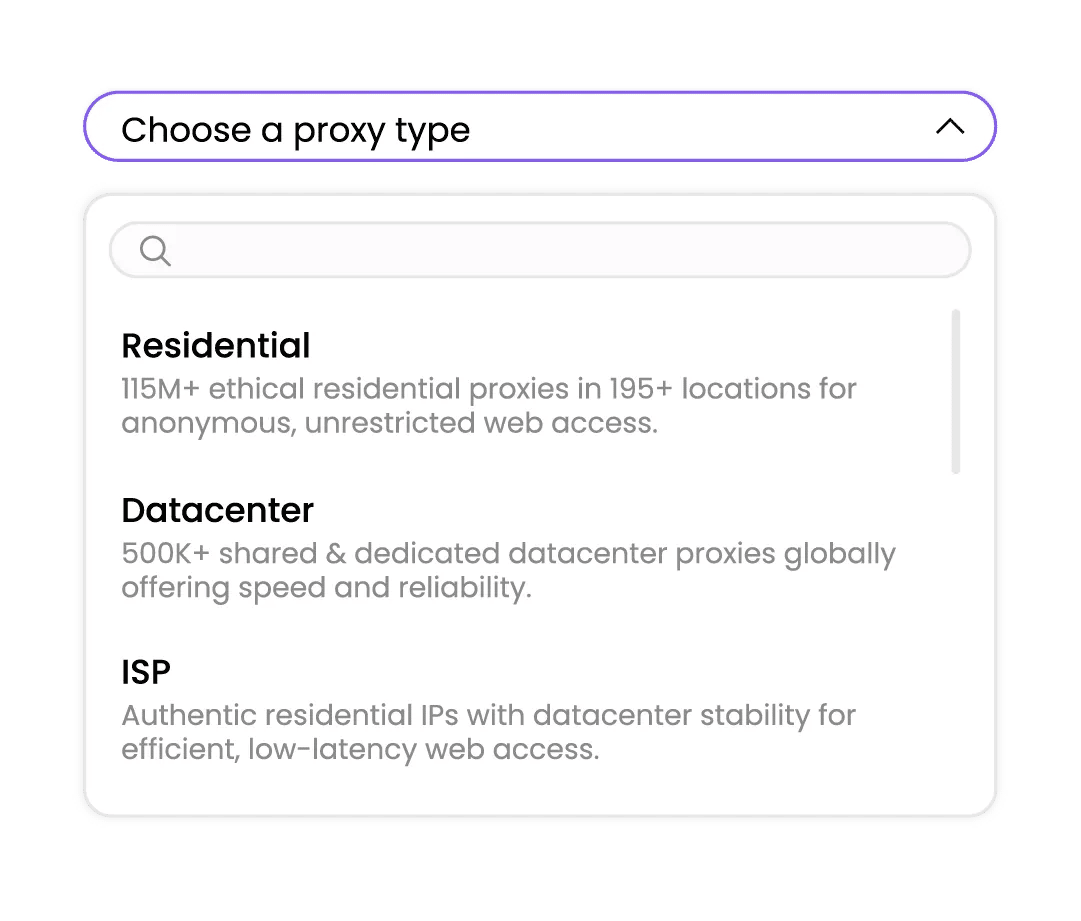
Dynamic pricing relies on clean, undetectable traffic. Decodo provides a 125M+ global IP pool across residential, ISP, datacenter, and mobile proxies built to mimic real user behavior and maintain stability under heavy load.
Key features:
- 195+ locations supported
- Rotating & sticky sessions
- Unlimited concurrency
- <0.3s response time
- Continent, country, state, city, ASN, and ZIP targeting
- 99.94% success rates
Dynamic pricing use cases
Find out how we help brands win at SEO, social media, app testing, AI training, and more. For independent storefronts, the Shopify Scraper API collects prices and variants across Shopify-hosted stores the same way.

Competitor price monitoring
Track competitor prices in real time and adjust automatically to stay ahead even on websites with advanced bot protection.

Demand-based pricing
Identify demand spikes, seasonal trends, and product interest surges with timely market data.

Inventory-based pricing
Move surplus stock quickly or increase prices when inventory runs low.

Geo-targeted pricing
Use Decodo’s precise location targeting to collect pricing data from any region and adjust accordingly.

Large catalog automation
Automate pricing for tens of thousands or millions of SKUs without downtime, throttling, or manual intervention.
Choose the right tool for the job
Web Scraping API
from $0.08/1k req
- JavaScript rendering and CAPTCHA bypassing
- Geo-targeting across 195+ locations
- 99.99% success rate with automatic retries
- Flexible output in JSON, CSV, HTML, XML, Markdown, and PNG
- 100+ ready-made templates for popular targets
Residential proxies
from $1.5/GB
- 99.92% success rate
- <0.5s response time
- Rotating and sticky sessions
- Continent, country, city, state, ASN, and ZIP targeting
- Unlimited concurrent sessions
Mobile proxies
from $2.25/GB
- 3G, 4G, and 5G networks from 700+ carriers
- 160+ locations
- 99.75% success rate
- Mobile-specific targeting (continent, country, city, and carrier)
ISP proxies
from $0.27/IP
- 99.99% uptime (verified by Proxyway in 2025)
- <0.2s response time
- High-speed IPs with residential credibility
- Unlimited traffic option
- Premium ASNs in 17 key locations
Datacenter proxies
from $0.02/IP
- 99.94% success rate
- <0.3s response time
- High-speed, low-latency performance
- Dedicated or shared IP options
- Unlimited concurrent sessions
Why scraping community chooses Decodo
Manual scraping
Other APIs
Decodo

Manage proxy rotation yourself
Limited proxy pools

125M+ IPs with global coverage
Build CAPTCHA solvers
Frequent CAPTCHAs
Advanced browser fingerprinting
Handle retries manually
Pay for failed requests
Only pay for successful requests
Maintenance overhead
Complex documentation
100+ ready-made templates
Days to implement
Limited output formats
JSON, CSV, Markdown, PNG, XHR, HTML output
Explore other common use cases
Our proxy and scraping solutions solve data collection challenges across industries and use cases.

eCommerce
Monitor pricing, analyze competitors, and gather market intelligence on multiple eCommerce platforms.

SERP
Collect SERP data across keywords, locations, and devices to track rankings, analyze competitors, and improve SEO performance.

Social media
Create and manage multiple social media accounts to grow your online presence and engage with target audiences.
Find out what people are saying about us
We're thrilled to have the support of our 135K+ clients and the industry's best.

Attentive service
The professional expertise of the Decodo solution has significantly boosted our business growth while enhancing overall efficiency and effectiveness.
N
Novabeyond
Easy to get things done
Decodo provides great service with a simple setup and friendly support team.
R
RoiDynamic
A key to our work
Decodo enables us to develop and test applications in varied environments while supporting precise data collection for research and audience profiling.
C
Cybereg





Frequently asked questions
What is dynamic pricing and how does it work?
Dynamic pricing is a strategy where businesses adjust product prices in real time based on market demand, competitor pricing, inventory levels, customer behavior, and other external factors. Instead of keeping a fixed price, companies use algorithms and data analysis to set prices that maximize revenue or stay competitive.
To make dynamic pricing work effectively, companies need to collect large volumes of external data. This is where web scraping becomes essential – it lets businesses automatically gather and analyze pricing data across the market in real time. Decodo conducted its own research on how U.S. companies are using external data and about the most scraped websites of 2025.
Is dynamic pricing legal?
Yes, dynamic pricing is legal in most countries. Businesses have the right to adjust their prices based on market conditions, as long as they don't engage in discriminatory practices. However, there are some important considerations. Companies must comply with consumer protection laws and avoid deceptive pricing practices.
How to scrape prices from eCommerce websites?
Scraping prices from eCommerce websites involves extracting product pricing data using automated tools or scripts. There are two main approaches: building your own scraper or using a ready-made solution.
If you're building your own, you'll need programming skills (typically Python) and libraries like Beautiful Soup, Scrapy, or Playwright. You'll also need to handle challenges like anti-bot systems, CAPTCHAs, IP blocking, and dynamic content loaded via JavaScript. This approach can be time-consuming and requires ongoing maintenance as websites change their structure.
Alternatively, you can use Decodo's Web Scraping API, which automates the entire process. It handles anti-scraping measures, rotates IPs automatically, renders JavaScript content, and delivers clean, structured data in formats like JSON or CSV. This approach is much faster and doesn't require extensive coding knowledge. You can also check out our guide on how to scrape Amazon prices for a detailed walkthrough.
Which dynamic pricing methods do companies use most often?
Companies use several dynamic pricing methods, each suited to different business goals and market conditions:
- Time-based pricing adjusts costs based on when customers buy, like higher hotel rates during peak season or surge pricing for ride-sharing during rush hour.
- Demand-based pricing raises prices when demand is high and lowers them when it's low. Commonly used by airlines and event ticketing platforms.
- Competitor-based pricing monitors rival pricing in real time and adjusts accordingly to stay competitive. Popular in eCommerce, where retailers track hundreds of competitors simultaneously.
- Segment-based pricing offers different prices to different customer groups based on factors like location, browsing history, or loyalty status.
- Penetration pricing starts with lower prices to attract customers and gain market share, then gradually increases as the product gains traction.
The most sophisticated companies combine multiple methods, using AI and machine learning to analyze vast amounts of data and optimize pricing decisions across thousands of products simultaneously. For businesses implementing these strategies, price monitoring tools and web scraping solutions are essential to gather the competitive intelligence needed to make informed pricing decisions.
Ready to Launch Dynamic Pricing at Scale?
Start collecting real-time pricing data with infrastructure designed for developers who move fast.
14-day money-back option