Amazon proxies – Rotating and Static IPs for Amazon Data
Amazon proxies are IPs that route your requests through residential, ISP, mobile, or datacenter IPs to collect structured product, pricing, and review data from Amazon at scale. Decodo's pool spans 125M+ IPs across 195+ locations with a sub-0.6s average response time and 99.94% success rate.
14-day money-back option

125M+
ethically-sourced IPs
195+
locations
3-day
free trial
<0.6
response time
99.99%
uptime
Trusted by:







What are Amazon proxies?
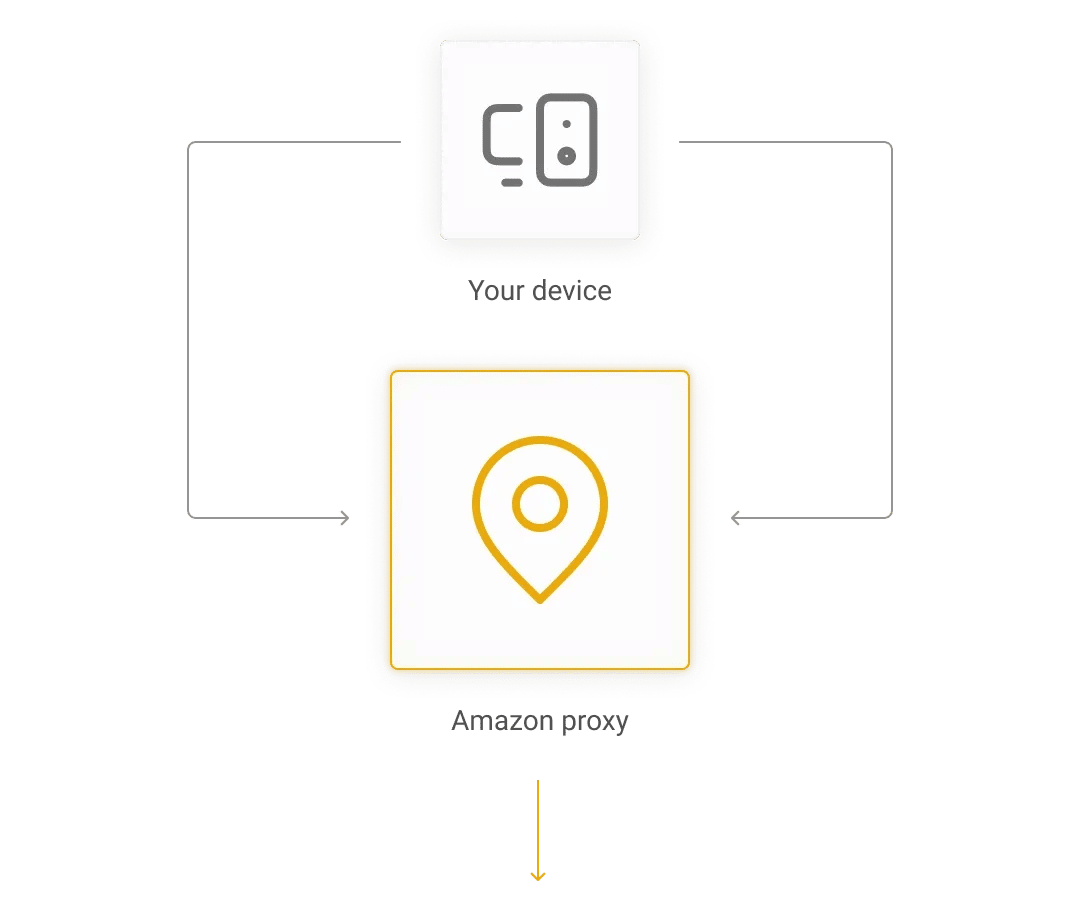
Amazon proxies are IPs (residential, ISP, mobile, or datacenter) that act as intermediaries between you and Amazon. Each outbound request appears to originate from a different IP, so your data collection pipeline maintains consistent access to product listings, pricing, reviews, and seller information without hitting request-volume limits.
What do Amazon proxies do?
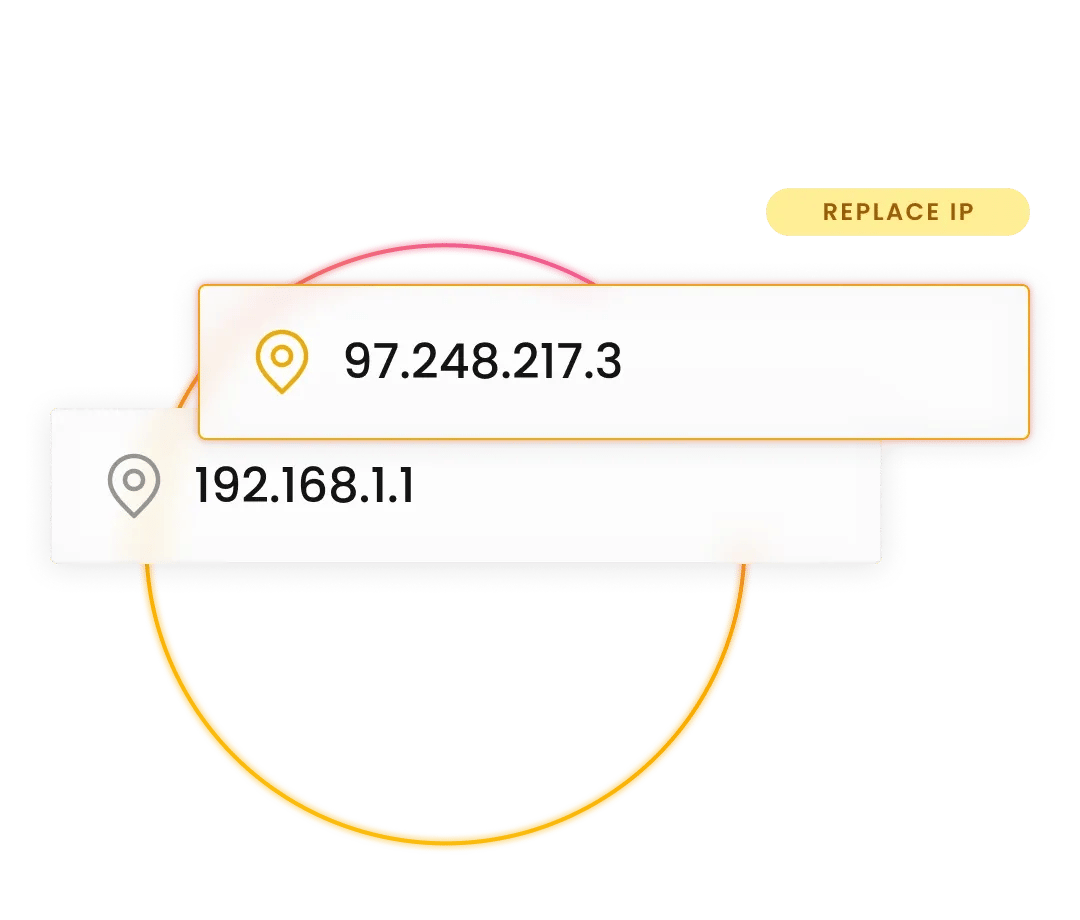
Amazon proxies intercept and relay scraping requests on your behalf, substituting your real IP with one from a pool of rotating or sticky IPs. This allows your tools to make repeated requests to Amazon product pages, search results, review sections, and seller storefronts while appearing to Amazon as a real user.
How do Amazon proxies work?
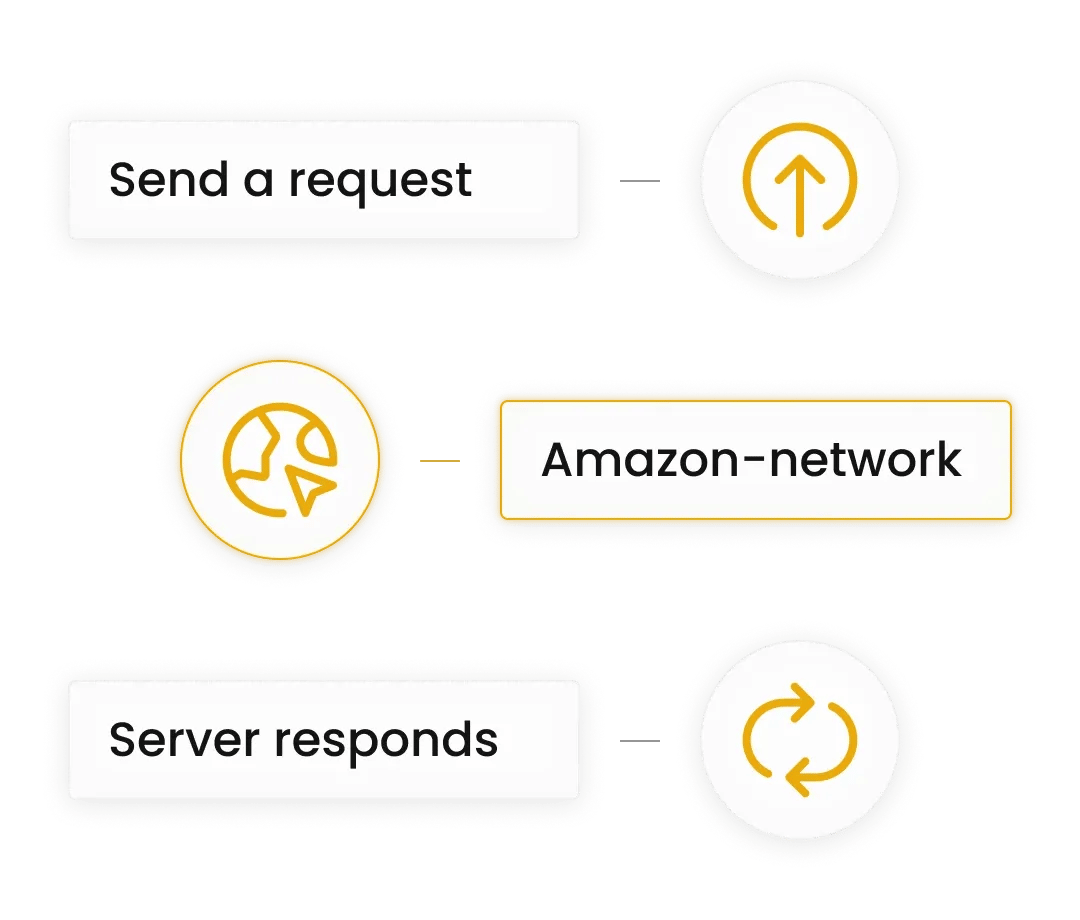
Instead of connecting directly to Amazon, your requests are handled through Decodo’s proxy network, which takes care of IP rotation and delivery. Here’s how the process works:
- Send a request to Amazon via the Decodo proxy endpoint using your assigned credentials (username:password or IP whitelist).
- Decodo's infrastructure assigns a fresh IP from the relevant pool (residential, mobile, ISP, or datacenter) and forwards your request to Amazon's servers.
- Amazon's response in HTML, JSON, CSV, XHR, PNG or structured Markdown is returned through the proxy to you, and the IP rotates or persists based on your session settings.
What data can you collect from Amazon with proxies?
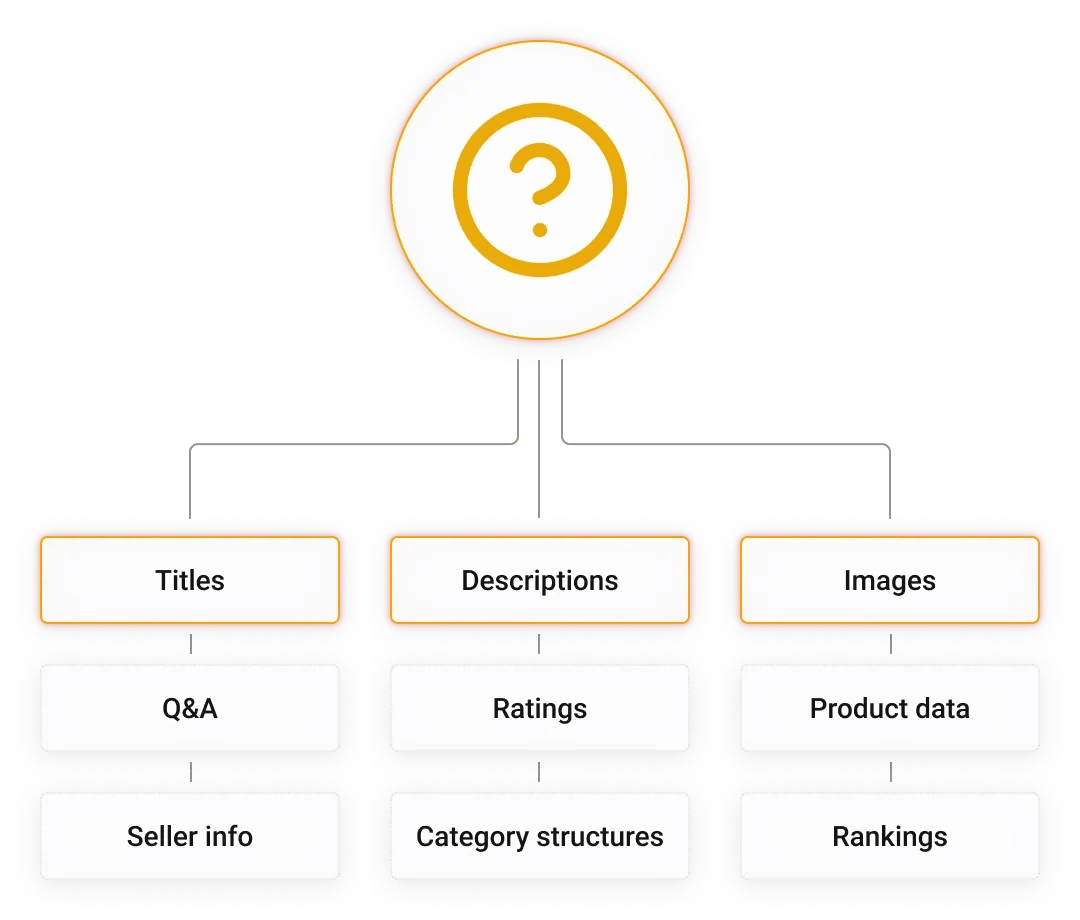
With the right proxy setup, you can access a wide range of publicly available Amazon data at scale without interruptions. This includes:
- Product titles, descriptions, images, and specifications
- Question and answer sections
- Customer ratings and full review text
- ASIN-level product data
- Seller name, rating, and fulfillment type
- Category and subcategory structures
- Stock availability and shipping options
Best-seller rank within categories
Explore the guide on what are the differences between all proxy types.
Why use Decodo's Amazon proxies?
Collecting Amazon data at scale requires more than sending a request. The table below maps the critical attributes of any proxy solution against 3 approaches: Decodo, self-managed proxies, and free public proxy tools.
Decodo Amazon proxies
Self-managed proxies
Free proxy tools
IP pool size
115M+ residential, 10M+ mobile, 500K+ datacenter
Limited to purchased/rented IPs
Shared, unknown pool size
Residential success rate
99.92%
Varies; no SLA
Typically <50%
Mobile success rate
99.75%
Rarely included
Not available
Datacenter success rate
99.94%
Depends on the provider
Unreliable
Avg. response time
<0.5s residential, <0.5s mobile, <0.3s datacenter, <0.2s ISP
1–5s+ depending on source
5–30s or timeout
Geo-targeting
Continent, country, state, city, ZIP, ASN
Country-level at best
None
Session control
Rotating and sticky sessions
Manual rotation only
No session control
Uptime
99.99%
No SLA
No SLA
Support
24/7 tech support
None or community
None
What makes Decodo's Amazon proxies different?


10M+ mobile IPs
Real 3G/4G/5G IPs from 700+ carrier networks across 160+ locations

ISP proxies with <0.2s response time
Static ISP IPs with datacenter speed and residential trust signals

Continent, country, city, ASN, and ZIP targeting
Granular geo-selection down to the postal code level

Rotating and sticky sessions
Switch IPs per request or hold the same IP for hours

HTTP(S) and SOCKS5 support
Protocol flexibility for any scraping stack

99.99% uptime
Built for high availability and consistent proxy performance

What are the use cases for Amazon proxies?
How do teams use Amazon proxies for price monitoring?

eCommerce businesses and marketplace sellers use Amazon proxies to collect real-time and historical Amazon price data across product categories, geographies, and seller accounts. By routing requests through IPs in target countries, price tracking pipelines can capture localized prices, currency conversions, and promotional discounts as they change – without interruption from rate controls triggered by repeated requests from a single IP. Teams running dynamic pricing models depend on this data to reprice competitively in real time.
How do data engineers use Amazon proxies for product research?
Product research teams collect ASIN-level data – titles, specifications, variant availability, and category hierarchies. This data powers merchandising decisions, catalog management, and competitive benchmarking. Amazon proxies enable pipelines to operate at the volume required to monitor tens of thousands of Amazon products continuously without request throttling.
How do businesses use Amazon proxies to collect customer reviews?
Review data drives sentiment analysis, product development prioritization, and brand reputation monitoring. Amazon proxies enable high-frequency collection of review pages at scale (including star ratings, verified purchase flags, and reviewer metadata) across multiple marketplaces like amazon.com, amazon.co.uk, amazon.de, and others. Geo-targeted IPs enable access to region-specific review content in each market.
How do agencies use Amazon proxies to track Best Seller rankings?
Best Seller ranking changes faster than most manual tracking workflows can capture. Agencies running BSR monitoring for brand clients use rotating proxies to poll category rankings at regular intervals, recording rank movement correlated with advertising spend, review velocity, and stock availability.
How do ad tech teams use Amazon proxies for advertising intelligence?
Amazon Advertising data, like sponsored product placements, display positions, and Share of Voice metrics, are publicly visible but only accessible through individual search result pages. Ad tech intelligence tools use Amazon proxies to collect placement data across thousands of keyword and geography combinations simultaneously, without triggering rate controls designed for single-user browsing behavior.
Which Amazon pages and data types can you collect with proxies?
Decodo's Amazon proxies support structured data collection across all major Amazon page types. The proxy type you choose (residential, ISP, mobile, or datacenter) affects the authenticity and speed of collection, but all are compatible with the data types listed below.
Amazon page type
Key data fields
Recommended proxy type
Product detail page (ASIN)
Title, price, images, reviews, stock status, seller info
Residential or ISP
Search results page
Organic rank, sponsored positions, ASIN list, prices
Residential or mobile
Customer reviews
Rating, review text, verified badge, helpful votes
Residential or mobile
Seller storefront
Seller rating, product count, dispatch performance
Residential or ISP
Amazon Best Sellers
Category rank, ASIN, price, ratings
Datacenter or ISP
Q&A section
Question text, answer text, upvote counts
Residential
Amazon deals and coupons
Discount type, amount, expiry, eligibility
Residential or mobile
Brand storefront
Brand listing, product sets, promotional banners
Residential or ISP
How do you integrate Amazon proxies with Python, Node.js, or cURL?
Decodo Amazon proxies use a standard authenticated endpoint. Integration requires your proxy host, port, username, and password. No SDK is required. The examples below use HTTP(S) and SOCKS5.
How do you get started with Decodo's Amazon proxies?
There are 3 ways to start using Decodo's Amazon proxies: through a no-code dashboard template, direct API integration, or by integrating proxies to third-party tools.
How do I use the no-code template?
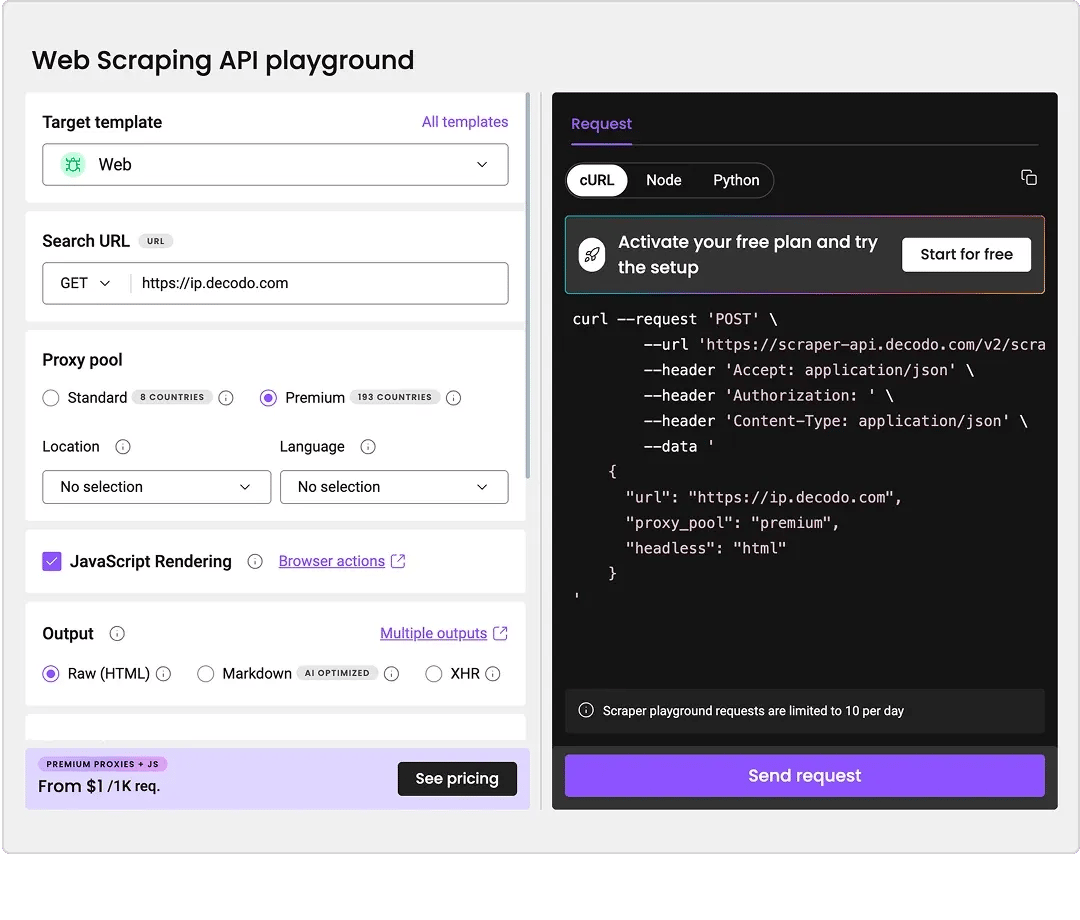
Decodo's dashboard includes a proxy configuration generator. Select your proxy type (residential, mobile, ISP, or datacenter), set your target country, choose rotating or sticky sessions, and copy the generated endpoint string directly into your scraper or browser extension. No code required. Pre-built scraping templates are also available for common Amazon collection workflows.
How do I integrate via API?
Setting up API access with Decodo is a straightforward process that doesn’t require complex configuration or custom tooling. In just a few steps, you can connect your application and start routing requests through the proxy network.
- Create a Decodo account and navigate to the Residential, Mobile, Static Residential (ISP), or Datacenter section of the dashboard
- Copy your authentication credentials (username and password)
- Set your proxy endpoint to gate.decodo.com:7000 (HTTP(S)) or gate.decodo.com:7001 (SOCKS5)
- Set targeting parameters to the username string as needed
- Send a test request to verify connectivity and response format
How do I try Decodo's Amazon proxies for free?
Click Start for free on this page or visit the free trial page. Your 3-day trial includes access to residential, mobile, ISP, and datacenter proxies with the full range of targeting options. To validate your setup before committing to a paid plan, see how to test proxies.
How is Amazon proxy pricing structured?
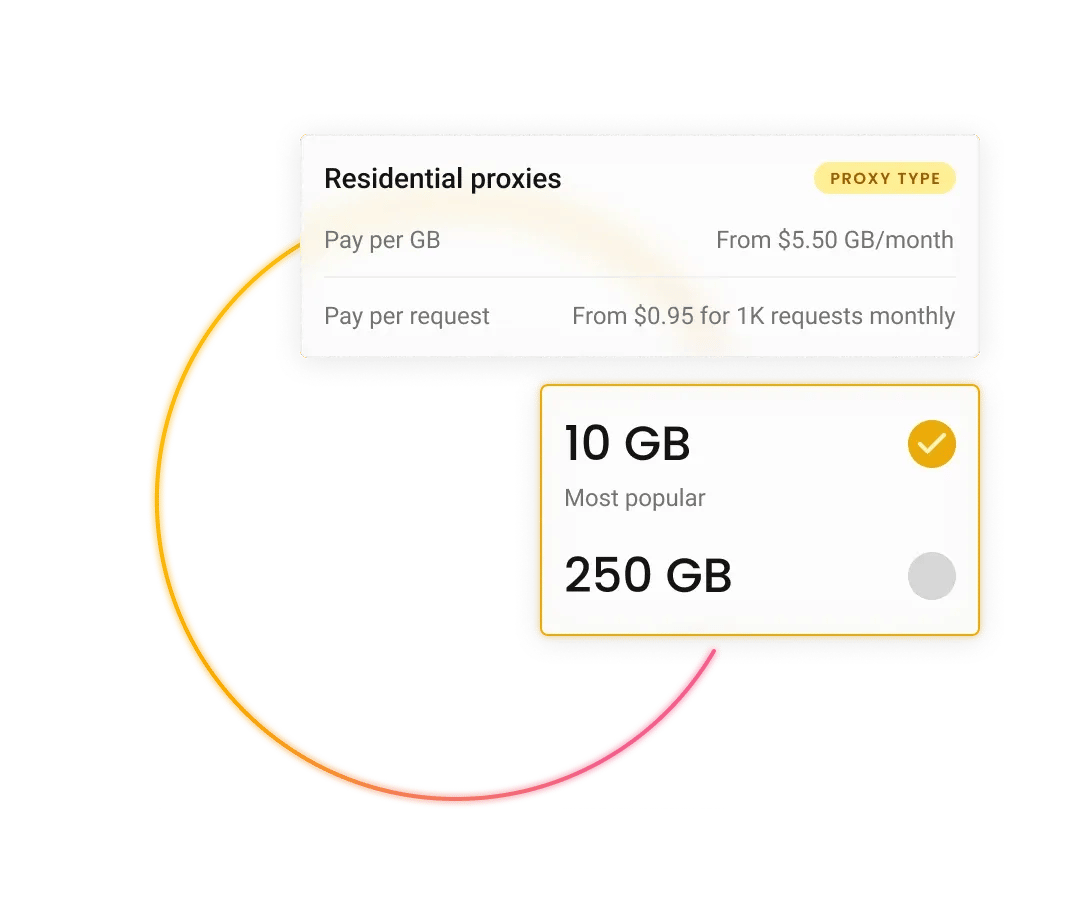
Based on your use case and unique project, you can choose a different proxy subscription option. Residential and mobile proxies offer a Pay As You Go option, allowing you to pay only for the traffic you use – ideal for one-off projects. For residential, static residential (ISP), mobile, and datacenter proxies, you can also opt for a monthly subscription with a fixed GB amount. Datacenter and static residential (ISP) proxies also have a Pay per IP subscription option, allowing you to get IPs that are shared with a small number of other users, helping you retain the same IP for use cases that require long sessions. Static residential (ISP) and datacenter proxies also have a choice to get dedicated IPs that are assigned to you exclusively and offer an unlimited traffic option.
You can test-drive all proxies with a 3-day free trial and 100 MB. For high-volume use cases, you can choose an Enterprise plan or contact our sales team to get a custom offer.
Amazon proxy plans and pricing
14-day money-back
SSL Secure Payment
Your information is protected by 256-bit SSL

What our clients and industry experts say about Decodo
135K+ users trust our infrastructure for all their data collection and automation needs.

Attentive service
The professional expertise of the Decodo solution has significantly boosted our business growth while enhancing overall efficiency and effectiveness.
N
Novabeyond
Easy to get things done
Decodo provides great service with a simple setup and friendly support team.
R
RoiDynamic
A key to our work
Decodo enables us to develop and test applications in varied environments while supporting precise data collection for research and audience profiling.
C
Cybereg






Amazon proxy guides and resources
Most recent

JavaScript Web Scraping Tutorial (2026)
Ever wished you could make the web work for you? JavaScript web scraping allows you to gather valuable information from websites in an automated way, unlocking insights that would be difficult to collect manually. In this guide, you'll learn the key tools, techniques, and best practices to scrape data efficiently, whether you're a beginner or a developer looking to streamline data collection.

Zilvinas Tamulis
Last updated: Oct 12, 2026
13 min read
Most popular
Proxy for Scraping Amazon: The Ultimate Guide
Scraping Amazon without proxies leads to IP bans, CAPTCHAs, and rate limits, making data collection nearly impossible. Proxies are essential for bypassing these defenses and accessing vital pricing and product data. This guide explains why scraping Amazon is challenging, how proxies can help, and which types of proxies are most effective for reliable, large-scale Amazon data extraction.
Dominykas Niaura
Last updated: May 05, 2025
5 min read
Is It Legal to Scrape Amazon?
Have you ever woken up all sweaty in the middle of the night with one question in mind: have I done something wrong by scraping Amazon? Well, you can answer this question in several ways. The good news is that they don’t necessarily give you a one-way ticket to scraping prison!
Just a quick heads up – this article is for informational purposes only and it doesn’t constitute legal advice.
James Keenan
Last updated: Apr 21, 2021
3 min read
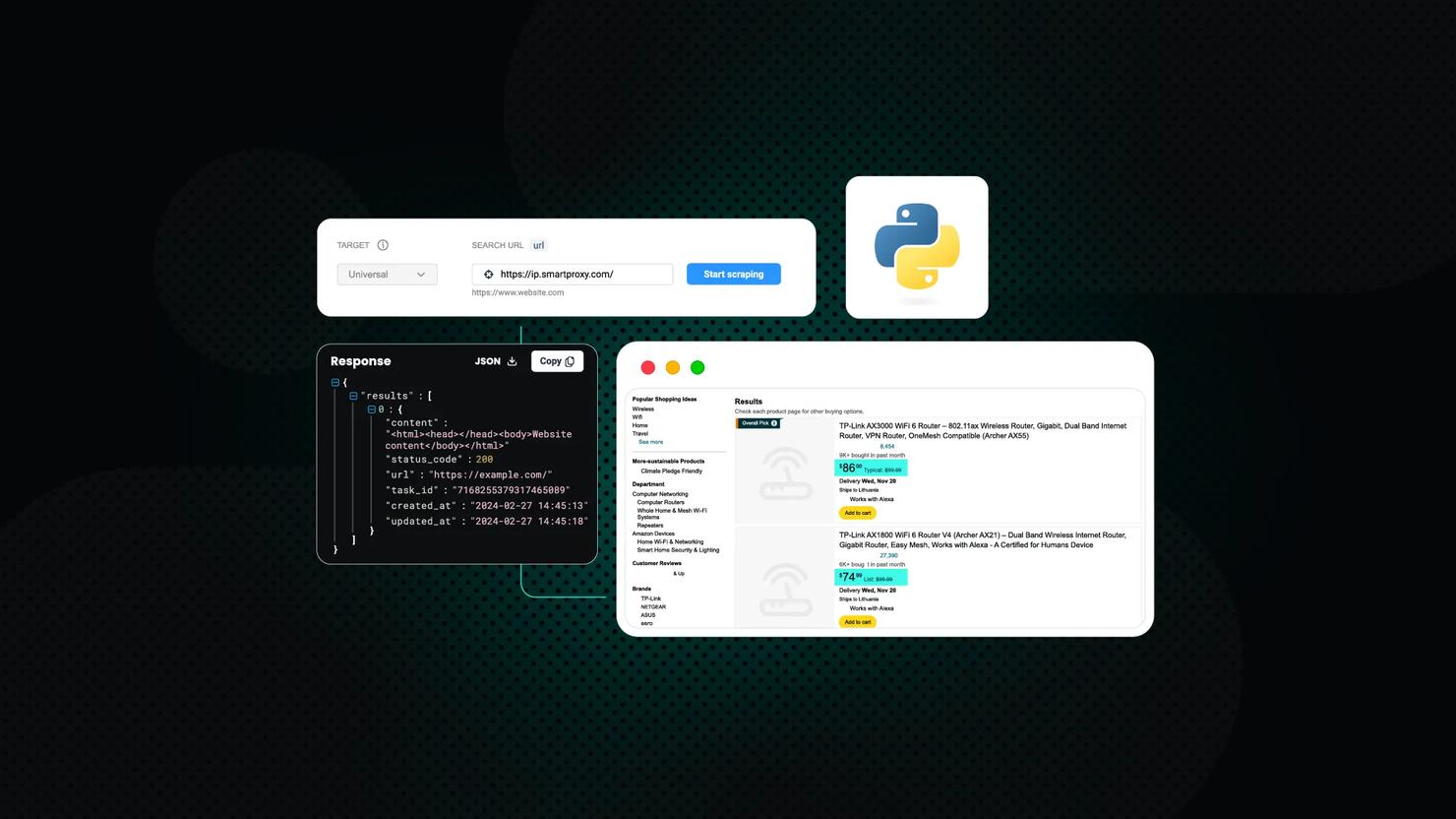
Scraping Amazon Product Data Using Python: Step-by-Step Guide
This comprehensive guide will teach you how to scrape Amazon product data using Python. Whether you’re an eCommerce professional, researcher, or developer, you’ll learn to create a solution to extract valuable insights from Amazon’s marketplace. By following this guide, you’ll acquire practical knowledge on setting up your scraping environment, overcoming common challenges, and efficiently collecting the needed data.
Zilvinas Tamulis
Last updated: Mar 27, 2025
15 min read
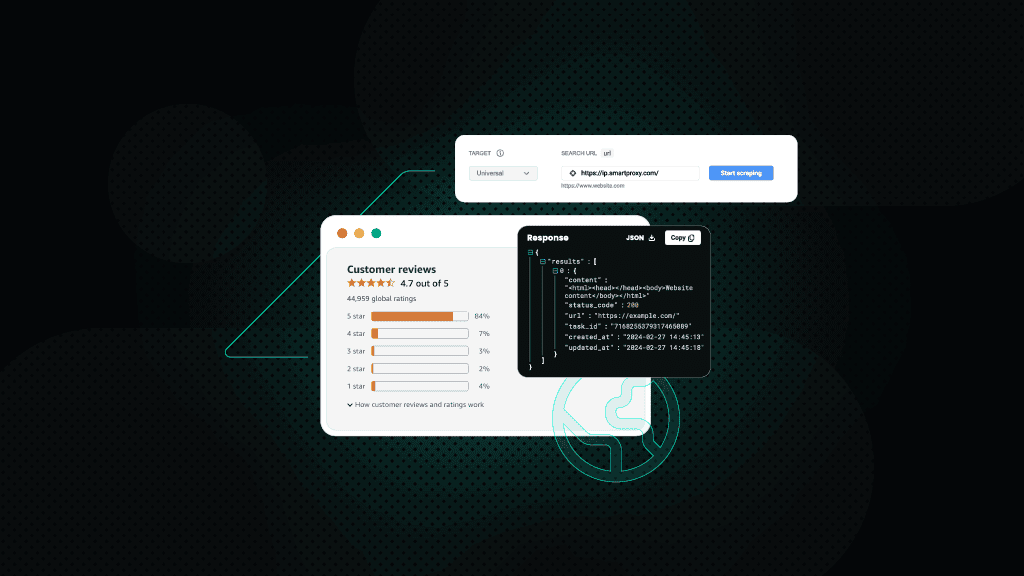
How to Scrape Amazon Reviews
Amazon is the go-to destination for online shoppers – and with that comes a treasure trove of customer reviews. These reviews provide invaluable insights for businesses looking to understand consumer preferences, researchers tracking market trends, and shoppers making well-informed decisions. In this guide, we’ll explore the types of data you can extract from Amazon reviews, outline various scraping methods, and show you how to efficiently scrape reviews using Python and our powerful residential proxies.
Dominykas Niaura
Last updated: Aug 04, 2025
10 min read
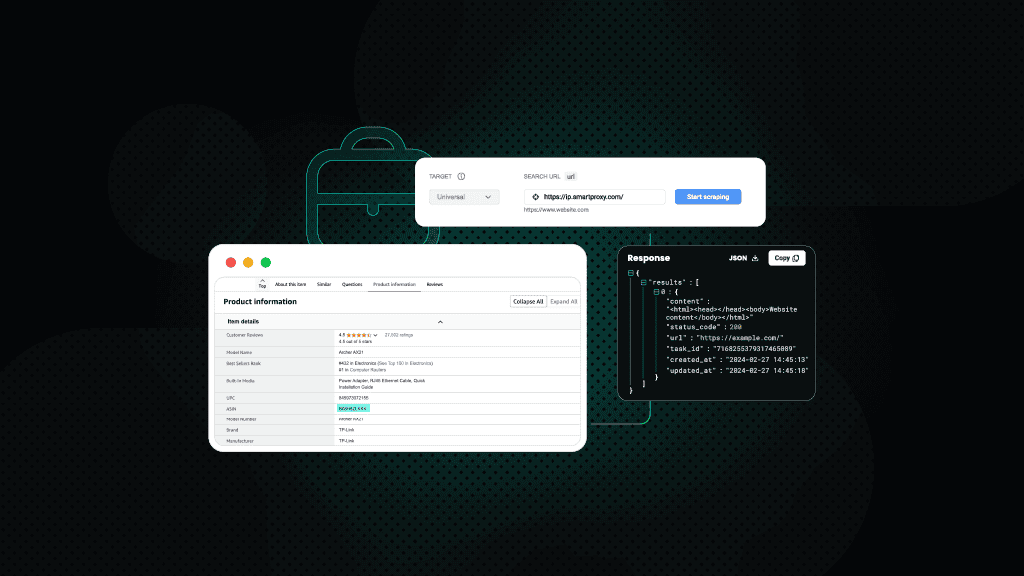
How to Scrape Amazon ASIN
Imagine you want to collect ASINs (Amazon Standard Identification Numbers) for all the products that appear on Amazon after searching for a specific item. This can be incredibly useful for tasks like market research, competitor analysis, or managing your own product listings. With our Amazon scraper, you can easily gather these ASINs directly from the search results, making the data collection process quick and efficient. In this guide, we’ll show you how to use our ready-made Amazon scraper to extract ASINs and explain how this information can benefit your business.
Dominykas Niaura
Last updated: Dec 03, 2024
7 min read
Amazon Price Scraping with Google Sheets
Amazon’s massive product ecosystem makes it a goldmine for price tracking, competitive analysis, and market research. This guide covers methods for Amazon price scraping, from small-scale tracking to enterprise-grade solutions, plus how to import data into Google Sheets for real-time analysis. Whether you’re hunting deals or analyzing eCommerce trends, we’ve got you covered.
Lukas Mikelionis
Last updated: Mar 14, 2025
9 min read
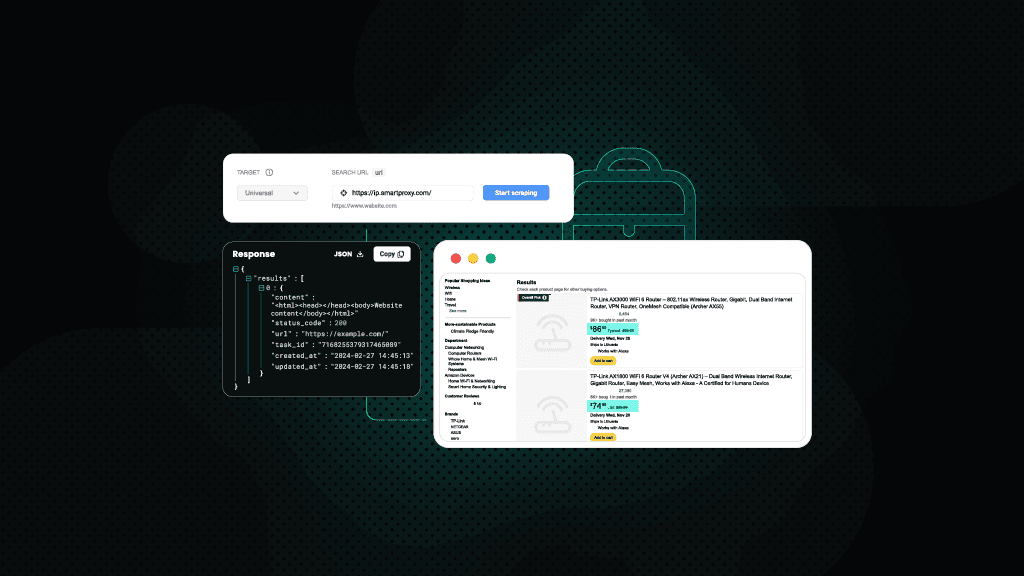
How to Scrape Amazon Prices
Amazon is the ultimate shopping platform, serving as a vast database of current, competitive pricing information. For anyone looking to track eCommerce prices, explore trends, or gain insights for competitive analysis, scraping Amazon prices is a powerful way to gather such data. In this guide on how to scrape Amazon prices, we’ll dive into the essential methods and tools available to help you gather pricing data and keep an eye on the latest deals and price changes.
Dominykas Niaura
Last updated: Nov 15, 2024
8 min read
How to Scrape Amazon Prices Using Excel
If you’re here, you already know Amazon constantly tweaks product prices. The eCommerce giant makes around 2.5 million price changes daily, resulting in the average item seeing new pricing roughly every ten minutes. For sellers, marketers, and savvy shoppers, that creates both a challenge and an opportunity.
This comprehensive guide walks you through proven methods – from Excel's built-in tools to powerful scraping APIs that can simplify your Amazon price monitoring workflow.
Zilvinas Tamulis
Last updated: Mar 31, 2025
8 min read
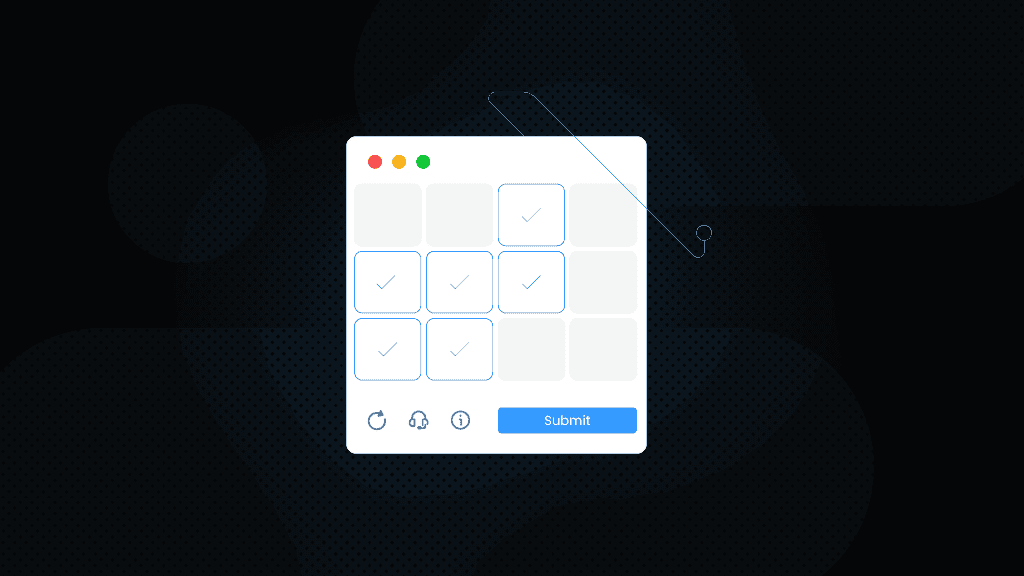
How to Bypass Amazon CAPTCHAs When Scraping
Amazon CAPTCHAs – advanced anti-bot mechanisms that prevent the robots from visiting the website and slowing down its performance. Whether you're trying to buy a new book or snag that highly coveted gadget, nothing kills the thrill of online shopping quite like the dreaded security obstacle in the form of random numbers and letters, the challenge of choosing all the motorbikes, or choosing which item is not from the same category as the rest of them.
Coming in various forms and sizes, CAPTCHAs can also prevent the bots from collecting valuable data that fuels eCommerce business growth. If you're looking for ways to avoid Amazon CAPTCHAs, implementing specific strategies can help you bypass this frustrating barrier and enhance your shopping experience.
This article will delve into the concept of CAPTCHAs and equip you with effective strategies to shop hassle-free on Amazon.
Martin Ganchev
Last updated: Oct 10, 2024
5 min read
How to Fix Amazon's "Sorry, Something Went Wrong on Our End" Error
Have you been on a shopping spree on Amazon and suddenly got stopped in your tracks by the "Sorry, something went wrong on our end" error? The page displays photos of beautiful dogs of Amazon, but neither "sorry" nor the dogs will help with your frustration. This error can interrupt your browsing and purchasing in an instant, so what can you do? In this blog post, we’ll dive into the causes of this error, ways to troubleshoot it, and tips to avoid it in the future so your shopping adventures remain enjoyable.
Dominykas Niaura
Last updated: Jan 28, 2025
5 min read
Frequently asked questions
Will my Amazon data pipeline get detected if I use proxies?
Detection risk is directly related to the type of proxy IP you use. Datacenter IPs share known ASN ranges, which anti-bot systems can identify. Residential and mobile IPs originate from real consumer devices and carrier networks – the same infrastructure that ordinary Amazon shoppers use, which makes individual requests substantially harder to distinguish from organic traffic. Combining residential or mobile IPs with sensible request intervals and session management keeps most collection pipelines running reliably. See also: how to avoid Amazon CAPTCHA.
Is using Amazon proxies for data collection legal?
The legality of collecting publicly available data from Amazon depends on jurisdiction, the type of data collected, and how the data is used. Amazon's Terms of Service restrict automated access, but courts in the United States have consistently held that scraping publicly accessible web data does not constitute a violation of the Computer Fraud and Abuse Act (see hiQ Labs v. LinkedIn, 9th Circuit, 2022). You should review Amazon's current Terms of Service and consult legal counsel for your specific use case before operating a collection pipeline at scale. For a broader overview, read our blog post, where we answer the question: is web scraping legal?
You might also be interested in Decodo's ethical proxy sourcing policy and our detailed Amazon-specific guide: Is it legal to scrape Amazon?
What type of proxy works best for Amazon?
Residential proxies are the most reliable for Amazon data collection at scale because they use IPs from real home devices. Mobile proxies offer a higher trust level still – particularly for mobile-specific Amazon pages. ISP proxies combine residential-grade trust with datacenter-grade speed (<0.2s) and are suited to time-sensitive workflows like BSR tracking or price monitoring where latency matters. Datacenter proxies are fastest and cheapest but carry a higher detection risk for large-scale Amazon jobs. For a full comparison, see proxy types explained and ISP proxies vs residential proxies.
How many concurrent connections can I run?
Decodo’s residential and mobile plans support high concurrency with no hard thread limit on most tiers. The effective concurrency ceiling depends on your plan's data allocation and the response size of the pages you are collecting.
How do I choose between rotating and sticky sessions for Amazon?
Use rotating sessions when collecting data across many independent pages (product listings, SERPs, or category pages), where each request is unrelated to the last.
Use sticky sessions when your workflow requires continuity across multiple requests to the same session context. For example, following a browsing sequence or maintaining a cart state. Decodo allows sticky sessions for up to 60 minutes or configurable durations depending on proxy type. See the rotating and sticky sessions FAQ for configuration details.
Do Amazon proxies support SOCKS5?
Yes. Decodo’s residential, ISP, mobile, and datacenter proxies support both HTTP(S) and SOCKS5 protocols. SOCKS5 operates at a lower network layer, which allows it to handle any type of internet traffic, including non-HTTP requests. To use SOCKS5, connect to port 7001 on the Decodo gateway instead of port 7000. For a full protocol breakdown, see SOCKS5 vs HTTP proxy.
Start Collecting Amazon Data Today
Decodo's proxy network gives your pipeline access to 125M+ residential, mobile, ISP, and datacenter IPs across 195+ locations with excellent response times and a 99.99% uptime.
14-day money-back option