Verizon Proxies – Real IPs, Carrier-Grade US Targeting
Verizon proxies are residential, mobile, datacenter, and ISP proxy servers that route requests through real Verizon-network IPs to return authentic US carrier data. Decodo gives you 125M+ ethically-sourced IPs across 195+ locations with a 99.94% success rate and a <0.5s response time.
14-day money-back option

125M+
ethically-sourced IPs
195+
locations
3-day
free trial
99.94%
success rate
<0.2s
response time
Trusted by 135K+ users:







What is a Verizon proxy?
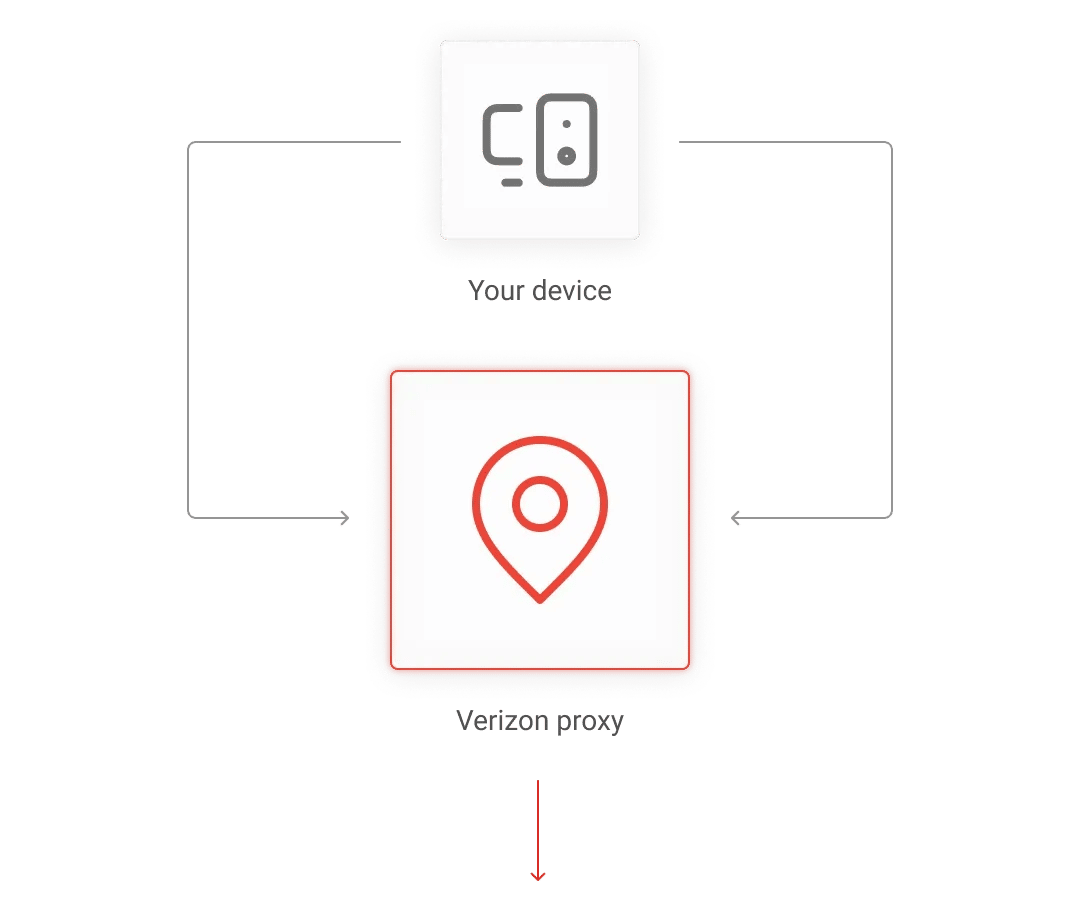
A Verizon proxy is an intermediary server that sends your web requests using an IP from Verizon’s mobile network, one of the largest in the United States. Depending on the proxy type you select, the assigned IP may originate from Verizon's residential, datacenter, mobile (3G/4G/5G), or ISP infrastructure. Because target websites see a real Verizon-subscriber IP, they treat your requests as those of a genuine US-based user on the Verizon network.
What does a Verizon proxy do?
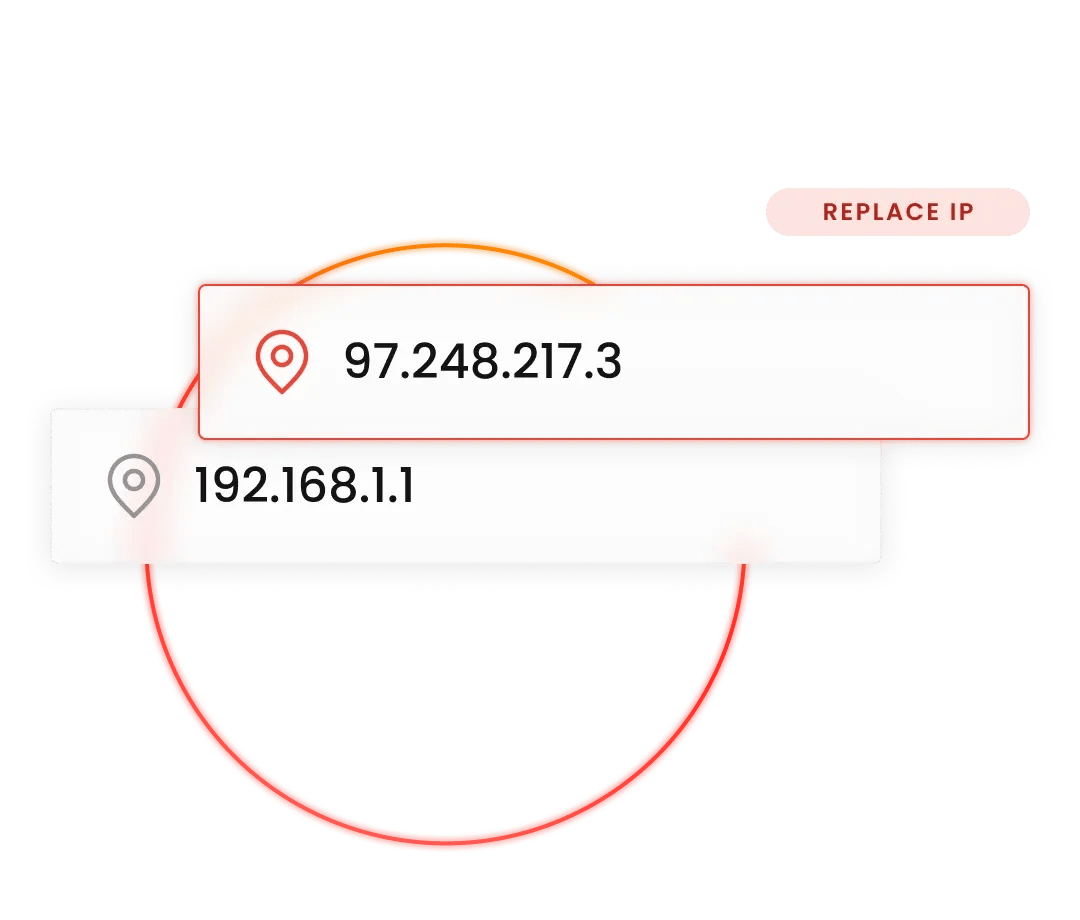
A Verizon proxy replaces your real IP with one registered to Verizon's network, enabling requests that appear to originate from an authentic US subscriber. This allows carrier-specific targeting – accessing content that varies by network, collecting US-localized pricing and availability data, and running high-volume data collection tasks with either rotating or sticky sessions without triggering access restrictions.
How does a Verizon proxy work?
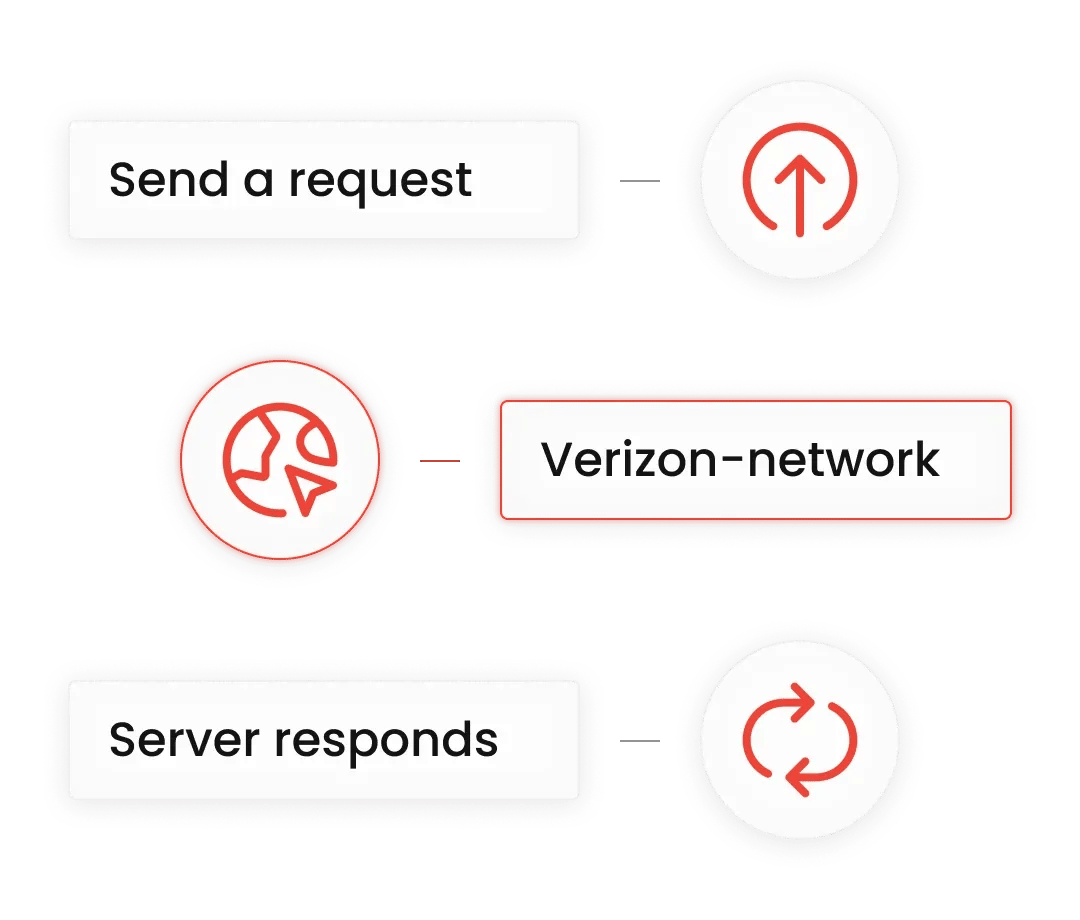
Once you send a request, everything is handled automatically based on your configuration. The proxy assigns an IP and returns the response without extra steps on your side. Here’s how it works:
- Send a request to the Decodo proxy gateway using your credentials (username:password or IP whitelist).
- Decodo assigns the request a Verizon-network IP from the residential, datacenter, mobile, or ISP pool, based on your session settings.
- The target server treats your request the same as it would a real Verizon subscriber. The response data is returned in formats like HTML, JSON, CSV, XHR, PNG, or structured Markdown. Depending on your session settings, the IP will either rotate or stay the same for the duration of your session.
What data can you collect with a Verizon proxy?
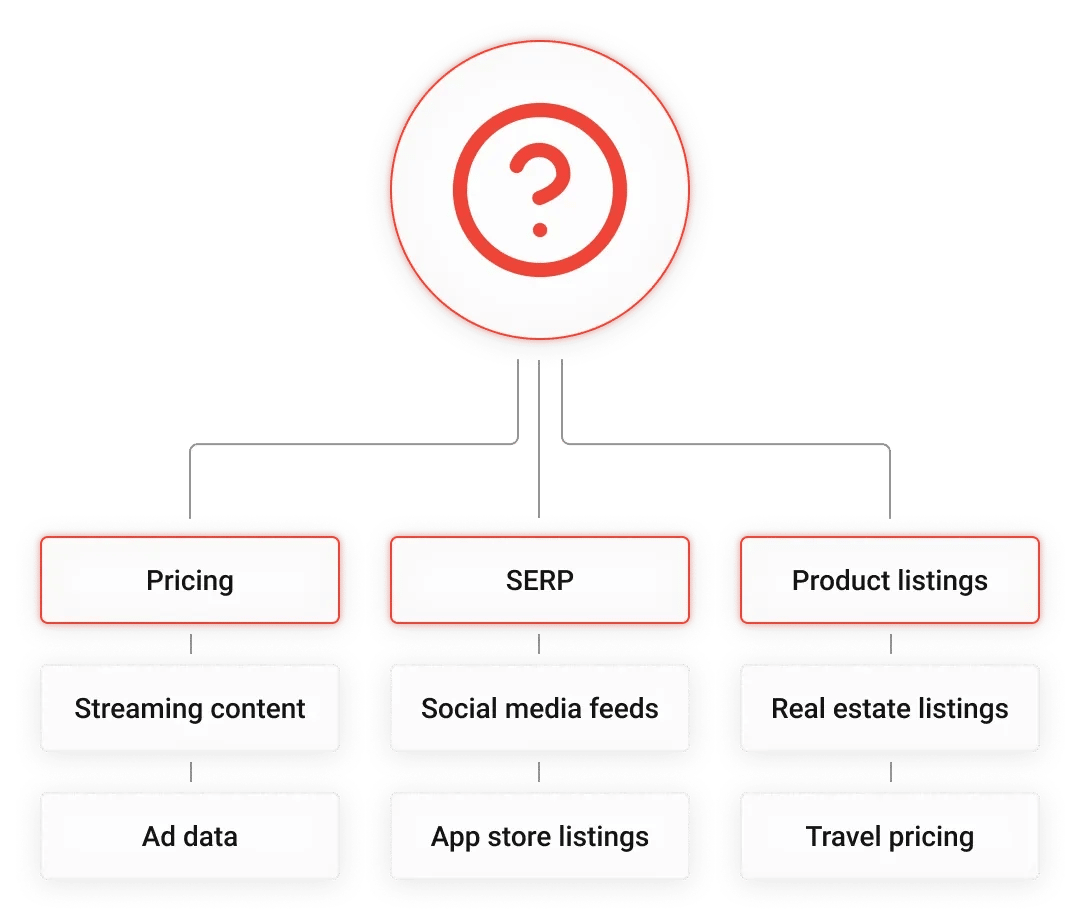
Using Verizon IPs, you can gather data that depends on carrier-level targeting and US location signals. This is especially useful for understanding how content, pricing, and availability change for real Verizon users across different regions. This includes:
- US carrier-specific pricing and promotional content
- Localized SERP results for US search queries
- eCommerce product listings and pricing variations by US region
- Social media feeds and ad placements targeting Verizon subscribers
- Real estate listings and localized property data
- Ad verification data tied to US carrier-level targeting
- Mobile app store listings and region-specific availability
- Travel fare and hotel pricing from US-geolocated sessions
- Dynamic website content gated by carrier authentication
Why use Decodo's Verizon proxies?
Decodo's Verizon proxy network combines authentic carrier-grade IPs with enterprise-level infrastructure, flexible session control, and full protocol support. See how it compares to generic proxy types and free alternatives, or read the ISP vs residential proxy breakdown if you're deciding between pool types.
Attribute
Decodo Verizon proxies
Self-managed proxies
Free proxy tools
IP source
Real Verizon residential, datacenter, mobile & ISP IPs
Mixed; often datacenter-sourced
Unknown; scraped public lists
Pool size
125M+ IPs
Limited
Minimal
Success rate
99.92%+ (residential), 99.94% (datacenter), 99.75% (mobile), 100% (ISP)
Inconsistent; often <70%
Very low; frequent failures
Response time
<0.5s residential, <0.5s mobile, <0.3s datacenter, <0.2s ISP
Varies widely
Typically 3s+
Session types
Rotating & sticky
Basic rotation only
None
Protocol support
HTTP(S) & SOCKS5
HTTP only (mostly)
HTTP only
Geo-targeting
Continent, country, state, city, ASN, ZIP
Country only
None
Uptime SLA
99.99%
No SLA
No SLA
Compliance
GDPR-compliant, ethically-sourced, Web Data API and proxies are ISO-certified
Unverified
Non-compliant
Trial
3-day free trial with 100 MB
Rarely available
"Free" but unreliable
What makes Decodo's Verizon proxies different?

Authentic Verizon IPs
Real IPs from Verizon’s residential and mobile networks for stable, uninterrupted access that looks like genuine user traffic.

4 proxy types
Choose from residential, mobile, ISP, and datacenter proxy options on our comprehensive proxy types page and pick what works best for you.

125M+ IP pool
One of the largest ethically-sourced proxy pools available, refreshed continuously for consistent performance.

<0.2s response time
Low-latency connections optimized for high-frequency data collection and automation workflows at scale.

Carrier-level geo-targeting
Pinpoint requests to a specific US state, city, ASN, or ZIP code for precise localization.

Rotating & sticky sessions
Rotating sessions switch IPs on every request. Sticky sessions hold the same IP for the duration of a long-running task.

HTTP(S) & SOCKS5 support
Full protocol flexibility via SOCKS5 and HTTP(S) to integrate with any scraping framework, automation tool, or browser.

99.99% uptime
Enterprise-grade infrastructure with a guaranteed availability commitment backed by Decodo's global network.

3-day free trial
Test all proxy types with 100MB of included traffic via the free trial page before committing to any subscription.
What are the use cases for Verizon proxies?
How do Verizon proxies help with US market research?
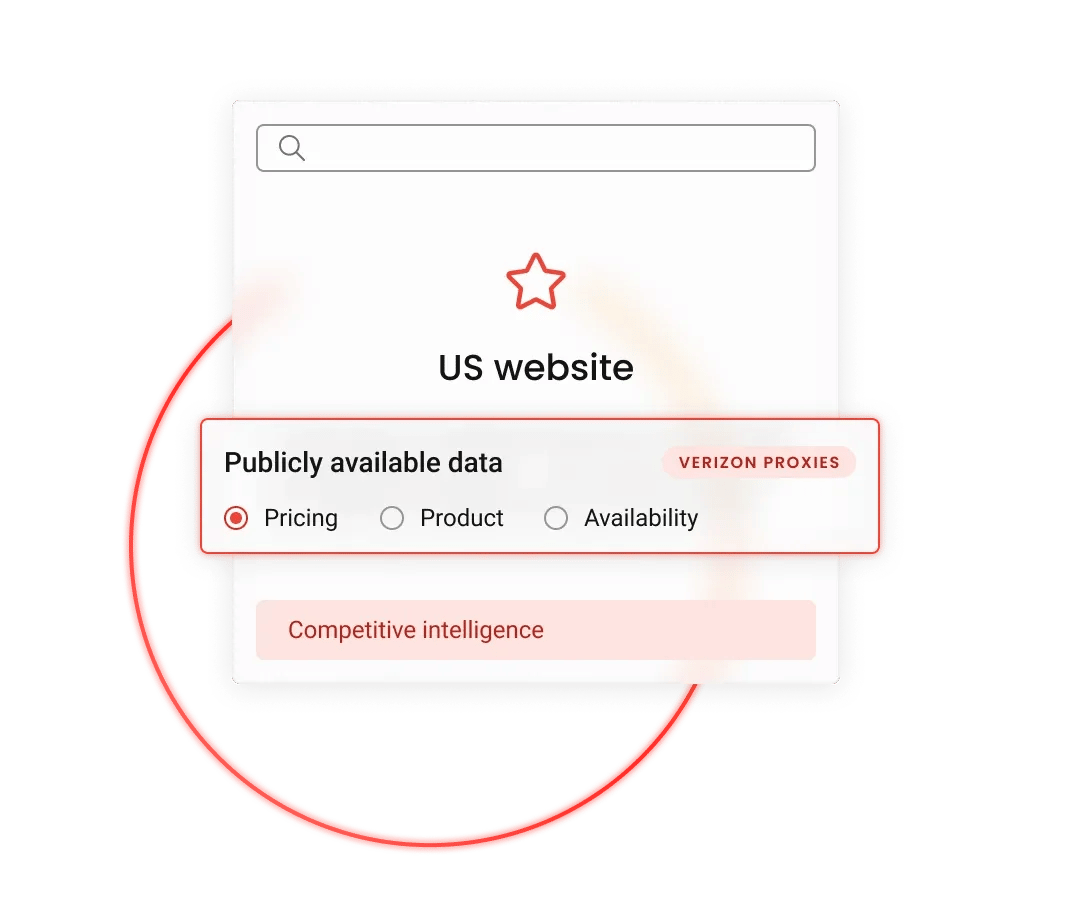
Verizon proxies let you collect publicly available pricing, product, and availability data from US websites as a genuine local subscriber would see it. Because your requests originate from a real Verizon-network IP, you receive the same content that US consumers see, including region-specific promotions and geo-restricted catalogs. This makes them particularly effective for competitive intelligence and price benchmarking.
How can I use Verizon proxies for ad verification?
Ad verification requires viewing placements exactly as your target audience sees them – on the right device, in the right location, and on the right carrier network. Verizon proxies provide US carrier-specific IPs so you can verify whether ads are served correctly to Verizon subscribers and detect unauthorized modifications. See Decodo's dedicated ad verification use case page for supported workflows.
How do Verizon proxies support eCommerce price monitoring?
US eCommerce platforms often display different prices, promotions, and availability based on the visitor's location and carrier network. Verizon proxies let you access the internet as if you’re a local U.S. mobile user, making it easier to collect data from major retailers at scale and supporting both dynamic pricing analysis and price tracking workflows without triggering bot detection systems designed to filter datacenter traffic.
How do Verizon proxies enable carrier-specific content access?
Some web properties deliver content differently depending on the user's network provider. With a Verizon-assigned IP, you can collect data from platforms that restrict access by carrier, test how your own content behaves for Verizon subscribers, and verify that carrier-specific delivery rules are functioning as intended across your target markets.
How do developers use Verizon proxies for mobile app testing?
Mobile apps frequently behave differently based on the device's carrier and geographic location. Verizon mobile proxies on 3G/4G/5G let developers simulate how their app performs for real Verizon subscribers without requiring a physical device on the network. This enables QA testing, regional feature rollout validation, and carrier-specific issue reproduction at scale.
Which US targets can you access with Verizon proxies?



Social media
Access US-targeted feeds, ad placements, and public content from TikTok and other platforms.

Travel & hospitality
Scrape US-facing fares, availability, and pricing from Airbnb and similar websites.


Financial data
Access market data, news feeds, and financial content restricted to US-based IPs.

Carrier-gated content
Reach web properties that deliver different content based on the visitor's carrier network.

App stores
Gather US-specific app listings, pricing, and availability from mobile app marketplaces.
How do you integrate Verizon proxies with Python, Node.js, or cURL?
How do you get started with Verizon proxies?
Start with Decodo’s Verizon proxies by choosing the setup that fits your workflow. Use a no-code dashboard template, connect directly via API, or plug them into your preferred third-party tools.
How do I use the no-code template?
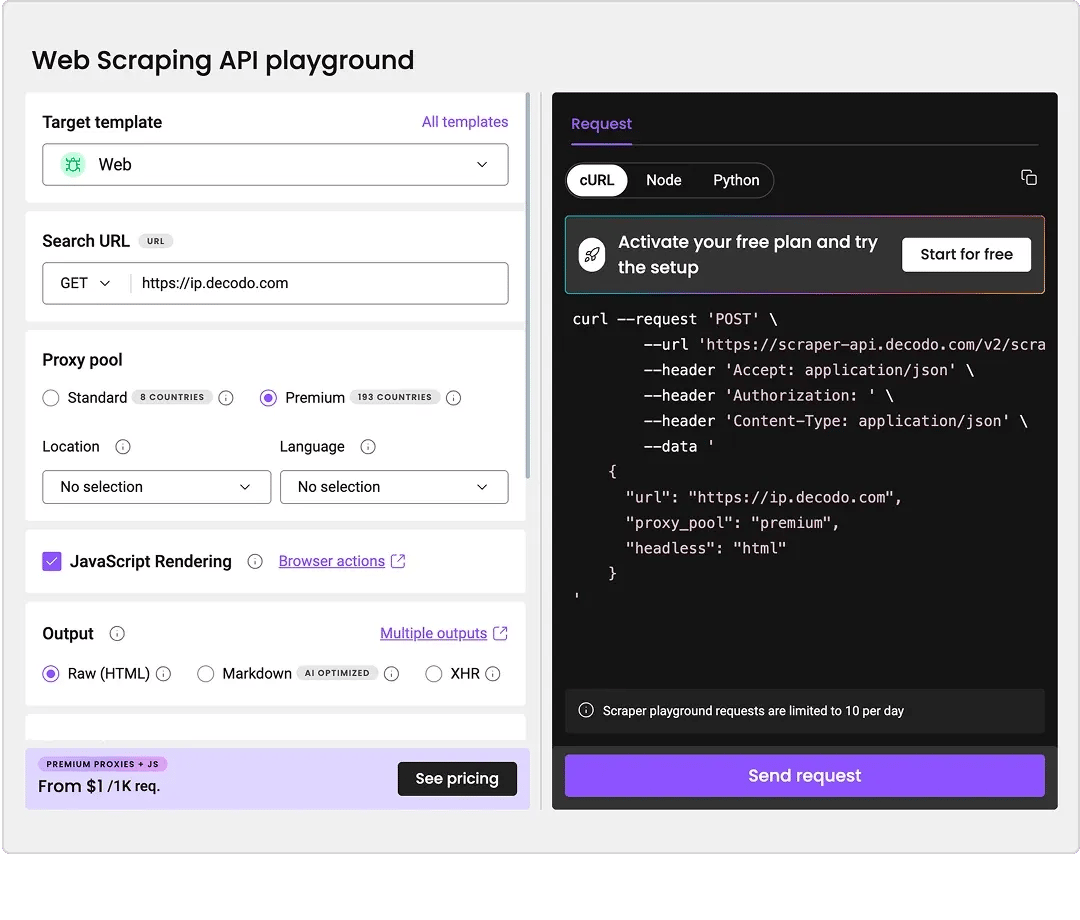
Decodo's no-code scraping templates let you start collecting data without writing a single line of code. Select the Verizon proxy pool in your dashboard, choose a pre-built template for your target, and configure your session and geo-targeting settings. The template handles request formatting, IP rotation, and error management automatically.
How do I integrate via API?
Decodo's proxy API uses standard HTTP(S) authentication. Replace USERNAME and PASSWORD with your dashboard credentials, set the gateway endpoint for your chosen proxy type, and point your existing HTTP client or scraping framework at the Decodo gateway. Full API documentation and SDK references are available in the developer hub.
How do I try Verizon proxies for free?
Create a free Decodo account, then navigate to the Residential, Mobile, Static Residential (ISP), or Datacenter section of the dashboard. Activate the 3-day free trial, and you’ll receive 100 MB of traffic to test any proxy type. For higher evaluation volume, contact the sales team for a custom trial arrangement.
How are Verizon proxies priced?
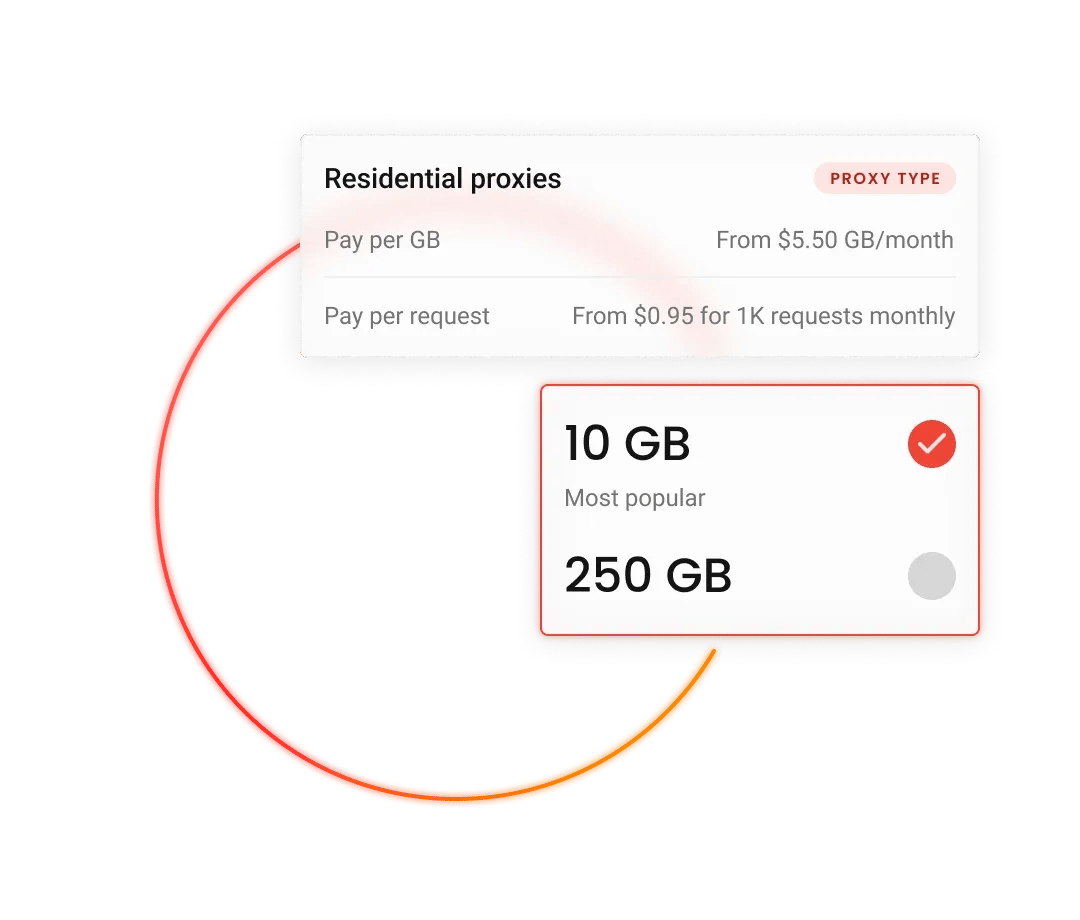
You can pick a proxy subscription based on your specific project needs and how you plan to use it. For smaller or one-off tasks, residential and mobile proxies support a Pay As You Go model, so you only pay for the traffic you actually use. If you prefer predictable usage, monthly plans are available across residential, static residential (ISP), mobile, and datacenter proxies with a fixed GB amount.
There are also options designed for more stable connectivity. Datacenter and static residential (ISP) proxies can be billed per IP, giving you access to IPs shared with a limited number of users – useful when you need consistent sessions over time. For full exclusivity, static residential (ISP) and datacenter plans also include dedicated IPs that are used only by you and come with unlimited traffic.
To explore everything, you can start with a 3-day free trial that includes 100MB of data. For higher-volume requirements, you can upgrade to an Enterprise plan or contact the sales team to create a custom package.
Verizon proxy plans and pricing
14-day money-back
SSL Secure Payment
Your information is protected by 256-bit SSL

What our clients and industry experts say about Decodo
135K+ users trust our infrastructure for all their data collection and automation needs.

Attentive service
The professional expertise of the Decodo solution has significantly boosted our business growth while enhancing overall efficiency and effectiveness.
N
Novabeyond
Easy to get things done
Decodo provides great service with a simple setup and friendly support team.
R
RoiDynamic
A key to our work
Decodo enables us to develop and test applications in varied environments while supporting precise data collection for research and audience profiling.
C
Cybereg





Verizon proxy guides and resources
Most recent
JavaScript Web Scraping Tutorial (2026)
Ever wished you could make the web work for you? JavaScript web scraping allows you to gather valuable information from websites in an automated way, unlocking insights that would be difficult to collect manually. In this guide, you'll learn the key tools, techniques, and best practices to scrape data efficiently, whether you're a beginner or a developer looking to streamline data collection.

Zilvinas Tamulis
Last updated: Oct 12, 2026
13 min read
Most popular

How Residential Proxies Work: A Technical Guide to Types, Networks & IP Sourcing
A residential proxy network routes your traffic through real ISP-assigned home IPs. But how routing actually happens, which proxy types you end up using, and how IPs are sourced have a much bigger impact on success rates. This guide breaks down how residential proxy networks work, including ASN-level routing, the different types of IPs, and the protocols they support.
Robertas Lisickis
Last updated: Jun 11, 2026
11 min read
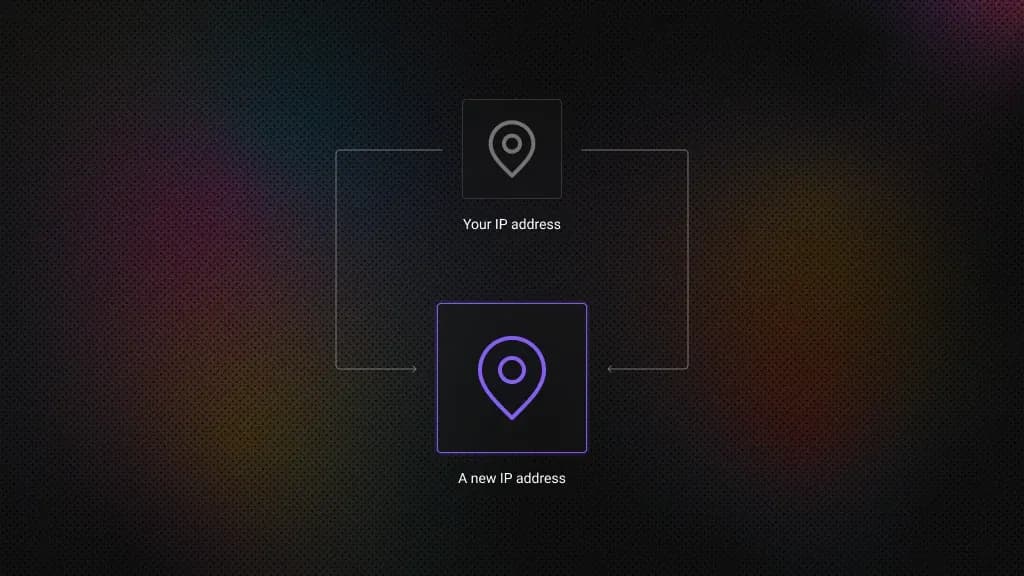
Fake IP Address: What Is It and Why Shouldn't You Use It?
When we scale businesses, do research, or just scroll leisurely, it's always a good idea to be clued up on online security. Whatever your reasons for running your eyes over a web browser are, anonymity and privacy are two pretty important players here. The thing is that any browser, website, system, or network can see our IP address. Some of them might even log your IP address and track it. In this blog post, we’ll go over the dangers of using free software, fake IPs, and the illegal aspects of using IP information.
Benediktas Kazlauskas
Last updated: Nov 05, 2025
6 min read

Introducing Static (ISP) Residential Proxies
This announcement is undoubtedly one of the best news we’ve shared in a while. So, all proxying aficionados, please welcome the newest addition to our proxy family – Static (ISP) Residential Proxies! It’s definitely a long-awaited one, so here’s a quick recap of what’s in store:
- Rotating on-demand IPs – keep the same IP address for as long as you need, whether it’s an hour or a whole day.
- Guaranteed 99.99% uptime – get unmatched stability and zero interruptions.
- Amazing speed – enjoy ISP proxies that have the unbeatable datacenter proxies speed.
- Forever website sessions – break free from restrictions and complete traffic-intensive tasks with ease.
- Highly customizable – tailor the static residential proxies settings to your needs.
James Keenan
Last updated: Jun 08, 2023
3 min read
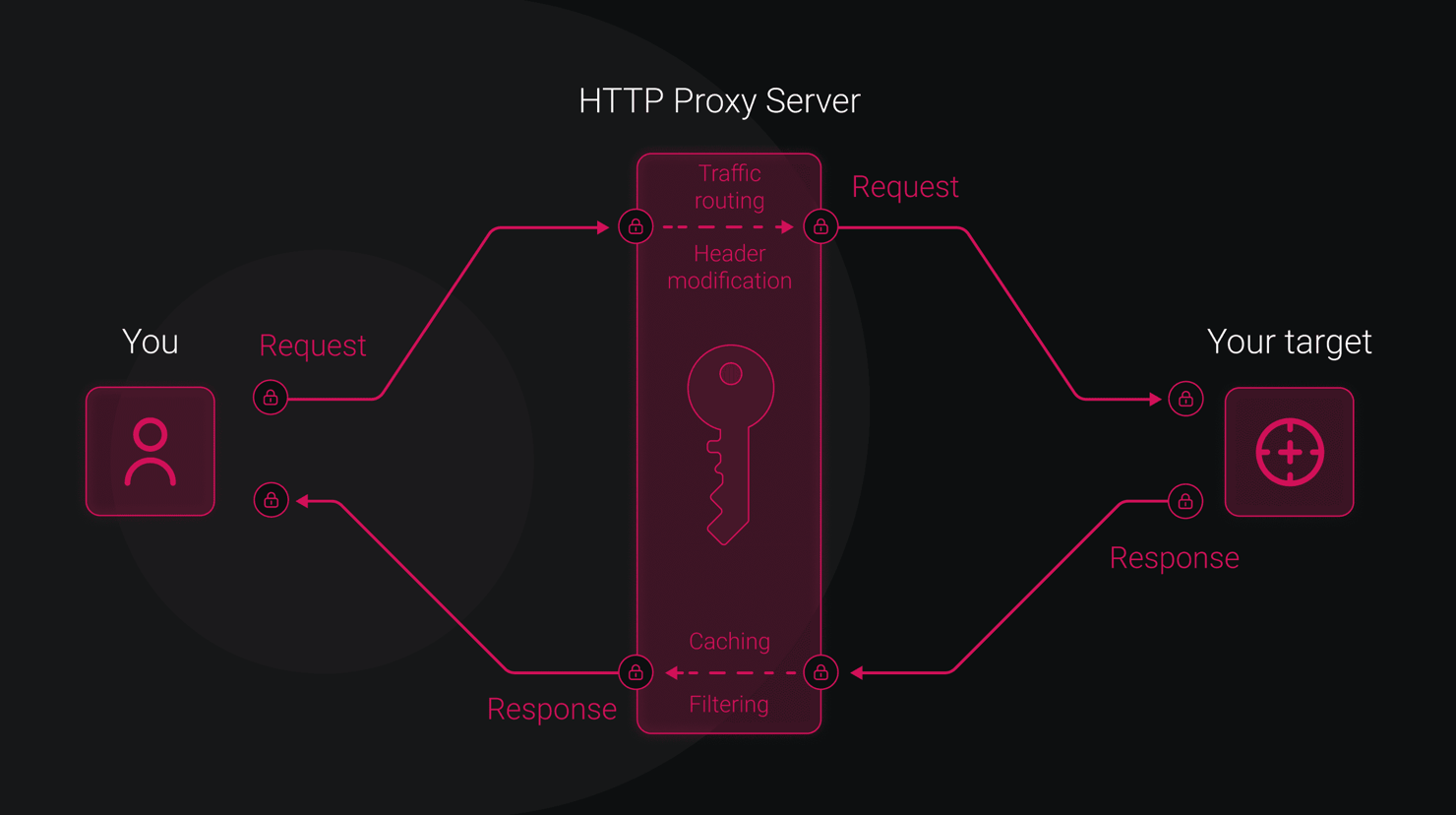
HTTP Proxy: Definition, Use Cases, and Error Solutions
HTTP proxies are one of the most common types of proxies, widely supported across various proxy types, including residential, mobile, datacenter, and static residential proxies. Designed specifically to handle HTTP and HTTPS traffic, they’re a versatile solution for tasks like anonymizing browsing, bypassing geo-restrictions, and optimizing network operations. In this blog post, we’ll explore what HTTP proxies are, their use cases, and practical solutions to common errors.
Dominykas Niaura
Last updated: Jan 27, 2025
7 min read
Difference Between SOCKS5 Proxy vs. HTTP Proxy
Choosing the right proxy type is essential for optimizing performance, security, and efficiency in web data collection. SOCKS and HTTP proxies serve different technical needs, from handling large-scale web scraping projects to managing automation and secure connections. In this article, we’ll compare SOCKS (SOCKS5 in particular) and HTTP proxies, explore their advantages, and help you determine which option best supports your data-driven tasks. By the end, you’ll have the clarity to make an informed decision and scale your operations with confidence.
Vilius Sakutis
Last updated: Mar 06, 2025
7 min read
How to Set Up, Configure, and Use SOCKS5 Proxy
SOCKS5 proxies operate as an application-layer protocol, making them highly versatile across different setups. Depending on your goals, you can configure them at the application level to isolate traffic from a specific tool, or apply them system-wide to route traffic across your entire device. This guide shows how to set up and use a SOCKS5 proxy across Windows, macOS, Linux, mobile devices, and selected applications, helping you choose the best configuration for your workflow.
Dominykas Niaura
Last updated: Aug 18, 2026
10 min read
What Are Rotating Proxies? Types, Benefits & Use Cases
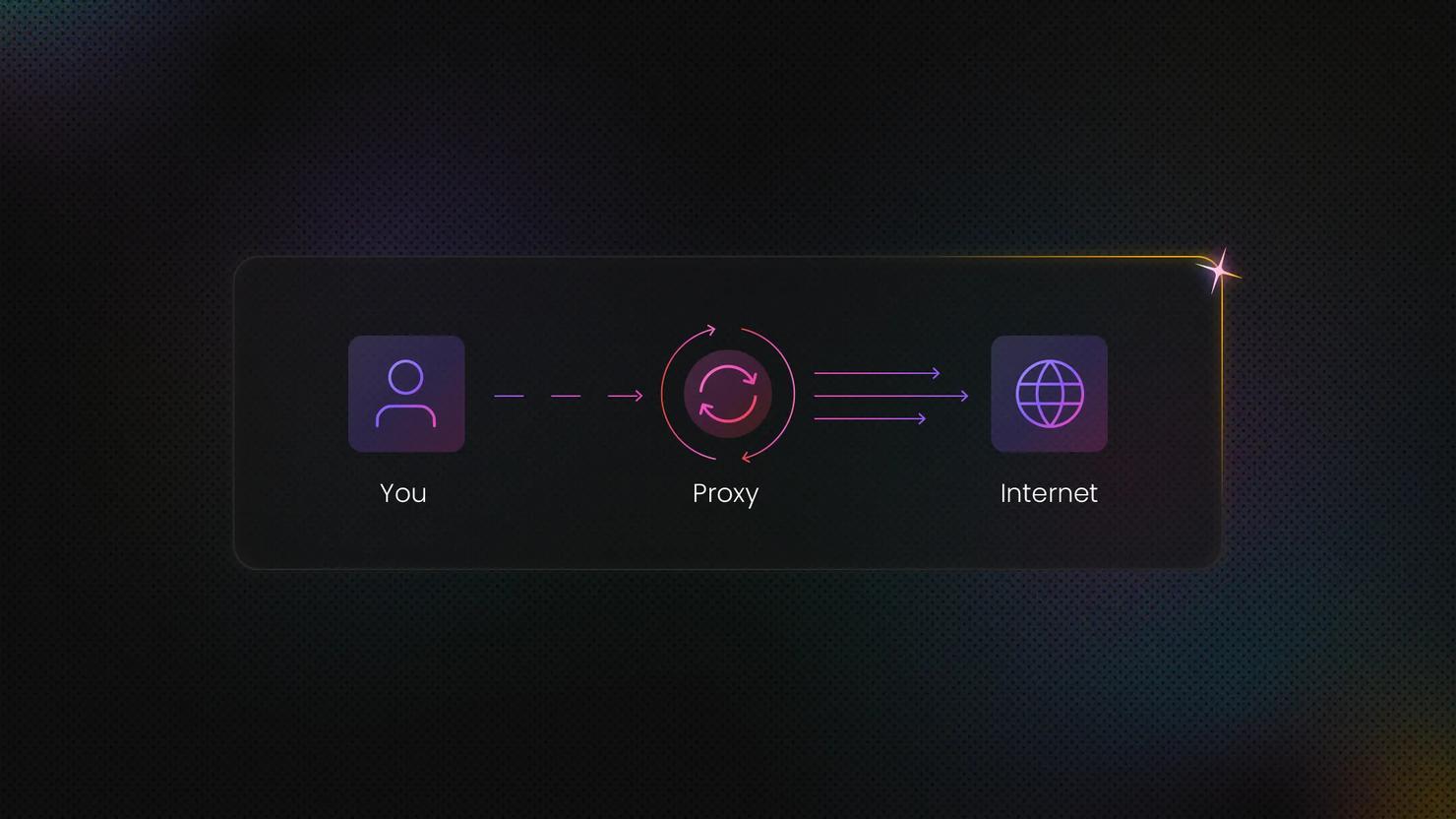
A rotating proxy is a proxy server that automatically assigns a new IP address at regular intervals or after each connection. In this guide, we'll delve into how rotating proxies work, the different types available, and the most common use cases where they offer a clear advantage.
Dominykas Niaura
Last updated: Apr 30, 2025
7 min read
Frequently asked questions
How do I know Decodo's Verizon proxies will work for my use case?
We recommend starting with the 3-day free trial, which includes 100MB for any proxy type. Test against your actual target with your preferred proxy type and session configuration. The trial covers all proxy types, so you can compare performance before committing. For extended evaluation or higher volume, contact Decodo’s sales team for a custom arrangement.
How do I get a refund if Verizon proxies don't meet my needs?
Decodo's private proxy plans include a 14-day money-back option. If the proxies don’t meet your requirements within that period, contact our tech support via LiveChat to request a refund. Pay As You Go and enterprise plans have separate terms – review the pricing page or speak to the sales team before purchasing.
Please keep in mind that the 14-day money-back option doesn’t apply if you’ve used a free trial.
How do I target a specific Verizon ASN or US city with Decodo proxies?
In your Decodo dashboard, select the proxy type and use the targeting parameters to specify the country (US), state, city, or ASN. For Verizon-specific ASN targeting, enter Verizon's registered ASN identifiers in the ASN field. See how to select a proxy from a specific location for step-by-step guidance.
How do I switch between rotating and sticky Verizon proxy sessions?
In the proxy endpoint configuration, set the session parameter to rotating (new IP on each request) or sticky (same IP held for the session duration). Sticky sessions support unlimited duration for ISP proxies and configurable durations for residential and mobile proxies. See the full rotating vs sticky sessions guide in the FAQ.
How do I integrate Decodo's Verizon proxies with my existing scraping framework?
Decodo proxies use standard HTTP(S) and SOCKS5 protocols, compatible with any tool that supports proxy authentication – including Scrapy, n8n, Playwright, Puppeteer, Selenium, and cURL. Replace your existing proxy endpoint with the Decodo gateway URL, add your credentials, and you are ready to start.
Start Collecting Data Effortlessly
Access 125M+ Verizon-network IPs with carrier-grade targeting and a 99.94% success rate. Try it for free for 3 days to see for yourself.
14-day money-back option