Artificial Intelligence
Artificial intelligence (AI) helps computers think and learn like humans by finding patterns in data. AI can automate tasks, make predictions, and solve problems across many industries. From chatbots that answer questions to AI agents that help to eliminate those time-consuming tasks – the key to successful AI is having good data to train it, enough computing power to run it, and careful planning to make sure it meets your business standards.
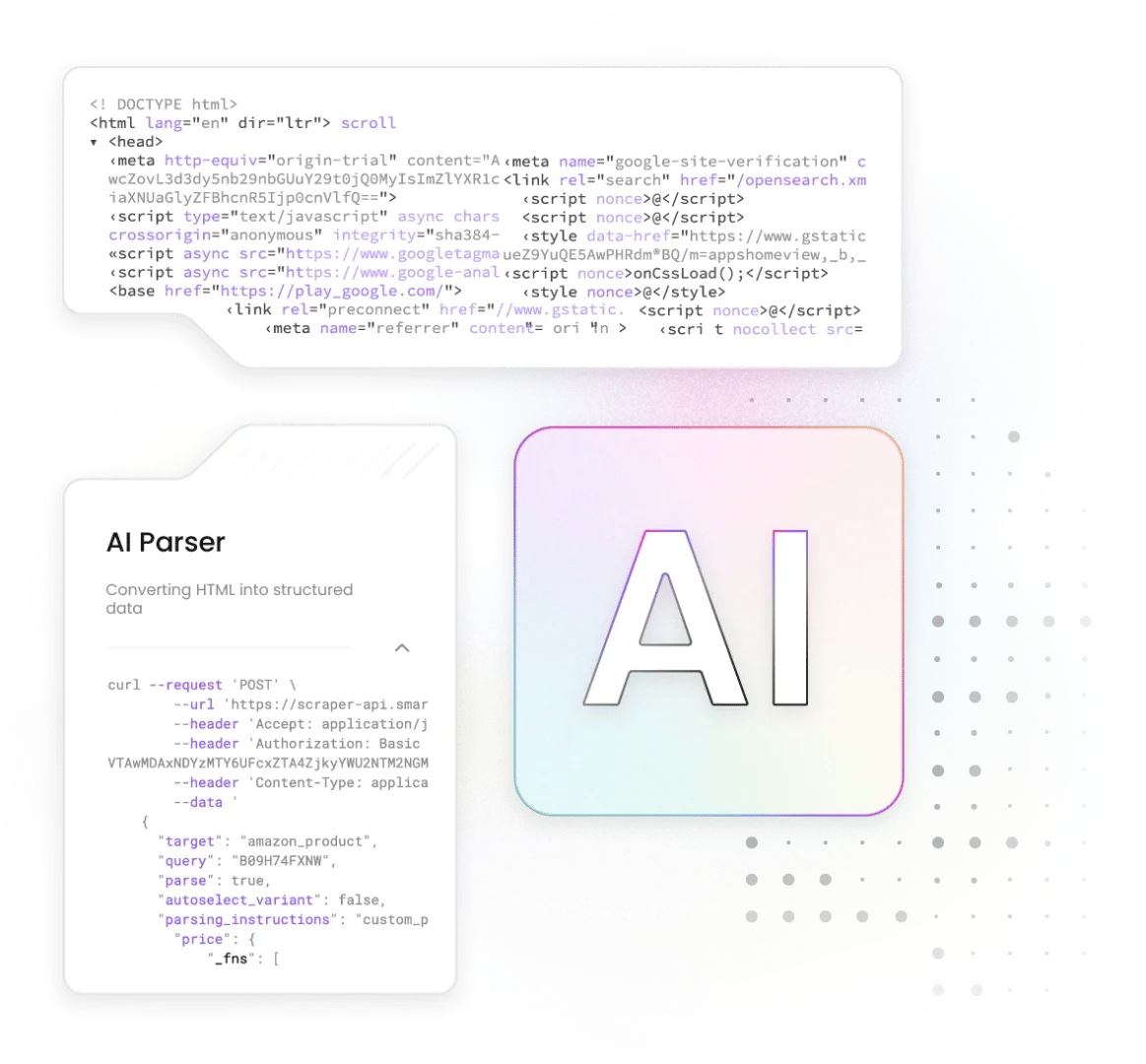

Agentic Web Scraping: How AI Agents Collect Web Data
Agentic web scraping is web scraping where an AI agent decides what to do, rather than following a fixed sequence of steps. It identifies the information it needs and chooses its own actions, such as following a link, opening another page, or extracting specific content. This guide explains how agentic web scraping works and when to use it, along with the best agentic scraping tools in 2026.

Kipras Kalzanauskas
Last updated: Sep 18, 2026
8 min read

Self-Healing Selectors: How AI Web Scrapers Survive Site Redesigns
Self-healing selectors let a scraper relocate the data it's looking for after a site's HTML changes, instead of breaking and needing a manual fix. Search interest in AI-driven scraping has spiked sharply lately, and open-source tools built around this idea have seen rapid adoption, as site redesigns get more frequent and selector maintenance becomes the real cost of running a scraper.

Zilvinas Tamulis
Last updated: Sep 17, 2026
9 min read

ChatGPT Atlas Is Gone. The AI Browsers That Bypass Detection Aren't
OpenAI shut down ChatGPT Atlas, its standalone AI browser, on August 9, 2026, less than a year after launch, folding browsing into the main ChatGPT app. That matters beyond the product news: Atlas and Perplexity's Comet showed that an AI agent browsing the web can be indistinguishable from a human using Chrome, a structural shift in detection that survives the shutdown.
Zilvinas Tamulis
Last updated: Sep 17, 2026
7 min read

ShieldFont Explained: How It Works and What Still Gets Through
ShieldFont is an open-source web font that swaps some of a page's words in the HTML source for different ones and redraws the originals on screen through the font's own rendering rules. The idea is to make the writing harder to use in AI training without permission. In this blog post, we'll tackle how the mechanism works and where it stops.

Robertas Lisickis
Last updated: Sep 16, 2026
7 min read

MCP Server Examples by Category: What Each One Does (2026)
MCP server examples show a real server giving an AI model one capability: reading files, querying a database, or fetching live web data. Without MCP, every connection means more glue code to maintain. This guide groups examples by category: web data, developer tools, productivity, databases, search, and design and project management, with what each does and a task it powers.
Kipras Kalzanauskas
Last updated: Sep 14, 2026
8 min read

Claude MCP: How To Set Up MCP Servers in Claude Desktop and Claude Code
Claude MCP is the Model Context Protocol as Claude implements it: a server declares tools, and Claude calls them. Claude Desktop and Claude Code both use it, and each reads a different config file. This guide sets up both clients, then measures cost and hidden failures.

Justinas Tamasevicius
Last updated: Sep 14, 2026
12 min read
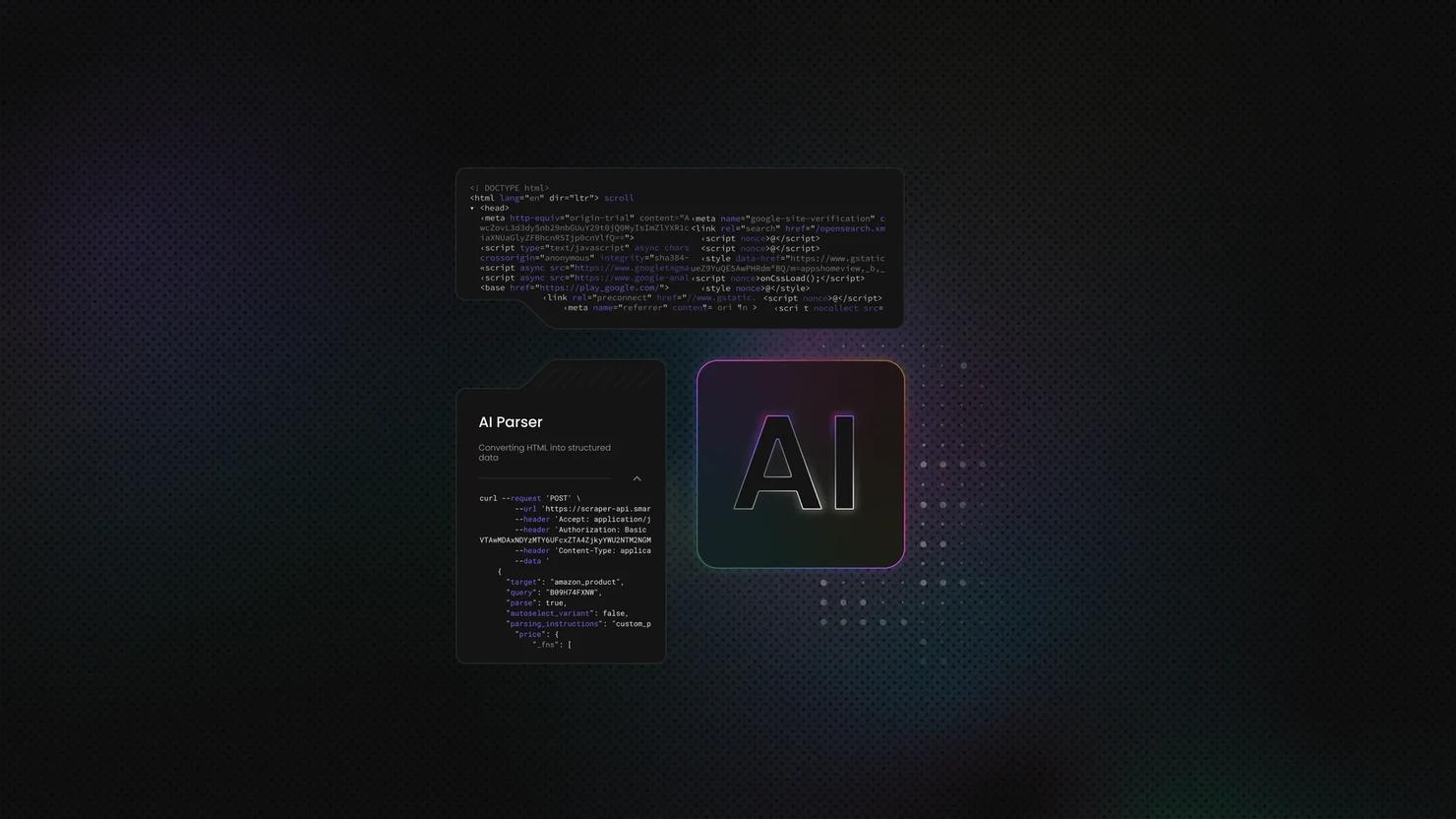
MCP vs. CLI: How to Choose the Right AI Agent Tooling
MCP and CLI are simply two ways to give AI agents like Claude, Cursor, or your own custom agent access to tools, either through a structured protocol or through the terminal. MCP standardizes how those tools get discovered, authenticated, and returned as clean output. CLIs, on the other hand, cost almost nothing in context, and models already know them from training. So choosing between the two comes down to your context budget, your workflow, and whether you need to share the tool with other agents.

Mykolas Juodis
Last updated: Sep 09, 2026
15 min read
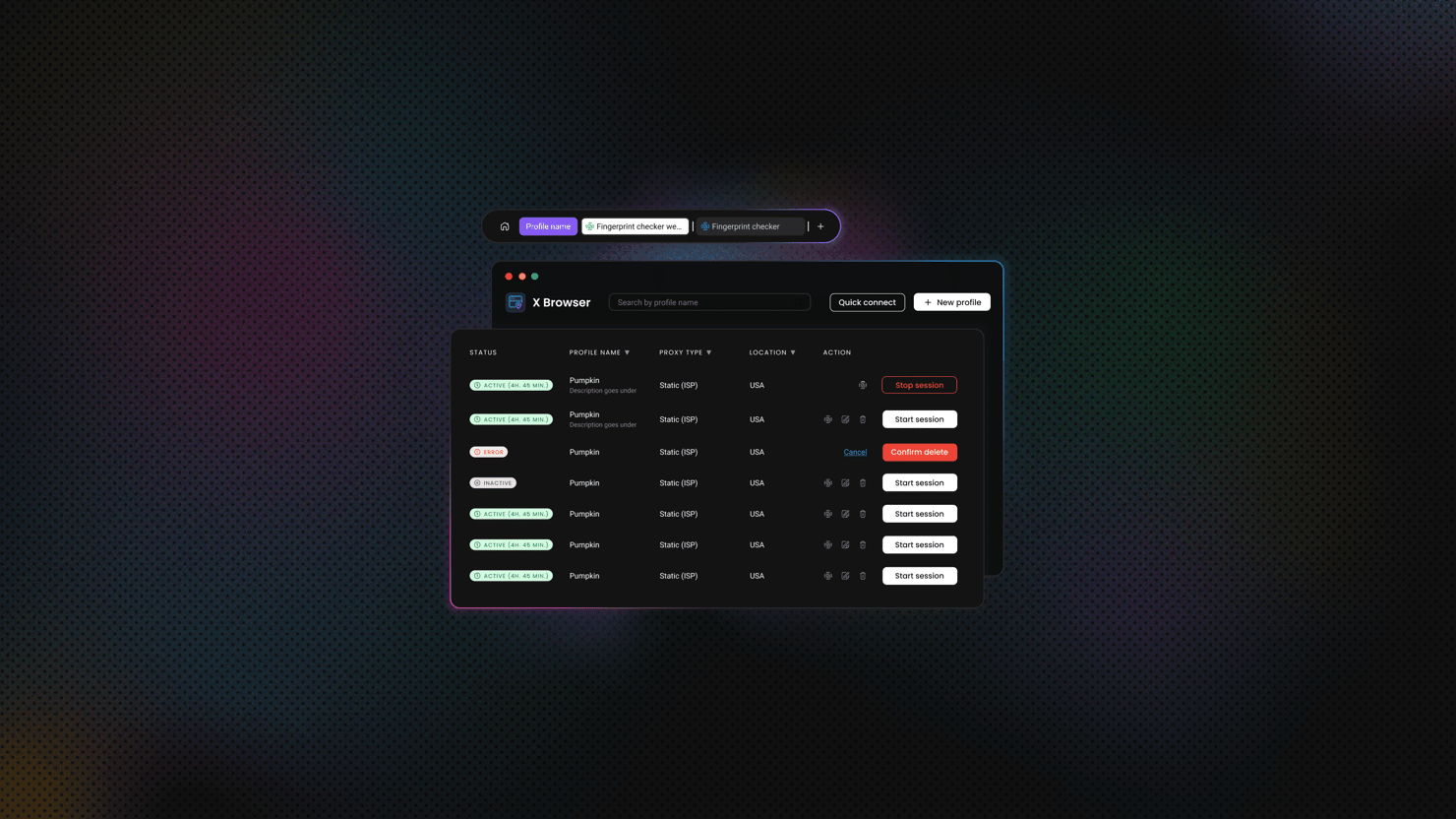
Browser-use Tutorial: Build an AI Agent That Drives a Real Browser
This Browser-use tutorial shows you how to point an AI agent at a live browser and have it get real work done. Browser-use is the leading open-source library for giving LLM agents browser control – MIT-licensed, with over 110k GitHub stars. By the end, you'll have an agent scraping product data, working through multi-step flows, and handling failures.

Dominykas Niaura
Last updated: Sep 01, 2026
10 min read
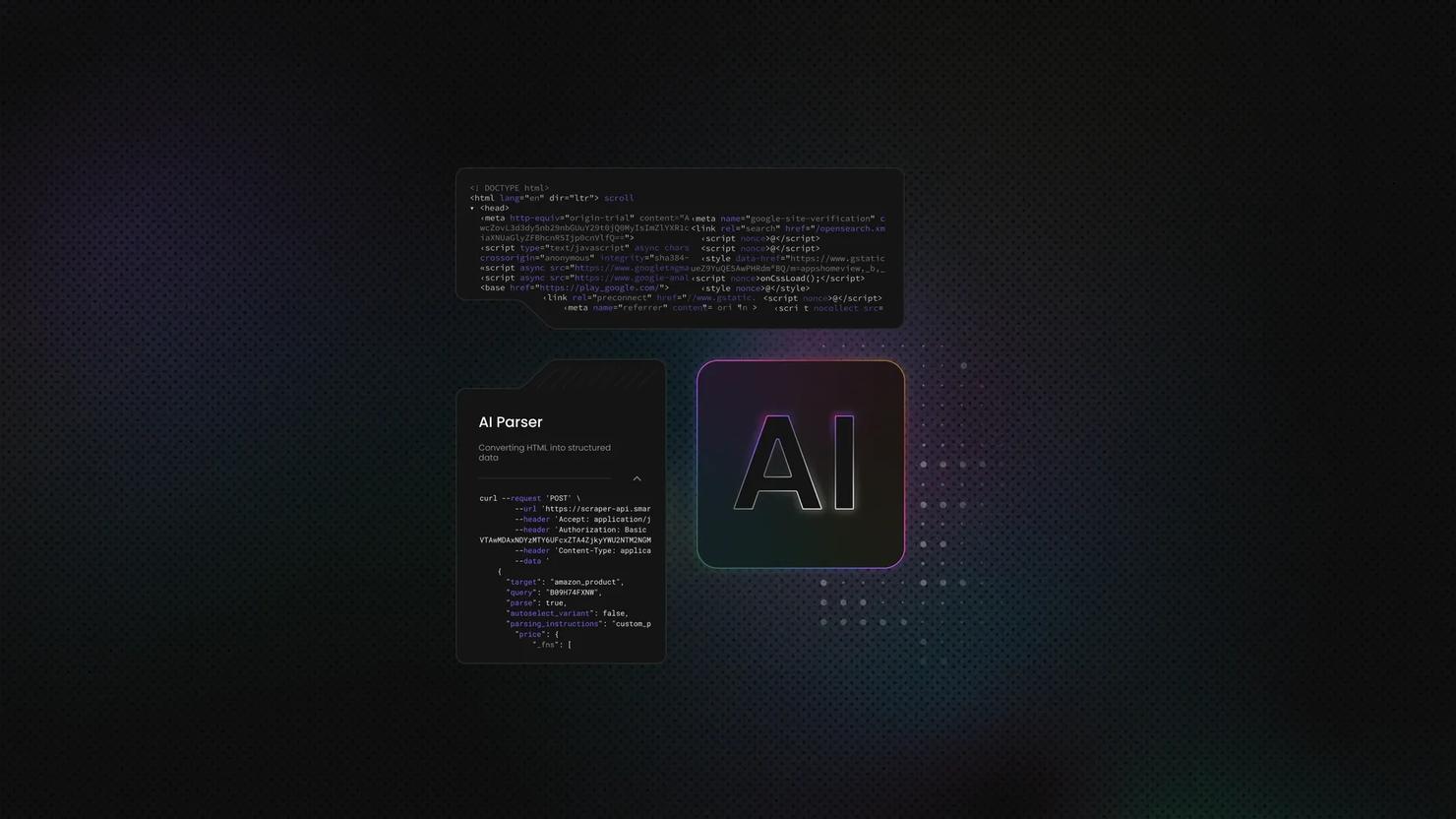
Agentic Commerce: Why AI Shopping Agents Get Blocked
Agentic commerce means an AI agent does the shopping: it searches catalogs, compares prices, and sometimes checks out. Retailers are meant to expose a protocol for that. When none is published, the agent reads the product page like a person. We ran 10 US retailer pages through 4 clients, and the best one we built read 5 of them. Adding a real browser didn't help. Correcting its client hints did.
Mykolas Juodis
Last updated: Aug 26, 2026
16 min read

Kimi Code CLI Guide: Setup, MCP, and Kimi CLI Differences
You run kimi mcp add to connect to an MCP server. Kimi Code CLI returns the unknown command 'mcp'. Nothing is broken: Moonshot AI publishes 2 builds that both install a command named kimi, and the mcp subcommand belongs to the other build, where it's documented and works. This guide covers which build to install, how to connect MCP servers, what model access costs, and where the built-in fetch tool stops working on pages with bot detection.
Justinas Tamasevicius
Last updated: Aug 21, 2026
12 min read

LLM Honeypotting: What It Is and How to Scrape Around It
LLM honeypotting is an emerging deception tactic where websites feed AI crawlers and scrapers plausible-looking but fake or worthless content. That fake data discourages scraping by raising compute costs and degrading what gets collected. It isn't widespread yet, but it's gaining traction. This guide covers what it means for you if you run a scraper, and how to keep your data pipeline clean.
Justinas Tamasevicius
Last updated: Aug 18, 2026
9 min read

DeepSeek Harness Web Scraping: MCP, Skills, and CLI
DeepSeek Harness (dsh) is an open-source agent runtime released in August 2026 under the MIT license, where models, tools, and skills all load as plugins. The plugin model means external data sources mount cleanly, but the built-in fetch and search tools still return blocked pages, empty JavaScript shells, and geo-wrong results on real sites. No commercial scraping provider has shipped a dsh integration yet, so this walkthrough uses tested config instead. You'll leave with three tested ways to give a dsh agent structured data from live sites.
Zilvinas Tamulis
Last updated: Aug 07, 2026
21 min read
RAG Data Sources: Types, How to Build Them, and How to Keep Them Clean
Retrieval-augmented generation (RAG) lets a language model answer questions using external data rather than frozen training data alone. The sources you feed it decide how accurate, fresh, and relevant those answers are. This guide covers what RAG is, how it works, the available data source types, comparisons with related methods, and the pitfalls to plan for.

Vilius Sakutis
Last updated: Jul 31, 2026
6 min read

Claude Skills vs. MCP: What's the Difference and When To Use Each
Claude Skills and MCP both extend what Claude can do, but they solve different problems. A Skill packages knowledge and procedure into a folder Claude reads when a task calls for it. MCP is a protocol that connects Claude to live tools and data. This guide gives you plain definitions, an honest comparison, and a working example of both on the same task.
Zilvinas Tamulis
Last updated: Jul 30, 2026
15 min read
Hermes Agent vs. OpenClaw: Features, Scraping, and Proxy Setup Compared
If you're choosing Hermes Agent vs. OpenClaw, you're looking at the two most popular open-source agent frameworks of the year. Both run AI agents on their own, work inside your messaging apps, and call tools for you. This guide compares both of these agents' features, use cases, and possible third-party integrations.

Benediktas Kazlauskas
Last updated: Jun 12, 2026
4 min read

Price Scraping: How To Build a Scraper, Test It, and Scale With Confidence
Price data is important for monitoring competitors in eCommerce, enforcing MAP policies, and receiving deal alerts. Doing this manually isn't effective for scaling. A practical approach is price scraping, which helps automatically collect product pricing data from eCommerce websites. This guide will show you how to build a Python scraper using Playwright. It will help you gather real prices, deal with anti-bot measures, and create structured JSON data.

Lukas Mikelionis
Last updated: Jun 08, 2026
20 min read

How To Set Up PewDiePie's Odysseus AI Workspace
Odysseus is a free, open-source, self-hosted AI workspace from Felix Kjellberg, aka PewDiePie. Yes, the guy who spent a decade telling 100 million people to smash subscribe now wants you to smash docker compose up. It bundles chat, autonomous agents, deep research, and email into one interface that runs on your hardware, not someone else's cloud. It launched in late May 2026 and hit 30,000+ GitHub stars in just 3 days, signaling real demand for AI you own, not rent. Here's what it does, how to use it, and where proxies fit in.
Zilvinas Tamulis
Last updated: Jun 04, 2026
16 min read

Open WebUI tools: how to give your local LLM real-time internet access with a scraping API
Local LLMs are powerful, but their knowledge ends at the training cutoff. Without internet access, a model running on your own hardware can’t check current prices, read recent news, or retrieve updated documentation. Open WebUI’s Tools system solves this by letting models call custom Python functions during a conversation. In this tutorial, you’ll connect the Decodo Web Scraping API to a custom Open WebUI tool, so your model can fetch live web content on demand.
Justinas Tamasevicius
Last updated: May 28, 2026
12 min read